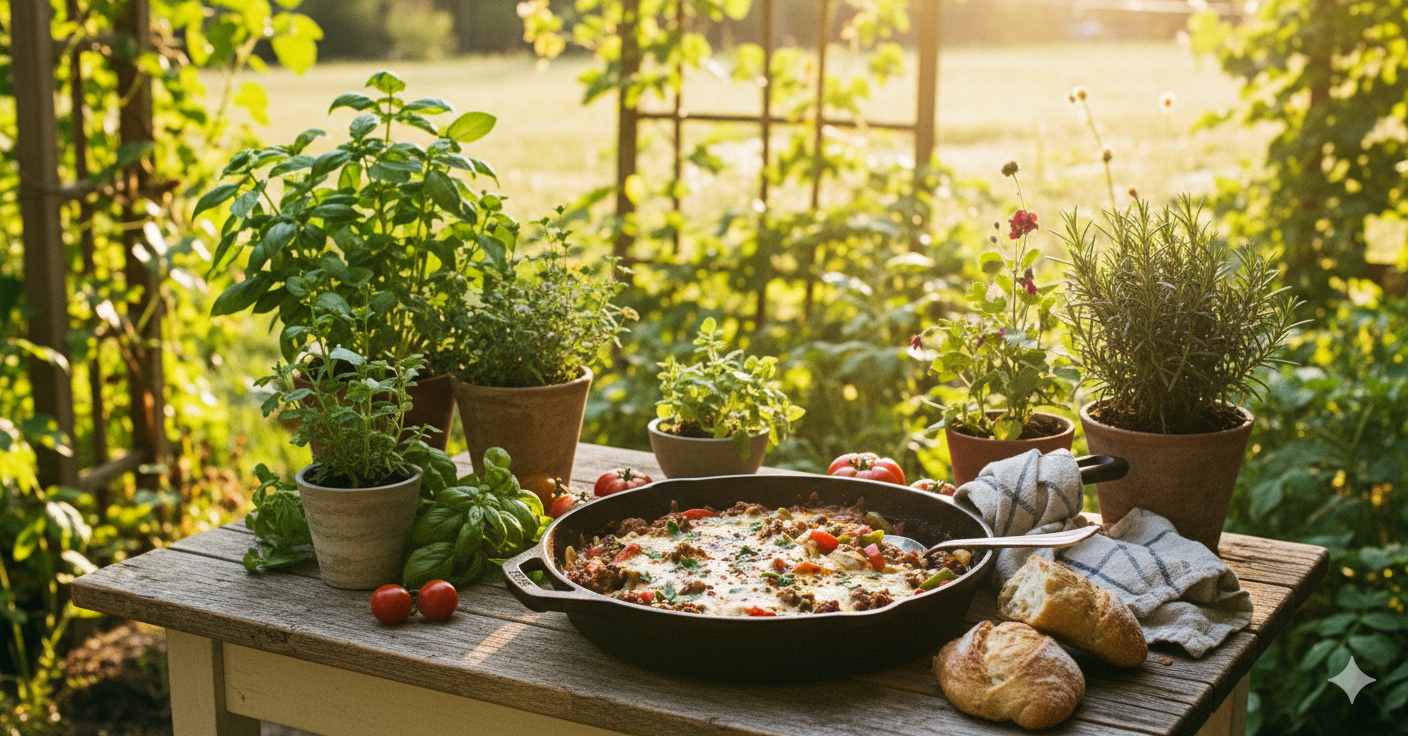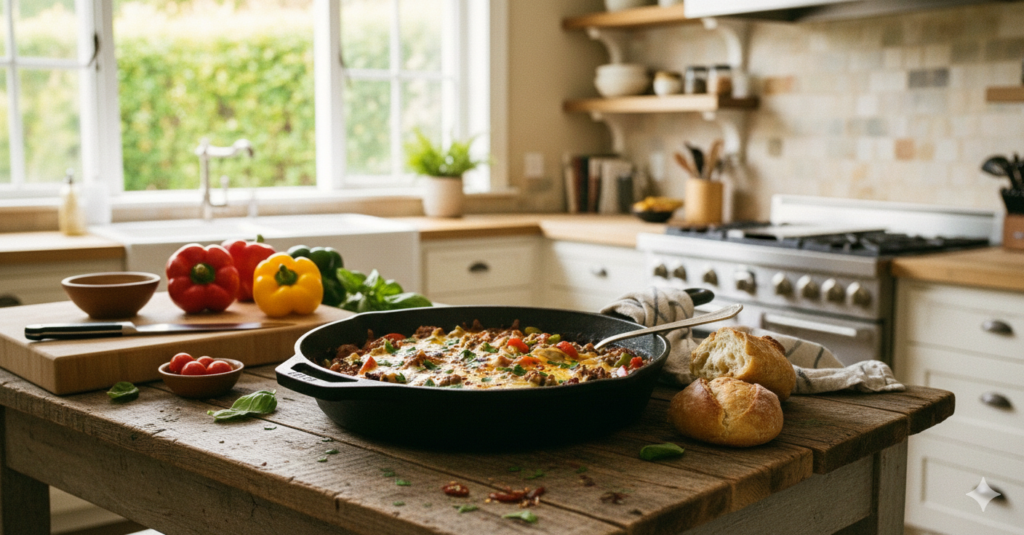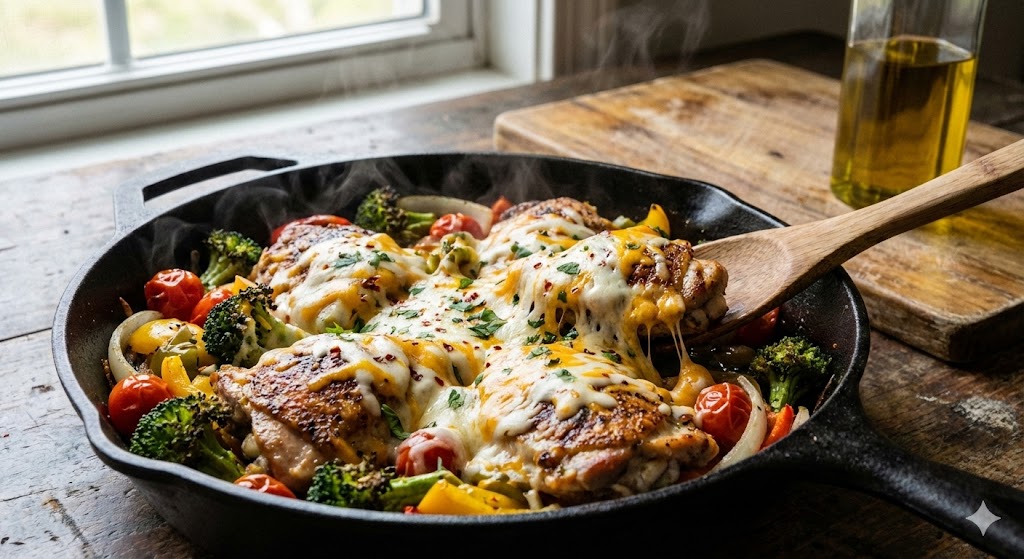
Skillet Beef with Roasted Broccoli and Cheese Recipe

Jump to RecipeSkillet Beef with Roasted Broccoli and Cheese Recipe
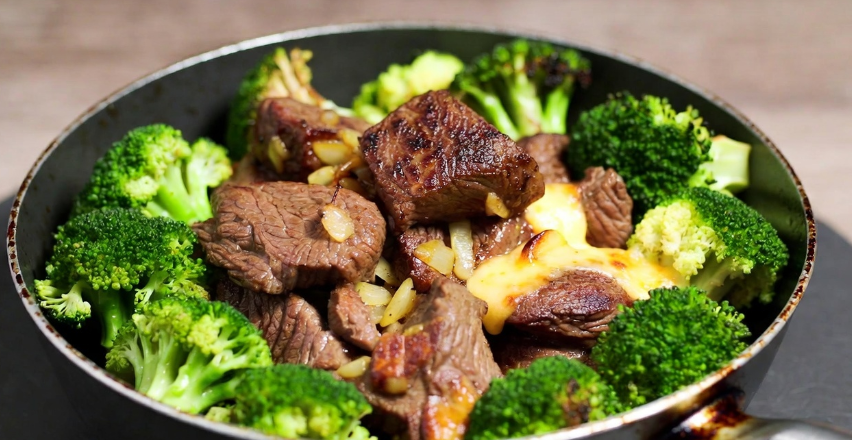
 A Simple Skillet Dinner That Comes Together Fast—Skillet Beef with Roasted Broccoli and Cheese Recipe

Some of the best weeknight meals don’t start with a plan. They start with opening the refrigerator and realizing that a few ingredients need to be used sooner rather than later.

That’s usually how this skillet beef with roasted broccoli and cheese ends up on the stove in my kitchen.

There’s often a piece of steak that should probably be cooked today. A head of broccoli that’s still crisp but won’t last much longer. And somewhere in the fridge, a block of cheese waiting to be grated.

Put those three together in a hot skillet and something satisfying happens.

The beef browns and develops that deep savory flavor. The broccoli roasts until the edges turn slightly crisp and nutty. Then the cheese melts into everything and ties the dish together.

It’s not complicated food, but it’s dependable — exactly the kind of dinner that works on busy nights when you still want something warm and satisfying on the table.

  1. Why You’ll Love This Skillet Beef Recipe

This dish has become a regular in my rotation for several reasons.

It cooks quickly.

Once the broccoli is roasting, the rest of the meal comes together in about fifteen minutes.

It uses simple ingredients.

Beef, broccoli, cheese, and a few basic seasonings are really all you need.

It’s filling without feeling heavy.

The combination of protein, vegetables, and a little cheese makes the dish satisfying without turning it into something overly rich.

It works for weeknights.

Everything cooks in one pan, and cleanup is easy.

  1. Ingredients You’ll Need

This recipe keeps the ingredient list simple.

1 pound sirloin or flank steak, thinly sliced

1 large head broccoli, cut into florets

1 cup shredded cheddar or Monterey Jack cheese

1 tablespoon olive oil or butter

½ teaspoon salt

½ teaspoon black pepper

Optional additions:

2 cloves garlic, minced

½ teaspoon smoked paprika

pinch of chili flakes

These optional ingredients add flavor, but the dish works perfectly well without them.

  1. Ingredient Notes and Cooking Tips

A few ingredient choices can make the recipe turn out even better.

Choose a tender cut of beef.

Sirloin and flank steak both work well. If the meat seems slightly tough, slicing it thinly against the grain helps a lot.

Fresh broccoli roasts best.

Frozen broccoli can be used in a pinch, but it tends to release more moisture and won’t brown as deeply.

Use a cheese that melts well.

Cheddar adds flavor, while Monterey Jack melts more smoothly. Mixing the two works nicely.

Don’t overload the cheese.

A moderate amount keeps the dish balanced instead of heavy.

  1. How to Roast the Broccoli

Roasting the broccoli first gives the dish much better flavor.

Preheat the oven to 425°F (220°C).

Cut the broccoli into bite-sized florets and toss them with a little olive oil and a pinch of salt. Spread them out on a baking sheet so the pieces aren’t crowded together.

This part matters more than people expect. If the broccoli is packed too tightly on the pan, it steams instead of roasting.

Place the tray in the oven and roast for 15–20 minutes, until the edges start to brown and the stems are tender.

Once the broccoli is roasted, set it aside while you cook the beef.

  1. Cooking the Beef Properly

Good skillet beef depends on two things: high heat and patience.

Heat a large skillet over medium-high heat and add the oil or butter. Once the pan is hot, add the sliced beef in a single layer.

If the pan looks crowded, cook the beef in batches. Overcrowding prevents the meat from browning properly.

Let the beef sit undisturbed for a minute or two so it develops a nice sear. Once the bottom browns, flip the pieces and cook briefly on the other side.

At this stage you’re mainly building flavor, not fully cooking the meat.

Transfer the browned beef to a plate and leave the flavorful bits in the pan.

  1. Bringing the Dish Together

If you’re using garlic or spices, add them to the skillet now and cook briefly until fragrant.

Return the roasted broccoli to the pan and stir it around so it warms through.

Add the cooked beef back into the skillet along with any juices that collected on the plate. Stir gently to combine everything.

Lower the heat to medium-low.

Sprinkle the shredded cheese evenly over the mixture and cover the skillet loosely for a minute or two.

The cheese will melt and coat the beef and broccoli without turning the dish greasy.

Once the cheese looks melted and creamy, turn off the heat.

  1. Tips for the Best Flavor and Texture

A few small techniques make a noticeable difference.

Dry the beef before cooking.

Excess moisture prevents proper browning.

Use a hot skillet.

Beef sears best when the pan is already hot.

Avoid stirring constantly.

Letting the meat sit for a moment allows a crust to form.

Roast the broccoli instead of steaming it.

Roasting develops deeper flavor and better texture.

  1. Making the Recipe Even Better

Choosing the Right Cut of Beef

One thing that can quietly change the outcome of this recipe is the type of beef you use.

I usually reach for sirloin because it’s widely available and cooks quickly. It has enough fat to stay tender without becoming greasy in the skillet.

Flank steak is another excellent option. It has a stronger beef flavor and works especially well when sliced thinly against the grain. If you’ve ever ended up with chewy flank steak, it’s usually because it wasn’t sliced correctly.

For this dish, the slices should be thin — almost stir-fry style.

If the steak you have feels a little firm, placing it in the freezer for about 15 minutes before slicing makes it much easier to cut thin strips.

Even inexpensive cuts can work if they’re sliced properly and cooked quickly.

Why Roasting the Broccoli Changes the Dish

Broccoli behaves very differently depending on how it’s cooked.

When it’s steamed, it stays soft and mild. That’s perfectly fine for a side dish, but it doesn’t add much personality to a skillet meal.

Roasting transforms it.

The high heat caramelizes the edges slightly, giving the florets a deeper, nutty flavor that balances the richness of the beef and cheese.

Another small detail that helps is not cutting the florets too small. Larger pieces develop better texture and stay slightly crisp even after being added back to the skillet.

If the stems are thick, I sometimes peel the outer layer and slice them thinner. They roast beautifully and add extra crunch.

Getting the Cheese Just Right

Cheese is what ties this dish together, but it’s easy to overdo it.

A light layer of melted cheese creates a creamy finish without turning the skillet into something heavy.

I usually grate the cheese myself rather than using pre-shredded cheese. Pre-shredded varieties often contain anti-caking agents that prevent smooth melting.

If you want the best texture, shred the cheese just before adding it to the skillet.

Another small trick is lowering the heat before adding the cheese. Cheese melts best gently. If the heat is too high, it can separate and become oily instead of creamy.

Covering the skillet loosely for a minute helps trap enough heat to melt everything evenly.

Small Flavor Boosts That Work Well

Once you’ve made this recipe once or twice, it’s easy to adjust it depending on what you’re in the mood for.

A squeeze of fresh lemon right before serving brightens the whole dish.

A dash of smoked paprika adds warmth and depth without overpowering the beef.

If you enjoy spice, a small pinch of red pepper flakes brings just enough heat to keep things interesting.

Sometimes I also add a spoonful of the pan juices over the finished dish right before serving. It’s a small detail, but it makes everything feel more cohesive.

When This Recipe Works Best

This skillet meal fits nicely into the kind of evenings when cooking needs to stay simple.

It’s quick enough for weeknights but still feels satisfying enough to serve when friends stop by unexpectedly.

Because the ingredients are flexible, it’s also the kind of recipe that works when the refrigerator isn’t fully stocked.

A little beef, a vegetable, and some cheese can go a long way when they’re cooked properly.

And once you’ve made it once, the process becomes second nature.

  1. Easy Variations to Try

This recipe adapts easily depending on what you have available.

Spicy version

Add chili flakes or a dash of hot sauce before serving.

Creamy version

Stir in a splash of cream before adding the cheese.

Different vegetables

Cauliflower or Brussels sprouts work well in place of broccoli.

Leftover steak option

If you already have cooked steak, add it at the end just long enough to warm it.

10. What to Serve with Skillet Beef and Broccoli

This dish is satisfying on its own, but a few sides make it feel like a complete dinner.

Good options include:

steamed white or brown rice

roasted potatoes

crusty bread

a simple green salad

Rice is probably the easiest pairing and soaks up any juices left in the skillet.

  1. Storage and Reheating

Leftovers keep well for a short time.

Store the cooled dish in an airtight container in the refrigerator for up to two days.

To reheat, warm it gently in a skillet over low heat. Adding a small splash of water helps loosen the mixture.

The microwave works as well, though the texture of the beef can become slightly firmer.

  1. Frequently Asked Questions

Can I use ground beef instead of steak?

Yes. Ground beef works, although the texture will be different. Brown it first, drain excess fat, and continue with the recipe.

Can frozen broccoli be used?

It can, though it won’t roast as deeply. Pat it dry and expect a slightly softer texture.

What type of skillet works best?

A wide, heavy skillet works best. Cast iron or stainless steel both provide excellent browning.

Is this recipe low-carb?

Yes. As written, it’s naturally low in carbohydrates.

Recipe Card

Skillet Beef with Roasted Broccoli and Cheese Recipe

Some of the best weeknight meals don’t start with a plan. They start with opening the refrigerator and realizing that a few ingredients need to be used sooner rather than later.
That’s usually how this skillet beef with roasted broccoli and cheese ends up on the stove in my kitchen.

Ingredients
  

  • 1 pound sirloin or flank steak, thinly sliced
  • 1 large head broccoli, cut into florets
  • 1 large head broccoli, cut into florets
  • 1 cup shredded cheddar or Monterey Jack cheese
  • 1 tablespoon olive oil or butter
  • ½teaspoon salt
  • ½teaspoon black pepper
  • 2 cloves garlic, minced
  • ½teaspoon smoked paprika
  • pinch of chili flakes

Method
 

  1.  

Final Thoughts

Skillet beef with roasted broccoli and cheese is one of those meals that quietly proves you don’t need complicated recipes to make a satisfying dinner.

A few simple ingredients, a hot pan, and a little attention while cooking are really all it takes.

The beef brings richness, the roasted broccoli adds texture and balance, and the melted cheese ties everything together.

It’s not fancy food — and that’s exactly why it works so well. On busy evenings when dinner needs to be straightforward and dependable, this is the kind of recipe that keeps finding its way back onto the stove.

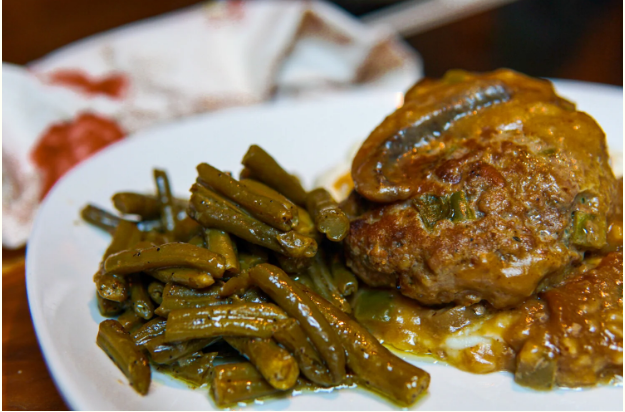
Skillet Meatloaf with Roasted Vegetable Gravy Recipe

Skillet Meatloaf with Roasted Vegetable Gravy

Quick Recipe Overview

Prep Time: ~20 minutes
Cook Time: ~45 minutes
Total Time: About 1 hour 5 minutes
Servings: 4–6

Ingredients

For the Meatloaf

  • 1½–2 lb ground meat (beef works well)

  • 1 egg

  • ½ cup breadcrumbs (or crushed crackers)

  • ¼–½ cup milk (as needed)

  • ½ onion, grated or finely chopped

  • Salt and black pepper

  • 1–2 tablespoons oil (for the skillet)

  • Optional topping: ketchup or thinned tomato paste

For the Roasted Vegetable Gravy

  • 2 carrots, roughly chopped

  • 1 onion, cut into wedges

  • 2 potatoes, roughly chopped

  • 1–2 tablespoons oil

  • Salt

  • 1–1½ cups broth or hot water

  • Black pepper (optional)

Basic Cooking Steps

  1. Roast the vegetables – Toss carrots, onions, and potatoes with oil and salt. Roast at about 400°F / 200°C until browned and soft.

  2. Mix the meatloaf – Combine ground meat, egg, breadcrumbs, onion, milk, salt, and pepper until it just holds together.

  3. Brown in a skillet – Heat oil in an oven-safe skillet and sear the shaped loaf to form a crust.

  4. Finish in the oven – Transfer the skillet to the oven and cook until the meatloaf is firm and cooked through.

  5. Make the gravy – Blend most of the roasted vegetables with broth and pan scrapings. Simmer in the skillet and add reserved vegetables for texture.

  6. Rest and slice – Let the meatloaf rest briefly before slicing and serving with the roasted vegetable gravy.

Skillet Meatloaf with Roasted Vegetable Gravy

The oven was already on because vegetables take longer than you think. I had a sheet pan out, carrots cut unevenly, onions in rough wedges, a couple of potatoes I almost peeled and then didn’t. Oil, salt, nothing fancy. They went in first. That part was decided before the meatloaf even crossed my mind.

The skillet meatloaf came later, mostly because I didn’t want to wash another pan.

I’d been standing there a minute, door open, checking the vegetables for color they didn’t have yet, when I realized I had ground meat thawed in the fridge. Not planned. Just there. One of those meals that starts forming once the heat is already happening.

By the time I pulled the skillet out, the vegetables were still pale but drying out at the edges, which is what you want before they actually brown. That gave me time.

Meatloaf, but not the careful kind

I don’t measure much when I make meatloaf. I know roughly how it should feel in my hands. Soft but not loose. Sticky but not wet. If it starts to slump when I shape it, I add something dry. Breadcrumbs, usually. Sometimes crackers. Once it was leftover rice and that worked fine, though I wouldn’t recommend it on purpose.

Egg goes in. Salt. Pepper. Onion, grated or finely chopped depending on my patience. A little milk if the meat looks tight. I don’t overthink seasoning here because the crust and the gravy do a lot of the work later.

I mix it gently, but not delicately. Meatloaf isn’t fragile. Still, I stop once it holds together. Overmixed meatloaf has a way of reminding you later.

The skillet gets hot before the meat does. Medium heat, oil first. I shape the loaf on a plate and slide it in rather than dropping it. There’s a sound when it hits—quiet, steady—not a hard sizzle. That’s what I’m listening for.

I let it sit. Longer than feels comfortable. This is where the skillet matters. You’re building a crust before the oven finishes the job. If you rush it, the loaf sticks and tears, and then you’re chasing it around the pan trying to fix something that didn’t need fixing.

Once one side releases, I nudge it. Turn it carefully. Not all the way around, just enough to give the sides color. It doesn’t need to be perfect. It won’t be.

Back to the vegetables, because timing overlaps here

By now the vegetables are starting to brown in spots. The onions soften first. The carrots take longer. I stir them once, maybe twice. Too much movement cools the pan and wastes heat.

This is one of those moments where cooking feels like coordination instead of steps. The meatloaf is browning, the vegetables are roasting, and nothing is fully done yet. That’s fine.

I check the skillet meatloaf again. There’s fat rendering out, pooling a little at the edges. I tilt the pan and spoon some of it away. Not all. Just enough that it doesn’t fry instead of roast once it goes in the oven.

The skillet goes straight into the oven after that. No rack juggling. Middle position. I don’t set a timer right away. I just note the time.

The gravy starts messy, on purpose

This gravy doesn’t come from stock alone. It comes from vegetables that have been roasted a little too hard in places and soft in others. That unevenness matters.

Once the vegetables are done—browned, slightly collapsed, smelling sweeter than raw—I pull them out. A handful gets set aside because I like texture later. The rest go into a bowl.

I pour a bit of hot water or broth onto the sheet pan and scrape. There’s flavor there. Don’t skip it. That liquid goes into the bowl too.

Blending is optional, but I usually do it halfway. I want some structure left. If it turns completely smooth, it feels separate from the meal, like it belongs to something else.

I don’t season much yet. Salt can wait.

Checking the meatloaf without poking it to death

At about the halfway mark, I pull the skillet out. The loaf has firmed up but still gives when pressed. There’s more fat now. I spoon a little more off, then leave it alone.

This is where I sometimes brush the top with something. Ketchup if I want that familiar thing. Tomato paste thinned with water if I don’t. Sometimes nothing at all. It depends on how browned it already looks.

Back into the oven it goes. The vegetables are resting. The gravy base is waiting. Everything feels paused for a moment, which usually means you’re on track.

The gravy finishes in the same skillet, eventually

When the meatloaf is done—firm, pulling slightly from the pan, juices clear—I move it to a board and tent it loosely. Not tightly. Steam ruins the crust you worked for.

The skillet stays on the stove. Heat goes back on, medium-low. There’s fat, browned bits, and a thin layer of residue stuck to the bottom. That’s the base.

I spoon off excess fat again, leaving enough to coat the pan. Then in goes the vegetable puree. It sizzles, thickens, picks up everything the skillet held onto.

This part takes a few minutes. I stir, scrape, watch it tighten. If it gets too thick, I thin it with broth. If it tastes flat, I add salt. Sometimes pepper. Rarely more than that.

The reserved roasted vegetables go in at the end. They don’t break down much, just soften further. The gravy becomes something between smooth and chunky. That’s intentional, even if it looks accidental.

Slicing before it’s fully ready (I still do this)

I tell myself every time to wait longer. I don’t always listen.

The meatloaf slices best after resting, but I usually cut into it a little early. The first slice is never perfect. It leans. It sheds a bit of juice. That’s fine. The rest behave better once the steam settles.

I spoon gravy over the top instead of underneath. It keeps the crust from going soggy too fast.

If I’m serving this to other people, I try harder. If it’s just me, I don’t.

What usually ends up on the plate

This skillet meatloaf with roasted vegetable gravy doesn’t need much alongside it. The vegetables are already there, folded into the sauce or resting beside it. Sometimes I add mashed potatoes. Sometimes I don’t bother.

Bread works. Something to drag through the gravy.

The plate looks heavy, but it eats lighter than you expect. The vegetables help with that, even though that wasn’t the point.

About leftovers, because they matter more than the first meal

This reheats well, but only if you’re gentle. Microwave on lower power. Stovetop with a splash of water or broth. The gravy thickens overnight. That’s normal.

Cold slices make decent sandwiches. Hot gravy poured over them later fixes anything that dried out.

I’ve eaten this standing at the counter the next day, skillet back on the stove, spoon in hand. That might be the best version, actually.

A few things I’ve learned the slow way

Skillet meatloaf behaves differently than baked. You get crust faster. You also get more fat rendered early. That changes timing.

Roasted vegetables make gravy taste fuller without much effort. They forgive uneven cuts and slight overbrowning.

Trying to make this neat makes it worse. Let it be what it is.

I still check the oven more than I need to. I still cut too soon. I still adjust seasoning at the very end instead of trusting earlier decisions.

It works anyway.

And once the pan is empty, I usually let it soak. Not because it’s ruined, but because I want to remember what came out of it before I scrub it clean.

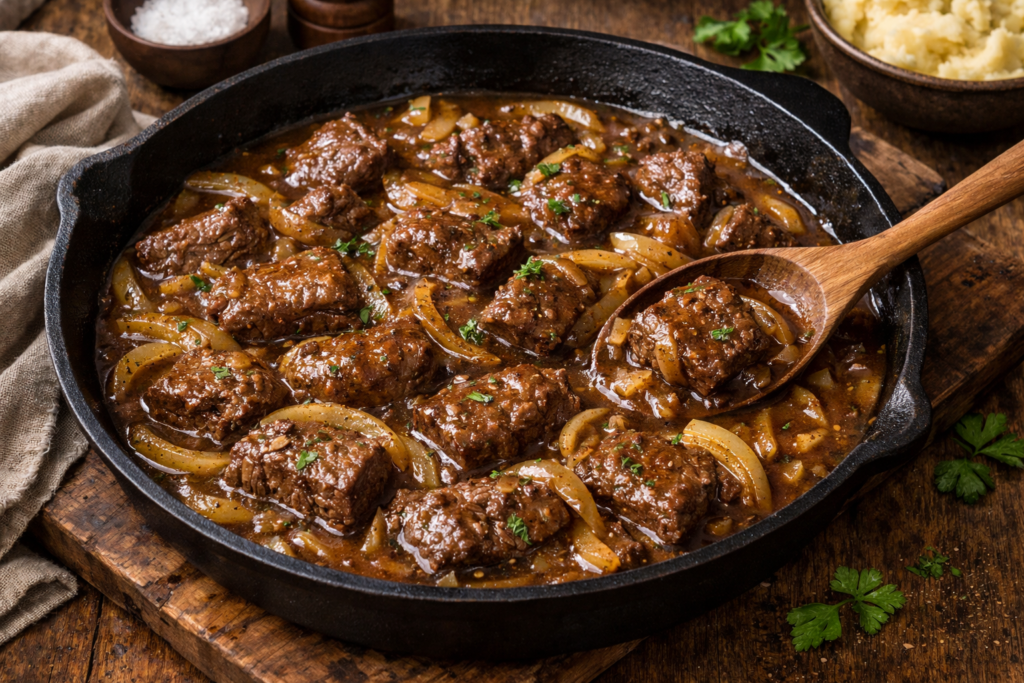
One-Pan Beef Skillet with Onion Gravy 

One-Pan Beef Skillet with Onion Gravy

Some nights I don’t even think of it as “onion gravy.”

It’s just onions that stayed in the pan longer than usual, because I wasn’t in a hurry to move on.

The name only makes sense later, when you realize that somewhere between browning beef and scraping the pan clean, a sauce quietly formed on its own. No packet. No plan. Just time and heat doing what they do.

This one-pan beef skillet with onion gravy usually shows up when I want dinner to feel solid but uncomplicated. Beef, onions, one skillet, and the patience to let things take their course. That’s really it. The rest is mostly about not getting in the way.

By the time it’s done, the kitchen smells like something dependable.

Why beef and onions keep working

There’s nothing clever about pairing beef with onions, and that’s exactly why it works. Beef brings weight and savoriness. Onions bring sweetness, but only if you let them.

What I like about this dish is how little it asks from you. No thickening packets. No bottled sauces trying to sound convincing. The onions soften, collapse, and eventually turn into something that holds the whole pan together.

And because everything happens in one skillet, nothing gets lost. Every browned bit stays put, right where it belongs.

Ingredients, without dressing them up

Beef

Thin-cut steak is my usual choice—sirloin, flank, even stew beef sliced smaller. Ground beef works too, but it turns this into a different meal. Still good. Just not this one.

Onions

Yellow onions are the safest bet. Sweet onions cook faster and can get too soft if you’re distracted. Red onions change the flavor slightly. I use them when that’s what’s around.

Garlic

Optional. I add it more often than not, but sometimes I skip it and don’t miss it.

Beef broth or stock

This becomes the gravy. Water works, technically, but broth gives you more to work with.

Fat

Oil, butter, or both. I decide based on how lean the beef looks that day.

Salt and black pepper

Enough to make things taste like themselves.

Optional extras

A pinch of thyme, a splash of Worcestershire, or a dusting of flour if you want thicker gravy. None are required. I don’t always use them.

Start with the beef, and actually let it brown

Heat a wide skillet over medium-high heat and give it a minute. A lukewarm pan won’t brown anything—it just steams it, and that changes the whole direction of the dish.

Season the beef lightly with salt and pepper. Add oil if needed, then lay the beef in a single layer. If the pan looks crowded, pull some pieces out and work in batches. It’s annoying, but it matters.

Once the beef is down, leave it alone. Don’t poke it. When it releases easily, flip it and let the second side brown.

You’re not cooking it through here. You’re building flavor.

When the beef looks right—browned, not dried out—transfer it to a plate. Leave everything else behind.

That dark layer stuck to the pan isn’t a problem. It’s the foundation.

Onions don’t care if you’re impatient

Lower the heat slightly. Add butter if the pan looks dry.

Add the onions with a small pinch of salt. They’ll soften first, then release moisture, then finally start to color. This is where most people rush things. I still do sometimes, and I regret it every time.

Stir occasionally and scrape the pan as you go. If the onions start sticking too aggressively, turn the heat down. Burnt onions can’t be rescued.

After about 10 to 15 minutes, they should be soft, deeply golden, and noticeably sweet. This is the point where the dish quietly turns the corner.

If you’re using garlic, add it now. Stir for about 30 seconds. That’s enough.

Turning onions into gravy (without overthinking it)

Pour in the beef broth slowly, scraping the skillet as you go. Everything stuck to the bottom should loosen and melt into the liquid.

Bring it to a gentle simmer. Not a boil. A boil makes the gravy feel harsh.

At this stage, I taste before deciding anything else. Sometimes it’s perfect as is. Sometimes it wants a little more salt. Sometimes I add flour. Sometimes I don’t bother and just let it reduce.

There isn’t one right move here. That’s kind of the point.

Bringing the beef back, briefly

Return the beef and any collected juices to the skillet. Stir gently so everything gets coated.

Lower the heat and let it warm through. You’re not cooking the beef again—you’re finishing it.

This takes less time than you think. Overdoing it makes the beef tough, and there’s no fixing that.

When the gravy coats the back of a spoon and the pan smells right, turn off the heat.

What it actually tastes like

The beef stays savory and tender. The onions disappear into the gravy instead of sitting on top of it. The sauce feels deep but not heavy.

There’s nothing sharp or flashy about it. Just steady, comforting flavor.

It’s the kind of food that makes you slow down without realizing you’ve done it.

How I usually serve it

Most often, over mashed potatoes. That’s the obvious move.

Rice works. Egg noodles do too. Crusty bread is perfect if you want to swipe the pan clean.

Some nights, I skip the sides altogether and eat it straight from a bowl. That happens more often than I admit.

Variations I actually use

Mushrooms

Cook them after the beef and before the onions. Let them release all their moisture.

Herbs

Thyme or rosemary works, but keep it subtle. This dish doesn’t want perfume.

Creamy version

A splash of cream at the end changes the whole mood. Still good. Just different.

Longer simmer

For tougher cuts, leave the beef in and let it go low and slow. It turns into something closer to a braise.

Mistakes that make it worse

Crowding the pan

Rushing the onions

Letting the gravy boil hard

Cooking the beef twice

None of these ruin dinner, but avoiding them makes the difference obvious.

Leftovers, if there are any

This keeps well for a couple of days.

Reheat gently on the stove with a splash of broth if the gravy tightens. The microwave works too—just stir halfway through.

Like most things built slowly, it’s often better the next day.

Final thoughts

One-pan beef skillet with onion gravy isn’t trying to prove anything. It doesn’t need decoration or clever tricks. It just needs time, heat, and enough attention to not rush it.

I come back to this dish when I want dinner to feel steady. When I want something warm that doesn’t demand much from me.

It’s not impressive food.

It’s reliable food.

And honestly, that’s usually what I’m after.


Easy Sour Cream Chicken Recipe (Creamy Oven-Baked Chicken)

Easy Sour Cream Chicken 

A Simple and easy Sour Cream Recipe Dinner That Became a Regular at Home 

It started as one of those nights when dinner had to happen quickly. The chicken had already thawed, everyone was getting hungry, and I had about forty minutes before the evening turned chaotic.

I opened the refrigerator, stared at a container of sour cream I’d originally bought for tacos that never happened, and decided to improvise.

That small decision ended up becoming one of the easiest chicken dinners I make.

That was about two years ago, and since then I’ve cooked this sour cream chicken more times than I can count. It isn’t complicated and it doesn’t require much attention, which is exactly why it works so well on busy evenings.

There’s no complicated technique to learn and no special equipment involved. You simply coat the chicken, slide the dish into the oven, and let it bake while you handle the rest of dinner.

Sometimes the simplest recipes are the ones that end up staying in your regular rotation the longest.

Why You’ll Love This Sour Cream Chicken

There are a lot of baked chicken recipes out there, but this one keeps returning to my weekly dinner list for a few simple reasons.

It’s incredibly low effort.

The preparation takes only a few minutes. Once the chicken is coated and in the oven, the dish mostly takes care of itself.

The chicken stays moist and tender.

Sour cream creates a light coating that protects the meat while it bakes. Even if the chicken cooks a few minutes longer than intended, it usually stays juicy.

The flavor is simple and comforting.

Garlic, paprika, and sour cream create a mild savory flavor with just a little tang. It’s the kind of dish that tends to please everyone at the table.

It pairs well with almost anything.

Rice, roasted vegetables, potatoes, or even a simple salad all work well alongside this chicken.

Because of that flexibility, it’s an easy dinner when you don’t want to plan too much.

Ingredients for Sour Cream Chicken

This recipe uses ingredients that are easy to find and often already in the kitchen.

Ingredient List

4 boneless, skinless chicken breasts (or chicken thighs)

1 cup full-fat sour cream

1 teaspoon garlic powder

1 teaspoon onion powder

1 teaspoon smoked paprika

½ teaspoon salt

½ teaspoon black pepper

½ cup grated Parmesan cheese (optional)

Fresh parsley for garnish (optional)

Ingredient Notes and Tips

A few small ingredient choices can make a noticeable difference in the final result.

Full-fat sour cream works best.

Lower-fat sour cream can thin out during baking and may not coat the chicken as well. The full-fat version creates a richer, creamier layer on top.

Chicken thighs are very forgiving.

While chicken breasts work perfectly well, I often use thighs because they stay juicy even if the oven runs a little hot.

Parmesan adds texture.

The cheese isn’t required, but it forms a light golden crust as the chicken bakes, which adds a nice contrast to the creamy coating.

How to Make Easy Sour Cream Chicken

This recipe is straightforward, but a few simple steps help it turn out better.

1.Preheat the oven

Preheat your oven to 375°F (190°C).

While the oven heats, prepare the sour cream mixture.

2.Mix the seasoning

In a medium bowl combine:

sour cream

garlic powder

onion powder

smoked paprika

salt

black pepper

Stir until the mixture is smooth and evenly seasoned.

I usually taste a small spoonful at this point. The mixture should taste well seasoned before it even touches the chicken.

3.Prepare the chicken

Pat the chicken dry with paper towels.

This step matters more than people expect. When the surface moisture is removed, the sour cream mixture sticks better and the chicken roasts instead of steaming.

Place the chicken pieces in a lightly greased baking dish.

4.Coat the chicken

Spread the sour cream mixture evenly over the chicken.

Try to create a fairly generous layer on each piece. A thin smear won’t produce the same creamy coating once baked.

If you’re using Parmesan cheese, sprinkle it evenly across the top.

5. Bake the chicken

Place the baking dish in the oven and bake for 25–30 minutes.

Larger chicken breasts may take closer to 35 minutes.

Around the fifteen-minute mark you’ll usually start to notice the aroma of garlic and paprika warming in the oven, which is a good sign everything is cooking nicely.

The chicken is done when the internal temperature reaches 165°F (74°C).

6. Let the chicken rest

Once the chicken comes out of the oven, allow it to rest for about five minutes before cutting into it.

I used to skip this step and quickly learned why it matters. Cutting too early allows the juices to run out onto the cutting board instead of staying in the meat.

Just a few minutes of resting helps the chicken stay much juicier.

Tips for the Best Sour Cream Chicken

This recipe is simple, but a few small habits can improve the final result.

Dry the chicken well before coating it.

Moisture on the surface prevents the sour cream mixture from sticking properly.

Don’t spread the coating too thin.

A generous layer creates the creamy baked texture that makes this dish work.

Use an oven thermometer if possible.

Some ovens run hotter than their dial suggests. If your chicken tends to cook too quickly, this might be the reason.

Allow the chicken to rest before serving.

Resting keeps the juices inside the meat and improves the overall texture.

Substitutions and Variations

One of the reasons I like this recipe is how easily it adapts to what’s already in the refrigerator.

Greek yogurt instead of sour cream

Greek yogurt works as a direct substitute and creates a similar creamy coating. The flavor is slightly tangier but still very good.

Cream cheese alternative

In a pinch, softened cream cheese mixed with a small splash of milk can replace sour cream. This version is a little richer and thicker.

Add a little heat

A pinch of cayenne pepper or chili flakes in the sour cream mixture adds mild spice without overpowering the dish.

Herb variations

Dried Italian herbs or fresh dill can change the flavor profile nicely.

Fresh dill in particular gives the chicken a slightly Eastern European character that pairs well with roasted potatoes.

Crunchier topping

If you like a crispier texture, mix a small handful of breadcrumbs with the Parmesan cheese before sprinkling it on top.

What to Serve With Sour Cream Chicken

This chicken pairs well with a variety of side dishes, which is another reason it’s such an easy dinner option.

Some good choices include:

steamed white or brown rice

roasted potatoes

buttered egg noodles

roasted broccoli or green beans

a simple cucumber or garden salad

When I’m trying to keep things simple, I often roast vegetables on a second tray in the oven at the same time the chicken cooks.

Storing and Reheating Leftovers

Leftover sour cream chicken keeps surprisingly well.

Store the chicken in an airtight container in the refrigerator for three to four days.

Reheating tips

For best results, reheat the chicken in the oven at 325°F (165°C) for about 10 minutes. This keeps the texture closer to how it was when freshly cooked.

The microwave works if you’re short on time. Just cover the dish so the chicken doesn’t dry out.

Leftover chicken also works well in other meals. It can be sliced into a salad, tucked into wraps, or chopped and mixed into pasta for a quick lunch.

Frequently Asked Questions

Can I prepare this recipe ahead of time?

Yes. You can assemble the dish, cover it, and refrigerate it for up to 24 hours before baking. Just place it directly into the oven when ready to cook.

Can I freeze sour cream chicken?

The chicken can be frozen, but dairy-based sauces sometimes change texture after thawing. It’s best enjoyed fresh or refrigerated for a few days.

Can I use bone-in chicken?

Yes. Bone-in chicken pieces will need a longer cooking time, usually around 35–45 minutes, depending on size.

Final Thoughts

I keep making this easy sour cream chicken for one main reason: it consistently delivers a good dinner with very little effort.

Everything goes into a single dish, the ingredient list is short, and the oven does most of the work.

The sour cream coating isn’t just a shortcut — it genuinely changes the texture of the finished chicken. It locks in moisture and creates a creamy layer that makes the dish feel richer than the effort involved.

And on busy nights, that’s exactly the kind of recipe I want.

Simple, reliable, and good enough to make again the next day.


Easy Sour Cream Recipe

This Easy Sour Cream Chicken is a fabulous recipe that keeps dinner not only simple and easy but also delightfully satisfying.

Ingredients
  

  • 1 teaspoon smoked paprika
  • ½ teaspoon salt
  • ½ teaspoon black pepper
  • ½ cup grated Parmesan cheese optional
  • Fresh parsley for garnish optional
  • Ingredient Notes and Tips
  • A few small ingredient choices can make a noticeable difference in the final result.
  • Full-fat sour cream works best.
  • Lower-fat sour cream can thin out during baking and may not coat the chicken as well. The full-fat version creates a richer creamier layer on top.


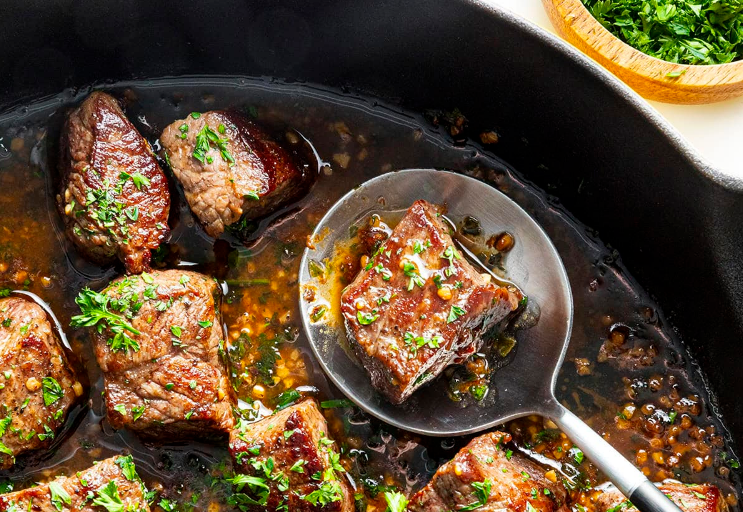
Skillet Steak Bites with Garlic Butter

          Skillet Steak Bites with Garlic Butter

 Some nights, I don’t want a project.

I don’t want a long ingredient list, a sink full of dishes, or a recipe that asks me to preheat something I’m not emotionally prepared to deal with. I want beef. I want it hot. And I want it cooked in a way that makes the kitchen smell like I meant to do this on purpose.

That’s usually when steak bites happen.

Not the fussy kind. Not the “served on toothpicks” version. Just chunks of steak, cooked fast in a skillet, finished with garlic butter because — honestly — what else would you finish them with?

This is one of those meals that feels indulgent but behaves like weeknight food. It cooks quickly, forgives small mistakes, and doesn’t demand your full attention for very long. Which, depending on the day, might be exactly what you need.

Why steak bites make sense when whole steaks feel like too much

Cooking a full steak can feel oddly high-pressure. You overthink the doneness. You hover. You second-guess every minute.

Steak bites remove most of that stress.

Cutting the steak into pieces does a few useful things:

They cook faster and more evenly

You get more browned surface area

Timing becomes less fragile

If one or two pieces go a touch further than planned, no one notices. And if a few stay pink inside, that’s kind of the point.

Add garlic butter at the end, and suddenly it feels intentional instead of rushed.

Choosing the right steak (without making it complicated)

You don’t need anything fancy here, but you do need something that cooks quickly and stays tender.

Good options:

Sirloin

Ribeye

Strip steak

Flat iron

I avoid anything that needs a long cook or careful slicing across the grain after cooking. That defeats the purpose.

What matters more than the cut is this:

The steak needs to be dry and at room temperature.

Cold, wet steak steams. And steamed steak bites are not the vibe.

A note on size (this matters more than you think)

Cut the steak into pieces that are:

Roughly bite-sized

Similar in thickness

Not perfectly uniform

Perfection here works against you. Slight variation means some pieces get extra crust while others stay softer inside. That contrast is part of what makes this dish satisfying.

I usually aim for chunks a little bigger than I think I need. They shrink slightly as they cook.

Ingredients (kept intentionally short)

Here’s what I actually use most of the time:

Steak (about 1½ to 2 pounds)

Butter

Garlic

Salt

Black pepper

Neutral oil (if the steak is lean)

Optional but welcome:

Fresh parsley

A squeeze of lemon

Chili flakes

A sprig of thyme or rosemary

Nothing here should feel precious.

Getting the pan right before anything goes in

This step gets skipped more than it should.

Use a wide, heavy skillet. Cast iron is great. Stainless works too. Nonstick is… fine, but you won’t get the same crust.

Heat the pan over medium-high and give it time. Not “warm” time. Actual heat. The pan should feel confident before the steak ever touches it.

Add a small amount of oil if the steak is lean. If you’re using ribeye, you may not need any.

Seasoning: less earlier, more later

I salt the steak bites right before they go into the pan. Not an hour ahead. Not at the table. Right then.

Pepper can wait until after cooking if you’re worried about burning, but I usually add it early and accept a little toastiness.

This dish isn’t about layering spices. It’s about letting beef taste like beef.

Cooking the steak bites (this is where restraint pays off)

Add the steak bites to the hot skillet in a single layer.

Then leave them alone for a minute or two so a crust can form.

Once the underside browns, flip them and cook the second side.

No stirring. No poking. Let them sit until a crust forms. If the pan is crowded, cook in batches. Overcrowding is the fastest way to ruin this.

Once they’ve browned on one side, flip them. Another minute or two, depending on size.

You’re not trying to cook them through completely at this stage. You’re building color.

Remove the steak bites from the pan and set them aside. They’ll finish later.

Garlic butter: when and why it matters

Turn the heat down to medium.

Add butter to the same pan. Let it melt, then add the garlic.

This is a short window — maybe 30 seconds. You’re looking for fragrant, not golden. Burnt garlic is loud and bitter, and it takes over everything.

Once the garlic smells right, return the steak bites (and any juices) to the pan.

Toss gently. The butter coats everything. The steak finishes cooking. The pan goes quiet again.

This is where skillet steak bites with garlic butter become what they’re supposed to be — rich, savory, and cohesive instead of just browned meat.

Taste. Adjust salt. Maybe more pepper.

Then stop.

What you should notice when it’s done

The steak bites should be:

Browned on the outside

Juicy inside

Coated, not swimming, in butter

The garlic should smell warm and savory, not sharp.

If the pan looks dry, add a small knob of butter and swirl. If it looks greasy, you used too much earlier — but it’s still edible. I’ve been there.

How I usually serve them (and how flexible this really is)

Most nights, these steak bites don’t need much.

I’ve served them:

Over mashed potatoes

With roasted vegetables

On top of a simple salad

Alongside crusty bread to mop up the butter

They also work surprisingly well with rice or tucked into warm tortillas.

If I’m being honest, I’ve eaten them straight from the pan more than once. No plate. No ceremony.

Variations that actually make sense

I’m cautious with variations here because it’s easy to lose the simplicity.

That said, a few changes work well:

Herb version

Add thyme or rosemary to the butter. Remove the stems before serving.

Spicy version

Chili flakes or a small spoon of chili crisp at the end. Not earlier.

Lemon finish

A quick squeeze of lemon right before serving cuts the richness nicely.

Mushroom add-in

Cook sliced mushrooms after the steak, before the garlic butter. Let them brown properly.

I don’t add cheese. I don’t add cream. Those belong somewhere else.

Common mistakes (all learned the hard way)

Starting with a cold pan

Overcrowding the skillet

Burning the garlic

Overcooking while “just checking one more time”

Steak bites reward confidence. Hesitation usually shows up on the plate.

Leftovers, if you have any

These reheat better than you’d expect.

Use a skillet over low heat with a tiny bit of butter. Microwave works in a pinch, but go slow.

I don’t love freezing them. The texture changes. If you plan to make ahead, keep them in the fridge and eat within two days.

A few questions I get asked

Can I use frozen steak?

Not for this. Thaw it completely and dry it well.

What doneness should I aim for?

Medium-rare to medium. They cook quickly.

Do I need fresh garlic?

Yes. This is one place where it matters.

Is this low-carb?

On its own, yes. What you serve it with is up to you.

Final thoughts

Skillet steak bites with garlic butter are one of those meals I come back to because they don’t ask for much. They don’t demand planning. They don’t punish small mistakes.

They just work.

On nights when I want something satisfying without the mental overhead, this is what I make. It feels generous. It tastes complete. And it reminds me that good food doesn’t always need a long runway.

Sometimes it just needs a hot pan, decent beef, and the sense to leave things alone long enough to brown.

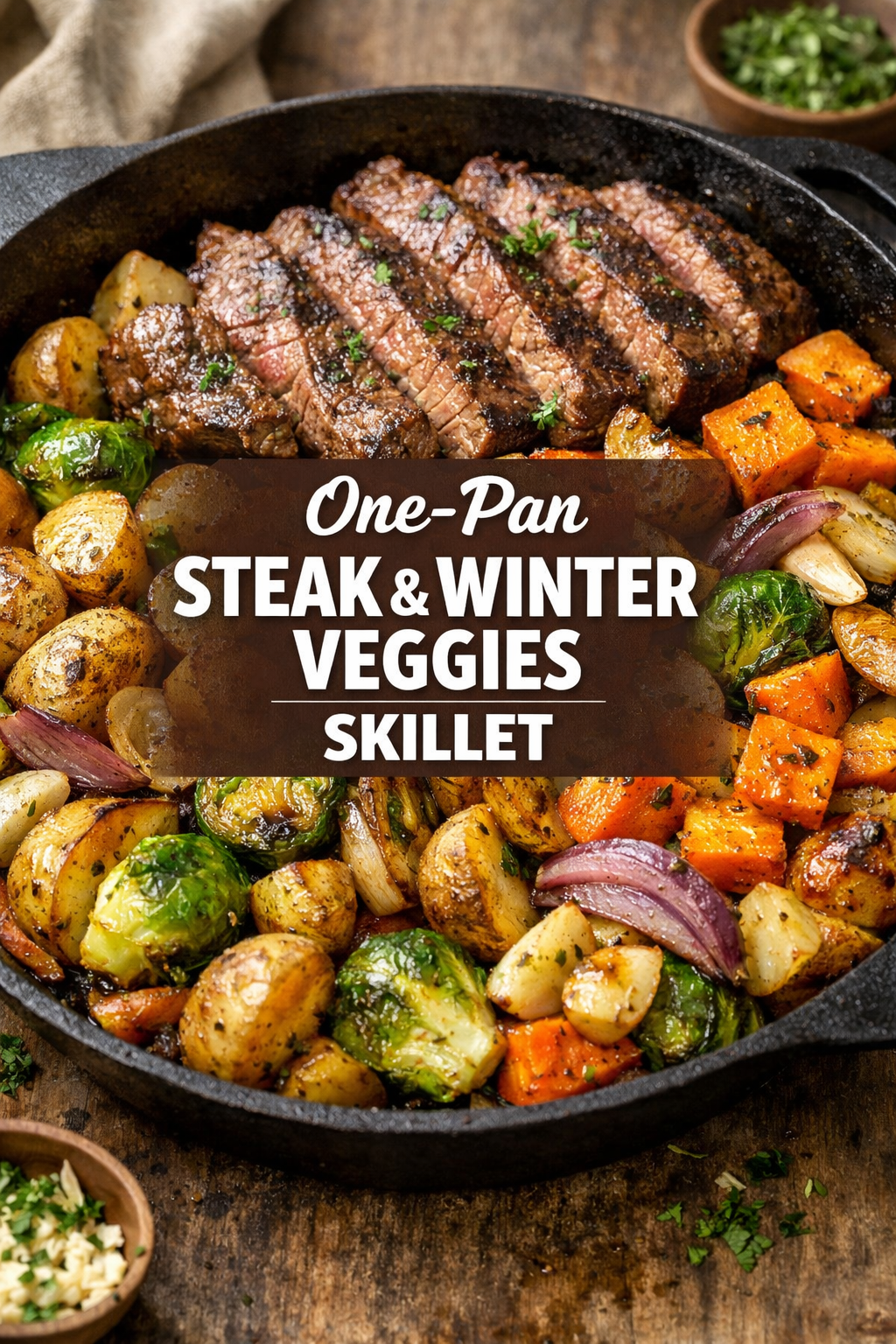
One-Pan Steak and Winter Veggies Skillet

One-Pan Steak and Winter Veggies Skillet 

Some dinners feel like a decision. Others feel like a solution.

This one is the second kind.

It usually happens on a cold evening when the kitchen already feels chilly and I don’t want to stack pans like I’m auditioning for something. I want heat, depth, and a plate of food that makes sense without a lot of explanation. Steak and winter vegetables in one skillet do that job quietly, without showing off.

There’s something grounding about cooking steak in a pan that already smells like onions and root vegetables. Everything shares space. Nothing feels fussy. And when it’s done, the skillet looks like it worked for a living.

That’s the kind of dinner I come back to.

Why this meal works when winter cooking feels heavy

Cold-weather food can get exhausting. Too many stews. Too much simmering. Too many meals that take all afternoon and still somehow feel flat.

This one-pan steak and winter veggies skillet stays direct. You get richness from the beef, sweetness from roasted vegetables, and enough browning to make the kitchen feel warmer than it actually is.

The vegetables carry their own weight. They’re not just filler. Winter vegetables—carrots, parsnips, potatoes, Brussels sprouts—actually improve when they hit hot fat and real heat. They caramelize. They soften slowly. They don’t rush you.

Steak, meanwhile, does what steak does best: brings confidence to the plate.

Choosing the steak (without overthinking it)

You don’t need a premium cut here. In fact, I’d argue against it.

Sirloin, strip steak, flat iron—these all work well. Ribeye works too, but sometimes feels almost excessive once you add the vegetables.You want something that cooks quickly, slices well, and doesn’t mind sharing space.

Thickness matters more than price. Too thin and you’ll overcook it while waiting for vegetables to behave. Too thick and everything else sits around awkwardly.

About an inch is comfortable. Season it simply. Salt, pepper. Nothing else yet.

Let it sit at room temperature while you prep the vegetables. That small pause helps more than people admit.

Winter vegetables I actually use (and why)

I rotate based on what looks decent, but a few show up again and again.

Carrots – Sweet, sturdy, and forgiving

Parsnips – Earthy and underrated

Baby potatoes or fingerlings – Creamy inside, crisp outside

Brussels sprouts – Halved, never whole

Red onion – Holds structure, adds sweetness

You don’t need all of them. Pick three or four. Too many vegetables crowd the pan and kill browning, which defeats the point.

Cut them unevenly on purpose. Thicker pieces take longer, thinner ones brown faster. That natural variation keeps the pan interesting.

What goes into the skillet

 Most nights the ingredient list for this dinner is short enough that I don’t bother writing it down.

A pound of steak is the center of the plate—sirloin, strip steak, or flat iron all work well. Around that I usually add a mix of winter vegetables that handle heat without falling apart. Carrots and parsnips are almost always there, along with baby potatoes or fingerlings. Brussels sprouts join in when they look good at the store, and a small red onion adds sweetness as it softens in the pan.

Garlic is optional but hard to resist. A little olive oil helps everything brown, and a small knob of butter at the end makes the skillet smell better than it has any right to.

Salt and black pepper do most of the seasoning work.

If I have fresh herbs around, thyme or parsley finishes the dish nicely. A squeeze of lemon sometimes shows up too, especially if the vegetables feel particularly rich.

Cooking everything in one skillet

The vegetables always go first.

Heat a large skillet over medium-high heat and add a little olive oil. Once it shimmers, scatter the carrots, parsnips, potatoes, Brussels sprouts, and onion across the pan. Try to keep them in a loose single layer so they have room to brown.

Season lightly with salt and pepper, then leave them alone for a minute or two. Vegetables need contact with the hot pan to develop color, and constant stirring gets in the way of that.

After several minutes they start to soften and pick up caramelized edges. Stir them occasionally until they’re mostly tender.

At that point I either push the vegetables toward the edges of the pan or move them briefly to a bowl. The steak needs a clear spot in the center.

Season the steak generously with salt and pepper, then lay it into the hot skillet. If the pan is ready, it should sizzle immediately.

Let the first side cook undisturbed until a crust forms. Flip it once and cook the second side until it’s just shy of your preferred doneness. Then transfer it to a plate to rest.

Lower the heat slightly and add a small knob of butter along with the garlic. Thirty seconds is enough for the garlic to turn fragrant.

The vegetables go back into the center of the skillet and get tossed through the buttery juices left from the steak.

Slice the rested steak against the grain and return it to the pan along with any juices that collected on the plate. Stir everything gently so the flavors mingle.

Taste once more, adjust the seasoning if needed, and that’s dinner. Bringing everything back together without losing control

Lower the heat slightly. Add a knob of butter if you’re in the mood. It’s winter. No one’s judging.

Toss the vegetables back into the skillet. Stir to coat them in whatever the steak left behind. This is where flavors start to overlap.

Add garlic if you want it. Keep it brief. Garlic burns quickly and bitterness travels fast.

Slice the steak against the grain. Return it to the pan along with any juices that escaped while it rested. Those juices matter.

Toss gently. Taste. Adjust salt and pepper.

Then stop.

This dish doesn’t benefit from fussing. The skillet has already done the heavy lifting.

What it tastes like when it’s right

The steak stays tender, with crisp edges and a warm center. The vegetables are sweet and browned, not mushy. Potatoes soak up fat. Carrots taste richer than they have any right to.

Everything tastes connected, like it belongs on the same plate.

It’s filling without being sleepy. Rich without being heavy. You finish it and feel warmed instead of weighed down.

Small adjustments that actually help

Cooking isn’t predictable. Ingredients behave differently every time.

If vegetables brown too fast, lower the heat and add a splash of water.

If the pan feels dry, add oil before things start sticking aggressively.

If the steak cooks faster than expected, pull it early and let it rest longer.

If you want brightness, a squeeze of lemon at the very end works quietly.

You don’t need a sauce. The pan already made one.

How I usually serve it (and why I keep it simple)

This doesn’t need much help.

Sometimes I serve it straight from the skillet with nothing else. Sometimes with crusty bread. Occasionally with a simple green salad if I’m pretending balance was planned.

But usually, the skillet is the point. It’s generous. It doesn’t ask for sides to justify itself.

Leftovers and real-life reheating

This keeps surprisingly well.

Store leftovers in a container, not stacked too tightly. Reheat in a skillet if you can. Microwave works, but gently. Steak doesn’t like being bullied.

The vegetables actually improve overnight. The steak softens slightly but stays flavorful.

I’ve eaten this cold once, standing at the counter, and didn’t feel bad about it.

Variations I’ve tried and would repeat

Add mushrooms if you want deeper earthiness.

Use sweet potatoes instead of regular ones for more contrast.

Finish with fresh herbs like thyme or parsley if you have them.

Swap steak for pork chops on nights when beef feels too much.

I avoid heavy sauces here. They take away from the honesty of the dish.

Common mistakes I see (and how to avoid them)

Crowding the pan is the big one. It kills browning and turns everything gray.

Moving things too often is another. Let heat do its job.

Overcooking the steak because you’re waiting on vegetables is why the vegetables go first. Always.

And finally, over-seasoning early. You can always add salt later. You can’t take it back.

Final thoughts

One-pan steak and winter veggies skillet isn’t clever food. It’s steady food.

It’s the kind of dinner that feels reassuring when days are short and everything outside the window looks tired. You don’t need to measure much. You don’t need to impress anyone. You just need a hot pan and a little patience.

It’s honest cooking. And honestly, that’s usually enough.

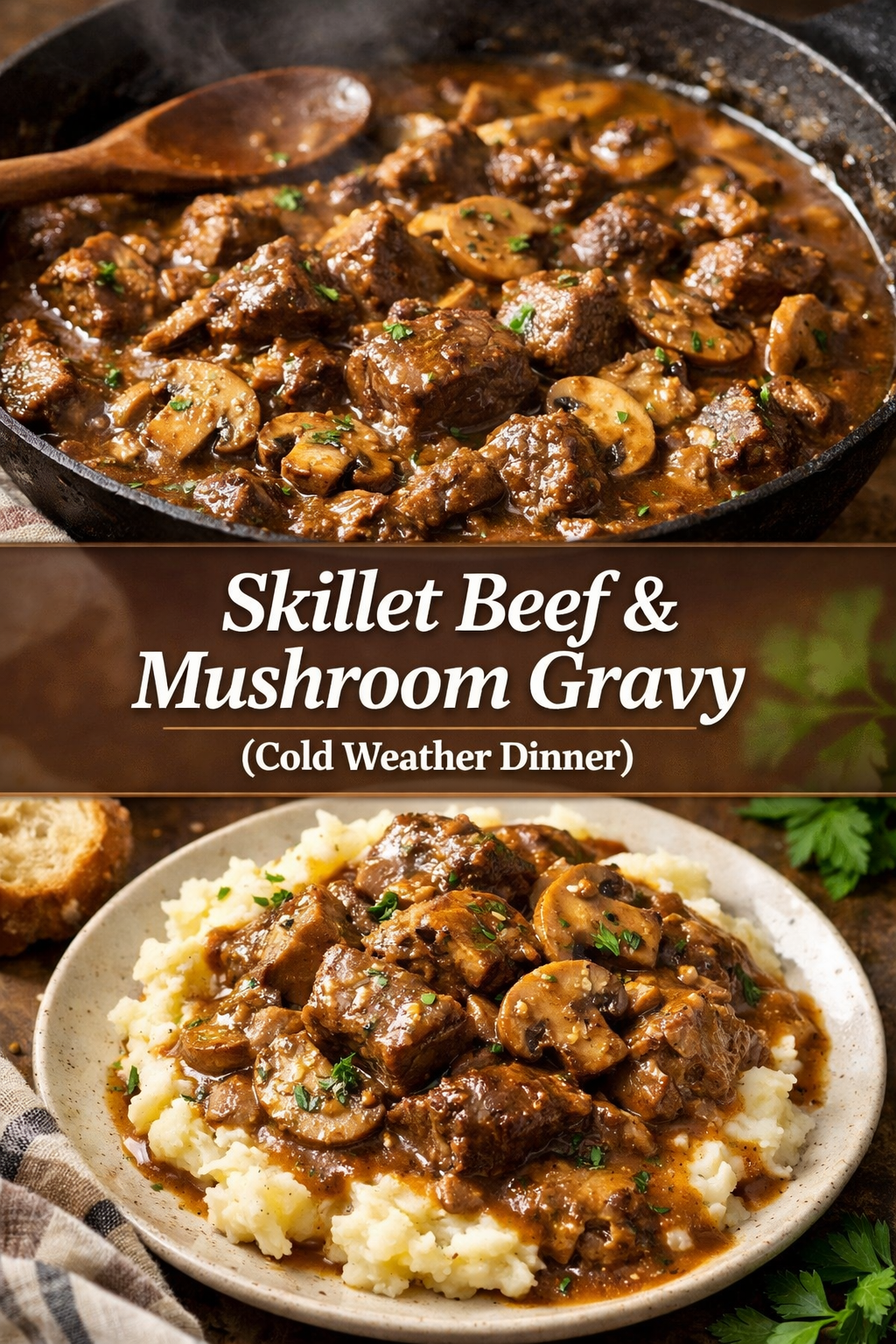
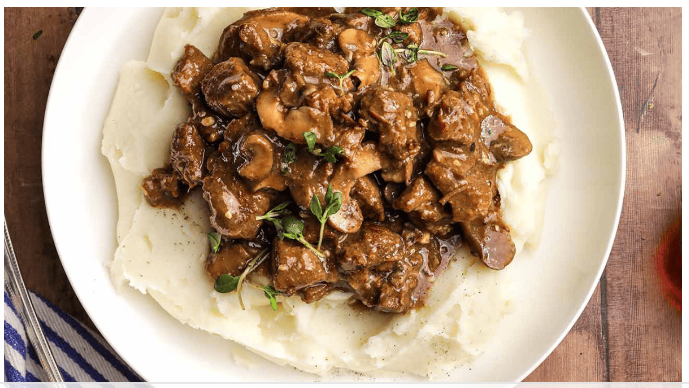
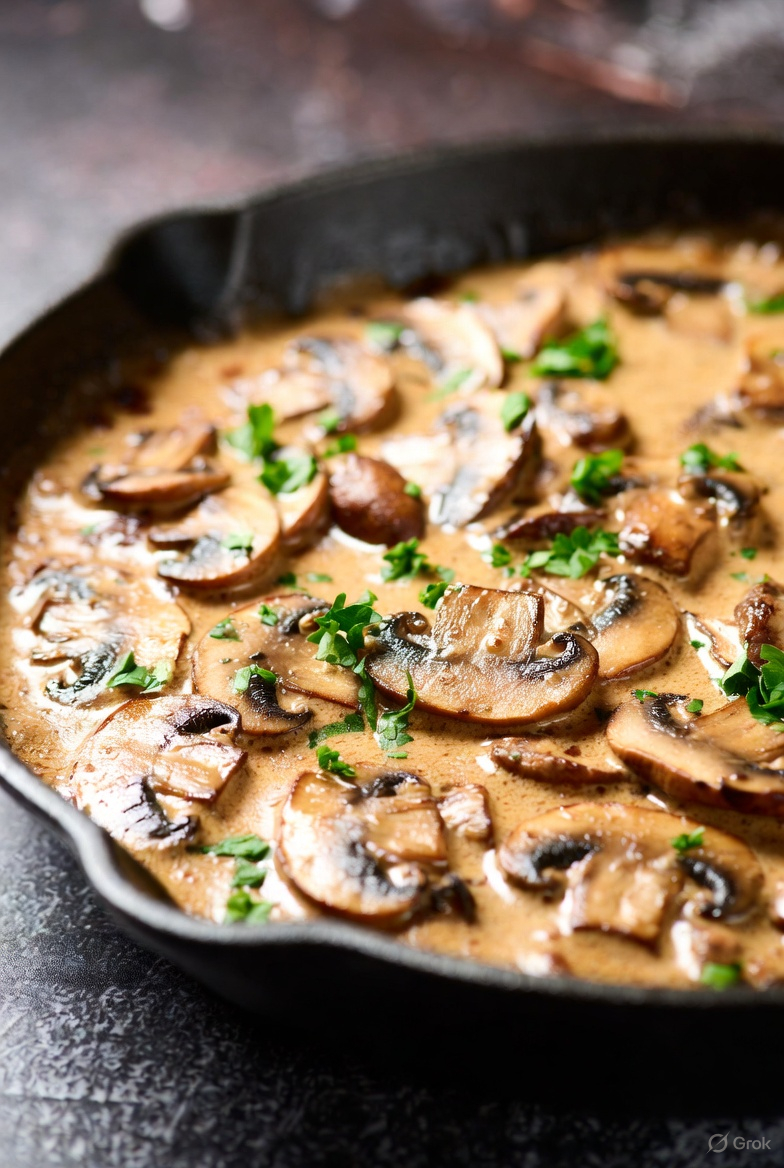
Skillet Beef and Mushroom Gravy

Skillet Beef and Mushroom Gravy (Cold Weather Dinner) 

Cold weather dinners don’t need a plan. They need heat, a pan, and something that smells right while it’s cooking. This skillet beef and mushroom gravy usually shows up at my table when the day has already made too many decisions for me.

It’s one pan. No oven. No careful timing. Beef, mushrooms, and gravy tend to behave themselves if you don’t rush them.

This isn’t fancy food. It’s filling food. The kind you make when the temperature drops and you want dinner to feel steady.

Why this works when it’s cold out

Cold weather cooking is less about creativity and more about payoff. You want warmth. You want depth. You want something that holds heat while you eat it.

Beef does that naturally. Mushrooms stretch the flavor without stretching the effort. Gravy pulls everything together and makes even simple sides feel intentional.

And because it all happens in one skillet, the kitchen doesn’t end up colder than when you started.

The beef choice actually matters

I usually reach for chuck or stew beef here. Not because it’s trendy, but because it forgives mistakes.

Chuck has enough fat and connective tissue to stay tender once it simmers. Sirloin cooks faster but dries out if you’re distracted. Stew beef is fine, but quality varies, so I look for pieces with some marbling.

Thin slices cook fast but don’t give the gravy much body. Larger chunks take longer but reward patience. I usually cut the difference. Bite-sized, but not tiny.

If you rush beef, it pushes back. This dish works because you don’t.

Mushrooms aren’t just filler

Mushrooms do more than bulk this out. They hold onto fat, soak up gravy, and add that deep, savory note that makes the beef taste beefier.

Cremini mushrooms are my first choice. Button mushrooms are fine and cheaper. I slice some thick and some thin on purpose. The thin ones soften into the gravy. The thick ones stay noticeable.

Uniform slicing looks nice, but it doesn’t eat better.

Ingredients, the way I actually use them

I don’t line these up before I start. I grab them as I go.

Beef, cut into chunks. Mushrooms, sliced however they come out. Onion if I have one. Garlic, always. Butter or oil. Flour. Beef stock. Salt and black pepper.

Sometimes I add a splash of Worcestershire sauce. Sometimes I forget. Both versions get eaten.

This isn’t precise cooking. It’s responsive cooking.

Ingredients

1½–2 lbs beef (chuck or stew meat), cut into bite-sized chunks

8 oz mushrooms, sliced

1 small onion, chopped (optional)

3 cloves garlic, minced

2 tbsp butter or oil

2 tbsp flour

2 cups beef stock

salt and black pepper

optional: 1 tsp Worcestershire sauce

Browning the beef without hovering

Start with dry beef. Pat it down. Season it generously. Under-seasoning at this stage shows up later, and not in a good way.

Heat a heavy skillet over medium-high heat. Add oil. When it shimmers, add the beef in a single layer. Don’t crowd it.

Then stop touching it.

Let the beef brown properly. It should release easily when it’s ready. If it sticks, it’s not done yet.

Flip, brown the other side, then pull it out. The beef won’t be cooked through. That’s fine. It’s coming back.

What matters is the color left behind in the pan.

Building the mushroom base

Lower the heat slightly and add butter if the pan looks dry. Then add the mushrooms.

They’ll soak up fat at first. Ignore that. As they cook, they release moisture and settle down.

Resist the urge to stir constantly. Let them sit. Color equals flavor here.

Once they’ve softened and started to brown, add chopped onion if you’re using it. If not, skip ahead. This dish survives either way.

Salt lightly and let everything cook until the pan smells savory, not raw.

Garlic goes in last. Thirty seconds is enough. Longer than that and you’ll know you went too far.

Making gravy without turning it into paste

Sprinkle flour over the mushrooms. Stir until it disappears into the fat. You’re not making a thick roux. You’re just coating things lightly.

Cook the flour for a minute. It should smell nutty, not dusty.

Slowly add beef stock, stirring as you go. Cold stock works. Warm stock works better. Either way, go slow.

The gravy will look thin at first. That’s normal. Let it simmer gently and it thickens on its own.

If it gets too thick, add more stock. If it stays thin, give it time. Rushing gravy usually makes it worse.

Bringing everything back together

Return the beef to the skillet along with any juices it released. Stir gently to coat.

Lower the heat. Cover partially and let it simmer until the beef is tender. This can take anywhere from 15 to 30 minutes depending on the cut.

Check occasionally. Stir once in a while. This isn’t fragile food, but it doesn’t like being ignored completely.

When the gravy coats the back of a spoon and the beef cuts easily, you’re there.

Turn off the heat and let it sit for a few minutes. The gravy tightens slightly as it rests.

That pause matters more than it sounds.

What this actually tastes like

The beef is rich and soft without falling apart. The mushrooms taste deeper than they did ten minutes ago. The gravy is savory, not heavy.

It’s filling without being overwhelming. Warm without being sleepy.

You don’t need a lot of it to feel satisfied.

How I serve it most nights

Mashed potatoes are the obvious choice. They soak up gravy and make the plate feel complete.

Egg noodles are a close second. Especially on nights when I don’t want to mash anything.

Toast works too. Thick slices. Nothing fancy.

I usually add something green if I remember. Sometimes I don’t.

Variations I actually repeat

If I want a lighter version, I use less flour and more stock. The gravy is thinner but still comforting.

A splash of cream at the end softens everything. I don’t always add it, but I don’t regret it when I do.

Thyme works well here. So does parsley. I skip strong herbs that fight the mushrooms.

I don’t add cheese. It doesn’t belong.

Leftovers and reheating

This keeps well in the fridge for up to three days.

Reheat slowly over low heat. Stir occasionally. Add a splash of stock or water if the gravy tightens too much.

It tastes better the next day. The mushrooms deepen. The beef relaxes even more.

Freezing works, but the gravy can change texture. It’s edible. Just not ideal.

FAQs

Can I use ground beef?

You can, but it becomes a different dish. Still good. Just not this.

What if my gravy is lumpy?

Lower the heat and whisk gently. It usually smooths out.

Can I make this ahead?

Yes. It reheats well if you’re patient.

Is this good for guests?

Yes. It looks better than the effort suggests.

Can I skip the flour?

You can, but the gravy will be thinner.

Final thoughts

Skillet beef and mushroom gravy is the kind of dinner that doesn’t ask much of you.

It doesn’t rush. It doesn’t punish small mistakes. It just warms the room and fills the plate.

On cold nights, that’s more than enough.

One-Pan Chicken and Cabbage Skillet

One-Pan Chicken and Cabbage Skillet 

Some dinners happen because you planned them. Others show up because the fridge is quiet and cabbage is still sitting there, looking patient. That’s usually how One-Pan Chicken and Cabbage Skillet enters my evening. I don’t crave it in advance. I make it because it makes sense, and then halfway through cooking, I remember why I keep coming back to it.

It’s warm, it’s filling, and it doesn’t ask much from me. Which, on most weeknights, is exactly the point.

Why this dish works when real life is loud

This is one of those meals that feels humble but does a lot of heavy lifting. One pan. No juggling timers. No sauce that needs babysitting.

Cabbage holds up. It doesn’t collapse the second heat touches it. Chicken does what chicken does. And together, they make something that feels intentional even when it wasn’t.

It’s also forgiving. If the cabbage cooks a little longer, it gets sweeter. If the chicken rests a minute too long, it stays fine. Nothing here is fragile.

How I think about the ingredients (not how a recipe card would)

Chicken comes first. I usually go with thighs. They’re cheaper, more forgiving, and I don’t have to hover. Breasts work, but I’ve dried them out enough times to know I need to pay attention when I use them.

Cabbage is the backbone. Green cabbage most of the time. I’ve used red in a pinch, but it behaves differently and turns everything a little purple. Not bad. Just different.

Onion almost always joins. Garlic usually does too, unless I forgot to buy it and decide it’s not worth a second trip.

Oil, salt, pepper. Sometimes smoked paprika. Sometimes caraway seeds if I’m feeling nostalgic. Sometimes nothing extra at all.

That’s the beauty of this dish. It doesn’t demand a lot of explanation.

Prepping without overthinking

I slice the cabbage into thick strips. Not shredded. I want bite, not slaw. Uneven pieces are fine. They cook at different speeds, which I actually like.

Chicken gets patted dry and seasoned. I don’t marinate. I used to, thinking it would add flavor, but honestly, the skillet does more than a marinade ever did.

Everything sits close by. That’s the extent of my prep.

Cooking the chicken first (always)

Skillet on medium-high heat. Oil in. When it shimmers, chicken goes down.

Then I stop touching it.

This took time to learn. If you move chicken too early, it sticks and you get annoyed. When it’s ready, it releases. That’s the signal.

I brown it well on both sides but don’t cook it through. That comes later. Once it’s got color, I pull it out and let it wait.

The pan looks messy at this point. That’s good.

The cabbage stage (where patience helps)

Same pan. Lower the heat just a touch.

Onion goes in first. It picks up all the bits the chicken left behind. A little salt helps it soften.

Then the cabbage. It looks like too much. It always does. I resist the urge to stir constantly. Letting it sit gives it color. Color gives flavor.

I stir occasionally. Some pieces brown. Some steam. I don’t fight it.

Garlic goes in near the end. I’ve burned it before by being impatient. I don’t repeat that mistake anymore.

Bringing it together without fuss

Chicken goes back into the pan. Any juices too.

I lower the heat and let everything mingle. Sometimes I add a splash of water or stock if the pan feels dry. Not always.

I cover it for a few minutes. Steam finishes the chicken and softens the cabbage just enough.

I taste. Adjust salt. Maybe pepper. Sometimes that’s all it needs.

This is usually the moment where I realize I’m hungry and should’ve started rice or bread earlier. Sometimes I don’t bother.

What I’ve learned by messing this up

I used to slice the cabbage too thin. It turned limp and sad. Thicker cuts fixed that.

I also once overcrowded the pan thinking “it’ll cook down.” It did, but it steamed instead of browned. Now I use a bigger skillet or cook in batches.

And I learned that too much seasoning early makes the cabbage release water too fast. Salt later works better.

Variations that don’t feel forced

If I want it spicier, I add red pepper flakes at the end. Not earlier.

For a low-carb winter meal, I keep it exactly as is. It doesn’t need rice or potatoes to feel complete.

Sometimes I add a splash of apple cider vinegar right before serving. It wakes everything up. Sometimes I forget, and it’s still good.

I’ve added sausage alongside the chicken once. It worked, but it changed the dish. Heavier. Louder.

Nutrition, without pretending it’s a science project

This is protein and vegetables. That’s the core.

It’s filling without being heavy. I don’t feel sluggish afterward. I also don’t feel like I need dessert immediately, which says something.

I’m not counting anything here. I just know it works for how I eat most days.

Leftovers and reheating (honest version)

Leftovers keep for two days easily. Three, sometimes.

The cabbage softens more overnight. The flavor deepens. I reheat it in a skillet if I can. Microwave works, but stir halfway so it heats evenly.

Freezing is possible, but the texture changes. I don’t love it. I only freeze it if I really have to.

Common questions I actually get

Can I use chicken breasts?

Yes. Just don’t walk away.

Does red cabbage work?

It does, but expect a different look and slightly different taste.

Do I need onion?

No, but it helps.

Is this good for meal prep?

Yes. It holds up better than most skillet meals.

Can I add carrots?

You can. Slice them thin so they cook in time.

What pan works best?

Heavy skillet. Cast iron or stainless.

Is it bland?

Only if you forget to season. Taste as you go.

Can I double it?

Yes, but use a bigger pan.

Final thoughts

I keep making One-Pan Chicken and Cabbage Skillet because it fits the way I cook on ordinary days. It’s not flashy. It doesn’t try to impress. It just works.

It’s the kind of dinner that doesn’t need instructions once you’ve made it once. And honestly, those are the recipes that last the longest in my kitchen.

If this one ends up in your regular rotation, that wouldn’t surprise me at all.

Creamy Garlic Parmesan Skillet Chicken

Skillet Chicken with Garlic Parmesan Sauce 

Have you ever opened the fridge late at night and just stood there longer than necessary?

Not even looking for anything specific. Just staring. Like the answer might rearrange itself on the shelves.

That’s usually when this creamy garlic parmesan skillet chicken happens.

It’s not exciting in theory. It’s chicken. Garlic. Cream. Cheese. Nothing revolutionary. But once the pan heats up and the garlic hits butter, the whole kitchen smells like you meant to cook something impressive all along.

The chicken browns. The sauce thickens slowly. Parmesan melts in and turns everything glossy. You spoon it over the top and suddenly it looks like something you’d order somewhere that uses cloth napkins.

It’s ready in about 30 minutes. No complicated prep. No strange ingredients hiding in the back of a specialty aisle.

The first time I made it, it wasn’t planned. I just needed something low carb that didn’t feel like diet food. Now it shows up regularly — especially on nights when I don’t want to think too hard.

And honestly? The sauce carries the whole thing.

Why This Recipe Actually Works

Some low-carb dinners technically check the boxes — high protein, low carb — but they don’t really satisfy. You finish eating and start wandering back into the kitchen twenty minutes later.

This one doesn’t usually do that.

Each serving gives you solid protein from the chicken — roughly 35–40 grams depending on portion size. The butter, heavy cream, and Parmesan bring enough fat to make it feel complete without tipping into greasy territory.

Carbs stay low. Typically under 4g net per serving.

But what really makes it work isn’t the macro math.

It’s the sequence.

You brown the chicken first and don’t rush it. That builds flavor. Then you make the sauce in the same pan. You scrape up those browned bits stuck to the bottom. They dissolve into the cream and suddenly the sauce tastes deeper than it should for such a short ingredient list.

Nothing fancy is happening. It just builds on itself.

And that simplicity matters — especially if you’re newer to keto and don’t want recipes that feel like science experiments.

The Flavor Profile

Garlic and Parmesan together aren’t groundbreaking.

But heat changes things.

Butter melts. Garlic softens. Cream simmers and thickens. Parmesan goes from crumbly to smooth and pulls everything together. A little Italian seasoning hums quietly in the background.

It’s rich, but not heavy. Savory without being sharp. The sauce clings instead of running thin across the plate.

I’ve served this to people who aren’t eating low carb. No one asked questions. They just went quiet for a minute and kept eating.

That’s usually how I measure success.

It’s More Flexible Than It Looks

Once you’ve made the base version once, it stops feeling rigid.

You can add spinach at the end. It wilts quickly in the sauce.

You can stir in sun-dried tomatoes if you want something slightly tangier.

Mushrooms work well too, especially if you cook them before adding the cream so they release some moisture first.

Chicken thighs instead of breasts? Absolutely. They’re a little more forgiving if you accidentally leave them on the heat too long. Which happens. Not often. But sometimes.

The point is, the structure holds.

And when you’re eating low carb long-term, having meals that adapt instead of getting boring makes a difference.

Ingredients Required

The ingredient list is short. Nothing complicated.

For the Chicken:

2 large chicken breasts (about 1.5 lbs total), pounded to even thickness

2 tablespoons olive oil (or avocado oil)

Salt and black pepper

1 teaspoon Italian seasoning (optional)

½ teaspoon garlic powder

For the Garlic Parmesan Sauce:

3 tablespoons butter

4–5 cloves garlic, minced

1 cup heavy cream

¾ cup freshly grated Parmesan cheese

½ teaspoon Italian seasoning

Salt and pepper to taste

Fresh parsley for garnish (optional)

A Few Notes

Chicken:

Breasts cook quickly and stay lean. Thighs work just as well, just adjust the time slightly.

Heavy Cream:

This is one of those situations where substitutions don’t behave the same way. Lower-fat dairy won’t thicken properly.

Parmesan:

Freshly grated melts more smoothly. Pre-shredded cheese can turn the sauce slightly grainy. It’s not a disaster, but it’s noticeable.

Garlic:

Fresh gives the best flavor. Jarred is fine if that’s what you have. Just use a bit less.

Step-by-Step Instructions

Step 1: Prep the Chicken

Pat the chicken dry. It feels minor, but surface moisture prevents browning.

If the breasts are thick, slice them horizontally or pound them to about ¾ inch thick. Even thickness makes everything simpler later.

Season both sides with salt, pepper, garlic powder, and Italian seasoning.

You don’t need to overthink this part. Just don’t under-season.

Step 2: Sear the Chicken

Heat olive oil in a skillet over medium-high heat until shimmering.

Place the chicken in the pan. You should hear it immediately. If you don’t, give the pan another minute.

Let it cook undisturbed for 6–7 minutes. Don’t poke it. Don’t slide it around. Just let it do its thing.

Flip and cook another 5–6 minutes. Internal temperature should reach 165°F.

If you don’t have a thermometer, it’s worth getting one eventually. It removes guesswork. But people cooked chicken long before thermometers existed, so don’t panic if you’re eyeballing it.

Transfer to a plate and loosely tent with foil.

The pan will look messy. That’s good.

Step 3: Build the Garlic Parmesan Sauce

Lower the heat slightly and add butter.

Once melted, add minced garlic. Cook for about 30–60 seconds. You’ll smell it right away. If it starts browning, you’ve gone too far.

Pour in the heavy cream and scrape the bottom of the pan. Those browned bits loosen and melt into the sauce. That step alone changes everything.

Let the cream simmer for a few minutes until it thickens slightly.

Reduce heat to low and stir in Parmesan gradually. Don’t dump it all in at once. Add a handful, stir until smooth, then add more.

Season with Italian seasoning, salt, and pepper.

Taste it.

Sometimes it needs a pinch more salt than you expect. Cream dulls seasoning slightly. Adjust slowly.

Step 4: Bring It Together

Return the chicken to the skillet.

Spoon the sauce over the top and let everything simmer together for 2–3 minutes.

You don’t need much longer than that.

The sauce thickens a little more as it sits. If it feels too thick, add a splash of broth. If it feels thin, give it another minute.

It doesn’t have to be perfect. It just has to taste good.

Garnish with parsley if you want it to look polished. Or skip it. It won’t change the flavor.

Practical Tips

Don’t overcrowd the pan.

Keep heat low after adding cheese.

Let the chicken rest before slicing.

Adjust sauce slowly — small changes matter.

None of these steps are dramatic. They’re just small details that stack up.

Storage Instructions

Refrigerator

Store in an airtight container for 3–4 days.

The sauce thickens in the fridge. That’s normal.

When reheating, add a splash of cream or broth and stir gently.

Reheating

Stovetop over low heat works best.

Microwave works too — just use shorter intervals and stir between them. Cream sauces don’t love aggressive heat.

Freezing

Cream-based sauces can separate after freezing.

It’s possible, but texture may change slightly. If you freeze it, thaw overnight and reheat slowly while stirring. Sometimes it smooths out. Sometimes it’s just… different.

Still edible though.

Meal Prep Friendly?

Yes.

Portion it with cauliflower rice, zucchini noodles, roasted broccoli, or even a simple salad.

Keeping the chicken in the sauce helps it stay moist during reheating.

Dry chicken usually comes from overcooking the first time, not from storage.

FAQs

Can I use chicken thighs instead of breasts?

Yes. Increase cooking time slightly — about 7–8 minutes per side depending on thickness.

Is this dairy-free friendly?

Not realistically. The sauce depends on butter, cream, and Parmesan.

What should I serve with this?

Cauliflower rice

Zucchini noodles

Roasted broccoli

Mashed cauliflower

A green salad

Can I make it ahead of time?

You can prep the chicken ahead. The sauce is best fresh, but leftovers reheat well.

How do I prevent sauce separation?

Keep heat low once cheese is added. High heat breaks dairy sauces.

Can I double the recipe?

Yes, just cook the chicken in batches if needed.

Is it kid-friendly?

Usually. If garlic is a concern, reduce it slightly. The creamy sauce tends to win people over.

Final Thoughts

Keto can feel restrictive at first. Cutting out grains and quick comfort foods takes adjustment.

Meals like this make that shift easier.

It’s not complicated. It doesn’t rely on specialty ingredients. It just uses basic technique and lets the flavors do their job.

I make this often — not because it fits a plan perfectly, but because it’s dependable. It tastes good. Cleanup is minimal. And on nights when you don’t want to experiment, that’s enough.

Sometimes dinner doesn’t need to impress anyone.

It just needs to work.


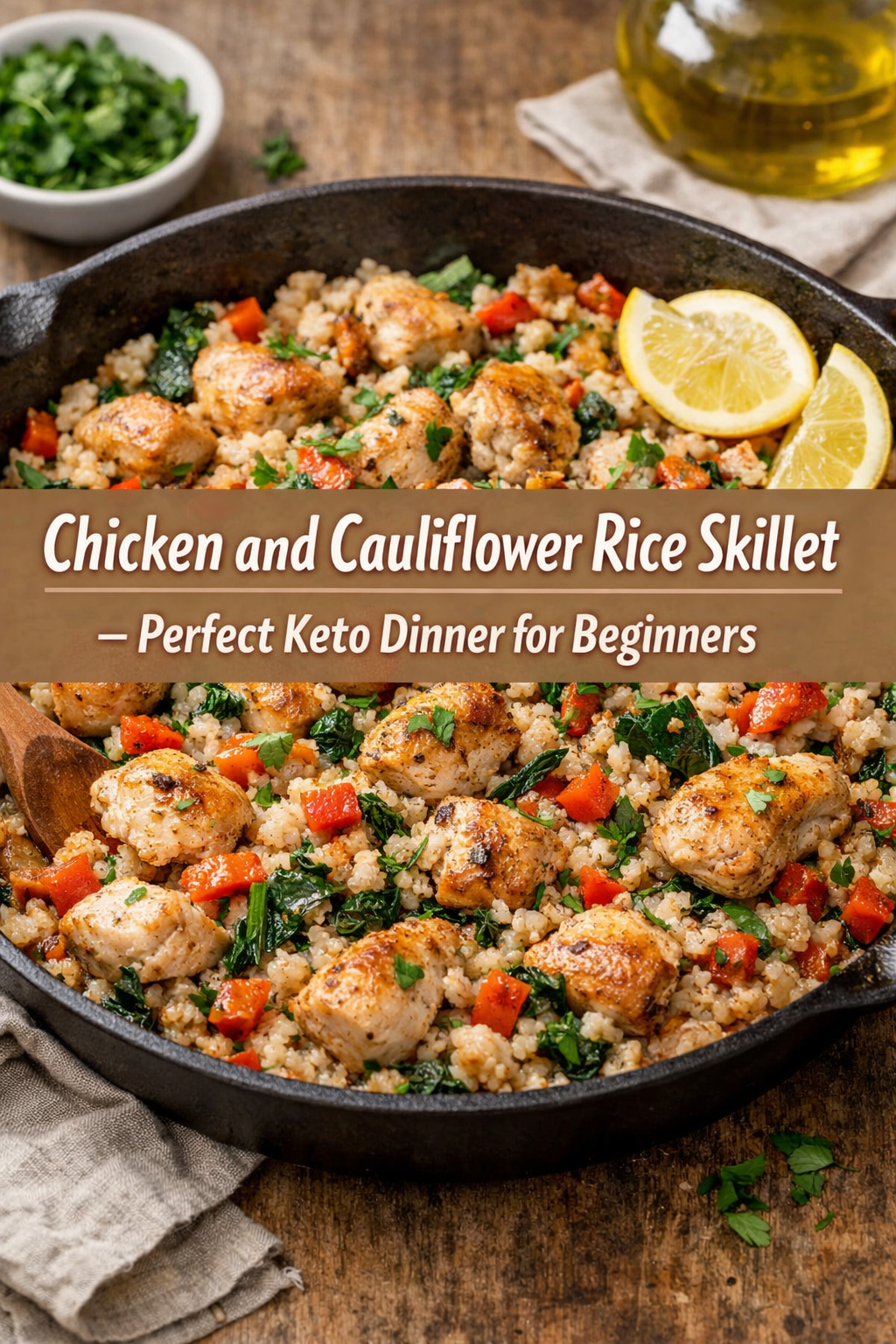
Chicken and Cauliflower Rice Skillet

Chicken and Cauliflower Rice Skillet –Perfect Keto Dinner For Beginners

The outside weather is frigid, your stomach is making dramatic protest noises, and the idea of a large pizza delivery sounds dangerously reasonable. It happens. Especially on those long winter evenings when it’s dark before dinner and motivation feels optional.

I found myself in that exact situation on a Tuesday night — cold, tired, and hovering near the fridge like it might magically solve dinner for me. For a moment, I genuinely considered eating half a block of cheese and calling it “keto creativity.”

Instead, I made this Chicken and Cauliflower Rice Skillet.

It wasn’t glamorous. It wasn’t complicated. But it was warm, filling, and exactly what I needed. And that’s why it has stayed in rotation.

If you’re building a list of Easy Keto Dinner Recipes For Beginners, this one deserves a permanent spot. It’s practical. It uses everyday ingredients. And you only wash one pan.

That last part matters more than we admit.

Why This Recipe Works

Most winter comfort meals lean heavily on carbs. Big bowls of pasta. Rice. Bread. They taste great — and then you feel like you need a three-hour nap.

This skillet gives you that same cozy, “hug in a bowl” feeling without the starch crash.

The key isn’t magic. It’s layering.

Cauliflower rice acts like a flavor sponge. On its own, yes — it can taste like damp cardboard. I won’t pretend otherwise. But once it absorbs browned chicken juices, garlic, and spices, it transforms.

It doesn’t need to be the star. It just needs to carry the flavor.

Why this skillet holds up:

One-Pan Cooking: Chicken, vegetables, and cauliflower all cook in the same skillet.

Fast: About 30 minutes from start to finish, even if you chop slowly.

Low Carb: No blood sugar rollercoaster at 9:00 PM.

Flexible: You can adjust spices or vegetables based on what’s in your fridge.

A lot of keto meals fall flat because they’re under-seasoned or too lean. Fat carries flavor. Browning builds depth. When both are present, the meal feels complete instead of “diet.”

Ingredients Required

You don’t need anything fancy here. This is standard grocery store territory.

The Chicken

I recommend chicken thighs. They have more fat, which means more flavor and more margin for error. They’re also harder to dry out.

If you prefer chicken breast, that’s fine — just keep an eye on it. About 1.5 pounds, cut into bite-sized pieces, works well.

The Cauliflower Rice

You have two choices:

Buy it pre-riced.

Pulse a whole head in your food processor.

I usually buy the bag. I’ve cleaned enough cauliflower confetti off countertops in my lifetime.

Fresh or frozen both work. If frozen, just give it extra time to cook off moisture. Water is the main enemy here.

The Flavor Base

1 small onion, diced

2–3 cloves garlic, minced

1 bell pepper, chopped

2 tablespoons butter or avocado oil

1 teaspoon smoked paprika

½ teaspoon cumin

Salt and pepper to taste

Fresh lime (optional but highly recommended)

The lime isn’t mandatory, but that small squeeze at the end brightens everything. Without it, the dish is good. With it, it wakes up.

Step-by-Step Instructions

Grab your largest skillet. Cast iron is great, but any wide pan works. Surface area matters more than material.

  1. The Sear

Heat your oil or butter over medium-high heat.

Season the chicken before it hits the pan. Salt, pepper, smoked paprika, cumin — let the spices bloom in the fat.

Add the chicken in a single layer and resist the urge to stir immediately. It needs contact with the pan to brown properly.

Cook about 5–6 minutes, turning occasionally until mostly cooked through and golden.

Remove it from the pan and set aside. Don’t worry if it’s not fully done — it’ll finish later.

  1. Sauté the Vegetables

Lower the heat slightly.

Add onions and bell peppers to the same pan. Let them soften and scrape up the browned bits left behind by the chicken. That’s concentrated flavor.

Add garlic last. Garlic burns quickly, so give it 30–60 seconds — just until fragrant.

If it smells amazing at this point, you’re on track.

  1. Toast the Cauliflower Rice

Add the cauliflower rice directly to the skillet.

Here’s where many people go wrong: they stir constantly.

Instead, spread it out and let it sit for a minute or two. Let it toast slightly before stirring. That contact with heat prevents sogginess and adds subtle texture.

Continue cooking until tender but not mushy. If using frozen cauliflower, expect extra steam. Keep the lid off. Let the moisture escape.

You’ll know it’s ready when it looks less wet and more “rice-like.”

  1. Bring It Together

Return the chicken — and any accumulated juices — back into the skillet.

Stir everything together and cook for another 2–3 minutes so flavors combine.

Taste and adjust salt if needed.

Turn off the heat and squeeze fresh lime over the top if using.

Let it sit for a minute before serving. It thickens slightly as it rests.

Common Beginner Mistakes

This recipe is simple, but there are a few traps worth avoiding.

The Soggy Rice Problem

Cauliflower holds water. If you cover the pan, you trap steam and create mush.

Keep the lid off. Always.

Under-Seasoned Chicken

Seasoning only at the end won’t penetrate the meat. Season before cooking so spices bloom in the hot oil.

Using a Small Pan

A crowded pan creates steam. Steam prevents browning. Browning builds flavor.

If things look packed tightly, consider cooking in batches.

Restaurant stir-fries taste better largely because they use high heat and wide pans. That’s not a secret technique — it’s physics.

Customizing This Skillet

One of the strengths of this Chicken and Cauliflower Rice Skillet is how adaptable it is.

Mediterranean Style

Swap smoked paprika for oregano and add lemon zest. Stir in olives and feta at the end.

It shifts the entire flavor profile without changing the structure.

Buffalo Version

Mix melted butter with hot sauce and toss it with the chicken before returning it to the pan. Add blue cheese crumbles and celery slices.

It becomes comfort food with a little edge.

Creamy Mushroom Version

Sauté sliced mushrooms with the onions. At the end, add a splash of heavy cream and grated parmesan.

It turns into something closer to a keto risotto — richer, heavier, very winter-friendly.

Storage and Reheating

This dish holds up well.

Fridge: Store in an airtight container for up to 4 days.

Freezer: Not ideal. Cauliflower changes texture after freezing.

Reheat: Best in a skillet over medium heat for 3–5 minutes. Add a teaspoon of butter or water if needed.

Interestingly, the flavors deepen slightly overnight. It’s one of those meals that tastes even more cohesive the next day.

FAQs

Can I use beef or shrimp instead?

Yes. Shrimp cook quickly, so add them at the end. For beef, flank steak or ground beef work well. If using ground beef, you can cook the cauliflower directly in the rendered fat.

Is cauliflower rice actually healthy?

Yes. It’s lower in carbs than traditional rice and contains fiber, Vitamin C, and Vitamin K. It allows for volume without the carb load.

Why does cauliflower sometimes smell strong?

It’s a cruciferous vegetable, similar to broccoli or cabbage. Sulfur compounds can produce a strong scent, especially if it sits too long in the fridge. Freshness matters.

How can I make it more filling?

Add avocado slices, extra olive oil, or chopped nuts for additional fat and calories.

The Budget Reality

Keto doesn’t have to mean expensive.

Chicken thighs and cauliflower are typically among the more affordable options in the meat and produce sections.

Buying spices in bulk helps reduce cost long-term. And purchasing larger packs of chicken to portion and freeze makes weeknight decisions easier.

When dinner is already prepped, takeout becomes less tempting.

Final Thoughts

This Chicken and Cauliflower Rice Skillet isn’t flashy. It’s steady.

It’s the kind of meal you make when you want something warm, satisfying, and uncomplicated. It doesn’t require rare ingredients or advanced technique. Just a skillet and moderate attention.

Winter evenings feel long. Having reliable Easy Keto Dinner Recipes For Beginners makes staying consistent much easier.

This one is a dependable fallback — especially on nights when ordering pizza feels very persuasive.

Grab a pan. Brown the chicken properly. Let the cauliflower toast instead of steam.

Dinner doesn’t need to be dramatic.

It just needs to work.

Skillet Chicken in Creamy Dijon Sauce 

Skillet Chicken in Creamy Dijon Sauce 

Some nights I want dinner to feel a little grown-up, even if I’m still cooking in socks and half-listening to something in the background. That’s usually when Skillet Chicken in Creamy Dijon Sauce shows up. Not because I planned it in advance, but because mustard, cream, and chicken are all things I tend to keep around. It usually starts as “let’s just cook the chicken” and slowly turns into something more intentional.

This is one of those meals that feels richer than the effort it asks for, which I don’t take for granted anymore.

Why this dish keeps working

First, it’s a single-skillet situation. That alone puts it high on my list. Everything happens in layers, in the same pan, and nothing feels rushed if you let it unfold the way it wants to.

Second, Dijon does a lot without taking over. It adds depth, but it doesn’t announce itself loudly. I like that. I’ve had mustard dishes that felt like a dare. This isn’t that.

And it adapts. I’ve made this on quiet weeknights and for people sitting at my table. The dish doesn’t really care which one it is.

Ingredients, as I actually decide on them

Chicken first. I reach for boneless, skinless thighs most of the time. They’re forgiving and don’t dry out easily if the sauce simmers longer than planned. Breasts are fine too. I just stay closer to the stove when I use them.

Dijon mustard matters, but not in a precious way. I use whatever jar is already open. Smooth Dijon melts right into the sauce. Grainy gives little pops of texture. I’ve mixed them before without realizing it until later.

Cream is what pushes this into comfort territory. Heavy cream is my usual choice. I’ve used half-and-half when that’s what I had, though the sauce ends up looser. Not bad. Just different.

Onion or shallot, depending on what’s in the drawer. Garlic if I remember before the pan is already hot. Butter and olive oil together, usually. Salt, pepper, and sometimes thyme. That’s about it.

Cooking the chicken (and not overthinking it)

I pat the chicken dry. I skipped this step for years and then kept wondering why browning felt unpredictable. Turns out it was mostly my fault.

Salt and pepper go on both sides. I keep it simple here because the sauce brings plenty later.

The skillet goes over medium-high heat. Oil first, then a little butter once it’s hot. The chicken goes in and I make myself leave it alone. This took practice. If it sticks, it’s not ready yet, even if I wish it were.

Once it releases, I flip it. I’m not chasing perfect doneness at this stage. I just want color and a bit of structure.

I pull the chicken out when it’s close, not finished. It rests while I deal with the sauce, which feels like the right rhythm for this dish.

The sauce (where things start to smell right)

I lower the heat slightly and add the onion or shallot to the same pan. There are usually browned bits left behind, and I don’t mess with them much. They sort themselves out.

The onion softens, picks up a little color, and starts to smell sweet. Garlic goes in briefly. If it hits the pan too early, I regret it. Thirty seconds is enough.

Then I add the Dijon. Just a spoonful at first. I stir it around and let it cook for a moment. It smells sharp right away, then settles down. That’s usually when I know it’s ready for the next step.

A splash of stock or even water loosens everything. I scrape the bottom, not aggressively. Just enough to bring the pan back together.

Then the cream. The sauce always looks thinner than I expect at this point. I’ve learned not to panic. It thickens as it sits, almost every time.

Bringing it together (and letting it finish)

The chicken goes back into the skillet, tucked into the sauce. I lower the heat and let it simmer gently.

This part rewards patience more than skill. Too much heat and the sauce tightens. Too little and it takes forever. I look for small bubbles and trust that.

I turn the chicken once or twice so it gets coated. The sauce thickens, clings, and starts looking like something I meant to make.

If it gets too thick, I add a splash of water. If it’s too thin, I wait. Waiting fixes more than I expect.

Mistakes I’ve already made for you

I used to add mustard at the very end. The flavor stayed sharp and a little disconnected. Letting it cook earlier makes everything smoother.

I’ve overheated the sauce and watched it separate. Lower heat solves that. So does stepping away from the stove for a second instead of fiddling.

And I once oversalted early, forgetting mustard already brings salt with it. Now I season lightly up front and adjust later.

Variations I actually return to

Sometimes I add mushrooms after the onions. They soak up the sauce and make the dish feel heavier in a good way.

On warmer days, I use half-and-half and finish with lemon. It’s not the same dish, but it still works.

I’ve added a little grated Parmesan when I wanted extra richness. I’ve also skipped cheese entirely and not missed it.

Fresh herbs at the end are nice if I have them. If I don’t, dried thyme earlier does enough.

What I usually serve it with

Most often, this goes over rice or mashed potatoes. The sauce likes something that can catch it.

Pasta works too, especially short shapes.

Sometimes it’s just bread and a salad. I don’t overthink sides with this one.

Storage and reheating, honestly

Leftovers keep two to three days in the fridge. I use shallow containers so they cool faster.

Reheating works best on the stove over low heat. The microwave is fine if I stop and stir halfway through.

The sauce thickens as it sits. A splash of water or milk brings it back.

Freezing works in theory. I don’t love the texture afterward, so I only do it if I really need to.

FAQs

Can I use chicken breasts?

Yes. Pull them earlier and let them finish gently in the sauce.

What kind of Dijon works best?

Whatever you already like. Smooth or grainy both work.

Can I make it dairy-free?

Coconut cream works, but the flavor shifts. Not bad, just different.

Why did my sauce break?

Too much heat is usually the reason.

Can I add wine?

A splash of white wine before the cream works well.

Is it spicy?

No. Dijon adds tang, not heat.

Can I make it ahead?

Yes. Reheat gently and loosen the sauce if needed.

What pan should I use?

A heavy skillet. Cast iron or stainless both work.

Final thoughts

I keep making Skillet Chicken in Creamy Dijon Sauce because it feels dependable without being boring. It’s the kind of dinner that makes an ordinary evening feel a little more pulled together, even if the day wasn’t.

It doesn’t ask for precision or perfect timing. Just enough attention to notice when it’s ready. Most nights, that’s exactly what I have to give.


Creamy Mushroom And Leek Chicken Thighs

creamy mushroom leek chicken thighs

Creamy Mushroom And  Leek Chicken Thighs for Dinner 

Some nights I don’t want a new idea. I want something that already feels decided before I even touch a pan. That’s usually when mushrooms and leeks end up on the counter without much conversation. Chicken thighs tend to follow. Not because I planned it, but because they’re forgiving and already thawed more often than not.

Creamy mushroom and leek chicken thighs fall into that category of dinners that feel calm while you’re making them. Nothing happens all at once. There’s no frantic timing, no step that punishes you if you answer a text or walk away for a minute. Things soften gradually. Smells build in layers. The pan does most of the work if you let it.

I’ve cooked versions of this more times than I can count. Some were great. A few were just fine. The good ones all had one thing in common, though—patience. Not a heroic amount. Just enough to not rush the parts that don’t like being rushed.

Why this combination keeps working

Mushrooms and leeks are naturally cooperative, which sounds obvious once you’ve cooked them together a few times. Mushrooms bring depth and that almost meaty quality that makes chicken feel more substantial. Leeks add sweetness, but in a quieter, rounder way than onions. Together, they build flavor without demanding attention.

Chicken thighs are the obvious choice here. They stay tender even when timing slips a little, and they don’t dry out while you’re waiting for the sauce to pull itself together. Chicken breasts technically work—I’ve used them—but they don’t relax into the dish the same way. They need more watching, and this isn’t a dish I like to hover over.

The cream doesn’t dominate if you’re careful. It rounds everything off and smooths the edges. It turns what could feel like a pile of separate ingredients into something cohesive, something that eats like a real dinner.

This isn’t flashy food. It doesn’t try to impress. It’s dependable food. And most nights, that matters more.

Ingredients, the way I actually think about them

Chicken thighs, bone-in or boneless. I reach for boneless more often because I’m impatient, but bone-in does give deeper flavor if you don’t mind the extra step.

Mushrooms. Button mushrooms are fine. Cremini are better. I slice some thick, some thin. Perfect uniformity doesn’t buy you much here, and I stopped trying.

Leeks. Just the white and pale green parts. Wash them well. They hide grit in places you wouldn’t expect, and you only forget that once.

Garlic. Not optional. Even when I consider skipping it, I don’t.

Heavy cream. I’ve tried half-and-half. It works, but the sauce ends up thinner than I want. Cream behaves better and gives you more room for error.

Butter or olive oil. Sometimes both, depending on my mood and what’s already on the stove.

Salt and black pepper. Always.

A little chicken stock, just in case the pan needs loosening later.

Fresh thyme if I have it. If I don’t, I don’t stress about it.

Getting the chicken right first

I start with the chicken because it sets the tone for everything else.

Pat the thighs dry and season both sides generously with salt and pepper. I used to under-season at this stage and tell myself I’d fix it later. That rarely worked out the way I hoped.

Heat a skillet over medium heat and add a bit of oil. Lay the chicken in and leave it alone. This is not the moment to multitask or get clever.

Let it brown properly. When it releases easily, flip it. You’re not cooking it through yet. You’re just building flavor and giving the pan something to remember.

Once both sides look good, pull the chicken out and set it aside. The skillet should have browned bits stuck to it. If it doesn’t, something went wrong earlier, but it’s usually salvageable.

Mushrooms first, leeks second (this order matters)

If the skillet looks dry, add a little butter. Then the mushrooms go in.

Don’t crowd them. Mushrooms need space or they steam and sulk instead of browning. Let them sit longer than feels necessary. Stir only when you have a reason.

Once they’ve released their moisture and picked up some color, add the leeks. Lower the heat slightly. Leeks don’t respond well to aggression. They soften on their own schedule.

Stir occasionally and let them turn silky. If they start browning too fast, turn the heat down. Burnt leeks are bitter, and there’s no fixing that after the fact.

Garlic goes in last. Thirty seconds is enough. Any longer and the kitchen tells on you.

Building the sauce without fussing over it

When the vegetables look soft and smell sweet, pour in a small splash of chicken stock. Just enough to loosen the fond from the pan. Scrape gently and let it settle.

Then add the cream. Not all at once if you’re unsure. I usually start with less than I think I need and adjust later.

Bring it to a gentle simmer. Not a boil. Cream gets cranky when rushed, and I’ve learned that the hard way.

Season lightly and taste. This is usually where I pause. If the sauce feels flat, salt fixes it. If it feels heavy, a splash more stock helps. I don’t add cheese here. It doesn’t need it, and it tends to muddy things.

Bringing the chicken back (and knowing when to stop)

Nestle the chicken thighs back into the sauce and spoon some over the top. Lower the heat and partially cover the skillet.

Let everything simmer until the chicken is cooked through and tender. The sauce will thicken as it goes, even if it doesn’t look like it at first.

Check once or twice. Not constantly. Overhandling makes everything worse.

When the chicken feels done and the sauce coats the back of a spoon, turn off the heat. Let it sit for a few minutes. The sauce tightens slightly as it rests, and the flavors settle into themselves.

That pause matters more than people think.

What this dish actually tastes like

The chicken stays rich and juicy. The mushrooms taste deeper than they did ten minutes earlier. The leeks melt into the sauce instead of announcing themselves.

The cream ties everything together without stealing attention. You taste mushrooms, chicken, and leeks first—not just dairy.

It’s comforting without being heavy-handed. You finish the plate feeling satisfied, not slowed down.

How I usually serve it

Most often, with mashed potatoes. They just make sense here.

Rice works too. Crusty bread works if that’s what you have. I’ve even spooned it over pasta on nights when I didn’t feel like making another decision.

A green vegetable on the side is nice. Not mandatory.

Variations I’ve tried (and would repeat)

For a lighter version, I’ve used less cream and more stock. The sauce is thinner, but still comforting.

I’ve added a splash of white wine when deglazing. It adds brightness if you like that direction.

Thyme is my favorite herb here, but parsley works in a pinch. I avoid rosemary in this one. It overpowers the leeks more often than not.

I don’t add cheese. Ever. I’ve tried it. I didn’t like what it did.

Storage, leftovers, and reality

This keeps well in the fridge for two to three days.

Reheat gently over low heat, stirring occasionally. If the sauce tightens too much, add a splash of stock or water and let it loosen slowly.

It tastes even better the next day. The mushrooms deepen, and the leeks disappear into the sauce completely.

I don’t freeze it often. Cream sauces change texture after freezing. It’s edible, but not ideal.

FAQs (answered like a real person)

Can I use chicken breasts instead of thighs?

Yes, but watch them closely and pull them early.

Do I need heavy cream?

It works best. Half-and-half is thinner but usable.

Can I make this dairy-free?

You can try coconut cream, but the flavor changes noticeably.

What mushrooms are best?

Cremini if you have them. Button mushrooms still work.

Can I cook this ahead?

Yes. Reheat gently and stir.

Why are my leeks gritty?

They weren’t washed well enough. It happens once.

Is this good for guests?

Yes. It looks more impressive than the effort suggests.

Can I add cheese?

You can. I wouldn’t.

Final thoughts

Creamy mushroom and leek chicken thighs are the kind of dinner I come back to when I don’t want to think too hard but still want something that feels cared for.

It’s steady. Forgiving. It doesn’t rush you.

And most nights, that’s exactly how cooking should feel.

Creamy Mushroom Skillet (Vegetarian Winter Dinner)

Creamy Mushroom Skillet –simple dinner you would love to cook

There are dinners you plan for, and then there are dinners you fall into because the weather turns sharp and quiet all at once.

This creamy mushroom skillet belongs to the second category. It’s the kind of winter dinner that starts with good intentions — something warm, something simple — and slowly turns into a pan you don’t want to stop hovering over.

I’ve made versions of this more times than I can count, usually when the sun disappears early and the kitchen feels colder than it should. Mushrooms, cream, a little fat, a little patience. That’s really it. But somehow it never tastes exactly the same twice.

Why mushrooms make sense in winter (even if you’re not trying to be virtuous)

I didn’t always cook mushrooms like this. For a long time, they felt like filler — something you added when you weren’t sure what else to do. Winter changed that for me. Mushrooms behave differently when it’s cold outside. Or maybe I just notice more.

They brown slower. They release water when you least expect it. They smell deeper than they look. When you give them space and don’t rush, they turn into something closer to comfort than substitution.

This skillet isn’t pretending to be meatless for moral reasons. It’s just honest about what mushrooms can do when you stop pushing them.

Choosing mushrooms (this is less about rules and more about mood)

I usually grab whatever looks decent that day. Button mushrooms work. Cremini work better. If there are oyster mushrooms that don’t look tired, I’ll grab those too.

What matters more than variety is how dry they feel when you pick them up. If they’re already slick in the store, they won’t behave well later. I learned that the annoying way — by standing over a pan that never browned.

I slice them unevenly on purpose now. Some thick, some thin. It gives the skillet a mix of textures that feels accidental, even though it isn’t.

The pan matters more than the ingredient list

I use the widest skillet I own. Not because it’s fancy, but because crowding ruins this dish faster than almost anything else. Mushrooms piled on top of each other don’t brown — they steam, sulk, and leak.

Butter goes in first. Sometimes olive oil too, depending on how indulgent the day feels. I let it heat longer than I think I should. Long enough that I start wondering if I’ve overdone it.

That hesitation is usually the right moment.

Cooking the mushrooms (and learning when not to interfere)

Once the mushrooms hit the pan, I leave them alone. This took practice. The instinct to stir is strong, especially when nothing seems to be happening.

For a few minutes, it looks like a mistake. Pale mushrooms. Wet patches. No drama. Then, slowly, the edges begin to darken. The pan sounds change. The smell turns nutty instead of raw.

Sometimes I salt early. Sometimes I forget and salt later. Both versions work, which surprised me the first time I noticed.

If the mushrooms release too much liquid, I don’t panic anymore. I let it cook off. Rushing only makes it worse.

Aromatics come second, not first (I learned this backward).

Garlic and shallots come in after the mushrooms have already decided who they want to be. I used to start with them, thinking flavor needed a head start. Instead, they burned while the mushrooms lagged behind.

Now I push the mushrooms aside, drop the garlic into the empty space, and let it warm gently before everything meets again. It smells calmer this way.

A sprig of thyme usually finds its way into the pan, mostly because winter makes me reach for herbs without thinking too hard about it.

Cream is not the star, even though it looks like it is.

I don’t drown the skillet in cream. I pour just enough to coat the mushrooms and then stop. The pan always looks too dry at first. That’s normal.

As it simmers, the cream thickens and picks up color from the pan. If it reduces too far, I add a splash of milk or broth. If it stays thin, I wait longer than feels comfortable.

Waiting fixes more problems than adding things.

Sometimes I grate in a little cheese. Sometimes I don’t. Both versions disappear at the same speed.

Small adjustments that change everything (and nothing).

A pinch of nutmeg can make this feel deliberate.

A squeeze of lemon at the end can make it feel lighter than expected.

Black pepper matters more than salt here, which surprised me the first time.

There are nights when I add spinach at the end, just to watch it collapse into the sauce. Other nights, I don’t want green anywhere near it.

The skillet doesn’t care. It adapts.

What I usually serve it with (and when I don’t bother)

Most often, this ends up over toast. Thick slices, not delicate ones. Something sturdy enough to soak without surrendering.

Sometimes it goes over pasta, though I rarely plan that ahead. If there’s cooked rice in the fridge, that works too. On lazier nights, it’s eaten straight from the pan with a spoon, standing up, the stove still warm.

Those are usually the best versions.

Ingredients

  • 1 lb (450 g) mushrooms (button, cremini, or mix)

  • 1 large leek, white and pale green parts only, washed thoroughly

  • 2–3 garlic cloves, minced

  • 2 tbsp butter (or butter + olive oil mix)

  • 1/4 cup heavy cream

  • 1–2 tbsp chicken or vegetable stock (optional, to loosen pan)

  • Pinch of nutmeg (optional)

  • Salt and black pepper to taste

  • Fresh thyme sprigs or parsley for garnish (optional)

  • Optional: spinach or other greens

Instructions

1. Prep the vegetables
Clean mushrooms and slice unevenly. Trim and wash the leek, slice thinly. Mince garlic.

2. Heat the pan
Add butter (and optional olive oil) to a wide skillet. Let it heat long enough that it hesitates before sizzling.

3. Cook the mushrooms
Add mushrooms in a single layer, leaving space. Don’t stir immediately. Let edges brown slowly. Salt as desired.

4. Add the leeks
Push mushrooms aside. Add leeks to the empty pan space. Lower heat slightly. Stir occasionally until soft and silky.

5. Add aromatics
Drop in garlic and thyme. Stir gently. Cook 30–60 seconds, just until fragrant.

6. Build the sauce
Add a splash of stock to loosen the pan fond. Then add cream gradually. Simmer gently, not boiling. Adjust seasoning with salt, pepper, nutmeg, or a squeeze of lemon.

7. Combine & finish
Mix everything together. Add optional spinach, cook until wilted. Let rest off the heat a few minutes before serving.

8. Serve
Over toast, pasta, rice, or straight from the pan. Garnish if desired.

FAQs

1. Can I make this dairy-free?
Yes, coconut cream works, though the flavor changes slightly. You might also try cashew cream.

2. Can I cook mushrooms ahead?
You can, but it’s best to finish with cream and aromatics fresh. Mushrooms reheat fine gently with a splash of stock.

3. What mushrooms work best?
Cremini are ideal for depth of flavor. Button mushrooms are fine. Oyster mushrooms add a delicate texture. Mix if you like.

Leftovers behave differently (not better, not worse)

The sauce thickens overnight. The mushrooms soften. The whole thing becomes quieter. I reheat it gently, sometimes with a splash of water, sometimes not.

It’s less dramatic the second day, but still comforting. Like a conversation you don’t need to repeat word for word.

When this skillet fails (and what I stopped blaming)

If it tastes flat, it’s usually because I rushed the mushrooms.
If it feels heavy, I added cream too early.
If it looks dull, I didn’t let the pan get hot enough at the start.

I used to blame ingredients. Now I blame timing.

A note I didn’t expect to learn from this dish

This creamy mushroom skillet taught me that winter cooking isn’t about richness alone. It’s about letting things take the time they ask for, even when dinner feels late.

Some nights, that’s the whole point.

And when it’s done, I don’t garnish it. I don’t clean the edges of the pan. I just turn off the heat and let it sit for a moment longer than necessary — mostly because it feels like it deserves that pause.

Banana Desserts I Make When They are too Brown to Eat

banana Dessert I make at home

Overripe Banana Desserts: Easy Recipes to Make with Brown Bananas


I don’t know how bananas move from “perfect” to “absolutely not” in about six hours — but they do. One day they’re yellow and cheerful. Next morning they look like they’ve seen things.

For a long time I threw those away. Which now feels slightly tragic, because overripe bananas are basically pre-made dessert sweetener with a built-in flavor boost.

These days, when my bananas go too brown to slice and eat normally, I don’t see failure. I see dessert options.

Not fancy bakery projects. Real kitchen desserts. The kind you make in an old bowl with a fork that bends a little.

Some of these came from good planning. Most came from me refusing to waste food on a tired evening.

Here’s what I actually make — repeatedly — when the bananas cross that line.

First — The Brown Banana Rule I Learned the Hard Way

If the banana smells fermented, it’s gone. No heroics.

But if it’s:

very spotted

soft

dark yellow to brown

sweet-smelling

It’s dessert-ready.

In fact, the uglier ones often make better banana desserts because you need less added sugar. They’re already halfway to caramel in spirit.

I used to ignore that and dump sugar in anyway. Results were… loud. Now I taste the mash first.

My Default Rescue: One-Bowl Banana Snack Cake

This is the thing I make most often because it’s hard to mess up and easy to scale.

Two or three very ripe bananas. Mashed roughly — not perfectly smooth. I like a few small lumps.

Add:

egg

oil or melted butter

brown sugar (not much — the bananas carry a lot)

flour

pinch of salt

cinnamon

baking powder

Stir like you’re not trying to impress anyone. Pour into a small pan.

It bakes into a soft, slightly dense cake that sits somewhere between banana bread and dessert. I rarely frost it. Sometimes I dust powdered sugar. Sometimes I don’t bother.

Best eaten slightly warm, standing at the counter the first time. That’s tradition now.

The 10-Minute Banana Pan Dessert

This one happened by accident when I didn’t want to turn the oven on.

Slice overripe bananas into a pan with a little butter. Cook them slowly. They soften, darken, and go glossy.

Add cinnamon and a small spoon of sugar. Let it bubble a bit.

Spoon over:

toast

pancakes

yogurt

vanilla ice cream

leftover cake (yes, really)

It tastes like the inside of a pie without making a pie. Which is my favorite category of dessert.

 Banana Oat Cookies (The Lazy Batch Version)

Not the fitness-cookie kind. The actually-good kind.

Mashed banana + oats + peanut butter + salt + chocolate chips.

That’s the base. Sometimes I add vanilla. Sometimes chopped nuts. Depends what’s open.

Drop rough mounds on a tray and bake.

They come out soft and chewy — not crisp — and they keep well. Good for late-night dessert without committing to cake.

Important: salt matters here. Without salt they taste flat and oddly serious.

Brown Banana Mug Cake (My Emergency Dessert)

This is for when:

the bananas are dying —

I want dessert

energy level is near zero

Mash half a banana in a mug. Add flour, sugar, cocoa, oil, pinch salt, splash milk. Stir badly. Microwave.

It comes out uneven. One side higher than the other. I consider that part of the charm.

Sometimes I push chocolate chips into the center before cooking so there’s a melted pocket. That was a good discovery day.

Freezer Banana Ice Cream — But Fixed

Everyone talks about frozen banana “nice cream.” Most versions taste like cold banana paste. Let’s be honest.

Here’s how I make it actually dessert-like:

Freeze banana slices. Blend with:

peanut butter or almond butter

cocoa powder or vanilla

pinch salt

tiny drizzle honey

The fat + salt change everything. Texture improves too.

Still banana-forward — but now it feels intentional, not like a substitute assignment.

Best eaten right away. It does not age gracefully.

Banana Bread — But Smaller and Better

Full banana bread loaves are dangerous because they linger.

I make mine in:

loaf halves

mini pans

muffin tins

Same batter, smaller formats. Faster bake. Built-in portions.

I also swirl something into the batter now — peanut butter, Nutella, cinnamon sugar — instead of keeping it plain. Plain banana bread gets ignored after day two. Swirled banana bread disappears.

The Banana Crumble Bowl

This is my “I want dessert but not baking” move.

Mashed banana in a small baking dish. Sprinkle oats, brown sugar, butter, cinnamon, salt on top. Bake until bubbling.

It becomes a soft-bottom, crisp-top dessert bowl.

Eat warm with a spoon. Add cream or yogurt if you want. Or not.

Feels bigger than the effort involved, which is my favorite ratio.

Banana Pancake Dessert Stack

Leftover pancakes + brown bananas = dessert stack.

Warm pancakes. Add mashed banana mixed with honey and cinnamon. Layer. Add nuts or chocolate chips.

Cut like cake. Eat with a fork.

It sounds silly. It works every time.

 When I Add Chocolate — and When I Don’t

Banana + chocolate is popular, but I don’t always use it.

Chocolate makes banana desserts richer but also heavier. If it’s late at night, I sometimes skip it and go cinnamon-forward instead.

Daytime banana desserts → chocolate okay

Late banana desserts → spice better

I didn’t plan this rule. It formed itself.

The Texture Choice That Changed My Results

I stopped over-mashing bananas.

Slight texture — tiny soft bits — makes desserts feel more natural and less processed. Smooth banana batter tastes more uniform but also more forgettable.

Rustic wins here.

Also — fork mash beats blender mash for most banana desserts. Less cleanup, better texture.

My Brown Banana Storage Habit Now

I freeze peeled bananas when they cross the line.

Not neatly. Just peeled and thrown into a container. Future me never complains about past me doing this.

Frozen bananas are perfect for:

smoothies

banana ice cream

blended batters

quick breads

Zero waste, instant dessert base.

The Smell Factor Nobody Mentions

Overripe bananas smell stronger when baked — in a good way.

Banana desserts make the kitchen smell warm and sweet fast. Faster than cookies, honestly.

That smell alone increases how satisfying the dessert feels. Which probably explains why I make them so often when I’m tired.

Scent counts as an ingredient. I stand by that.

 When Banana Desserts Fail (Because It Happens)

Let me save you a few mistakes I made repeatedly:

Too many bananas → wet, heavy center

Too little salt → dull sweetness

Too hot oven → burned outside, raw middle

No spice → flat flavor

Too much sugar → sticky texture

Balance matters more with banana desserts because the fruit brings both sugar and moisture already.

Why I Like Banana Desserts More Than I Expected

They’re forgiving.

They don’t demand precision. They don’t collapse dramatically if you eyeball measurements. They accept substitutions without attitude.

Also — they make me feel resourceful instead of wasteful. That adds a small, quiet satisfaction layer I didn’t expect to care about — but I do.

FAQ — Brown Banana Dessert Questions

How brown is too brown for banana desserts?

If it smells alcoholic or sour, toss it. Dark and soft is good. Bad smell is not.

Can I reduce sugar in banana desserts?

Yes — often by a lot. Taste the mash first. Very ripe bananas are already sweet.

Do frozen bananas work the same?   

For blended or baked desserts, yes. For sliced uses, not really — texture changes.

Best spice with banana besides cinnamon?

Nutmeg and cardamom both work surprisingly well. Use lightly.

Can I make banana desserts without eggs?

Usually yes — banana itself helps bind. Texture will be slightly softer.

Do banana desserts keep well?

Most keep 3–4 days covered. Banana breads and cakes freeze well too.

Apple Cake You Would Love to Bake at Home

Apple Cake You Would Love to Bake at Home–the delicious bites you would never forget!


Let us talk about Apple cake you would love to bake at home! Okay, let me start by saying, there’s just something about it. Not the kind from a fancy bakery, all shiny and perfect, no. I mean the kind you bake at home, maybe a little batter dripped on the counter, the smell of baked apples filling the kitchen, making you sneak a tiny bite before it’s even cooled. That kind. That’s the one I love.

I’ve baked a lot of apple cakes over the years. Some were dry. Some too sweet. Some were basically bread with apples glued in. And then a few were really good — soft, tender, and moist, with apples that actually shine through. I think I’ve finally landed on a version that works almost every time. Mostly. Sometimes I tweak things depending on the apples I have, or how lazy I feel, or whether I want a little extra cinnamon in there.


Apples — Or How Not to Mess Up

First things first, starting with apples. I usually grab two kinds — tart Granny Smith, sometimes Honeycrisp if I feel fancy. Honestly, you can use whatever’s in your fridge. Just don’t pick the mushy ones… they make the cake too wet. I’ve done it before. Disaster. Dense, heavy, slightly soggy… not fun.

Peel or not? I used to peel everything. Now, sometimes I leave the skins on. Rustic, yes, but kind of pretty and adds texture. Tiny bits left behind? Fine. Cake’s still good. Humans mess up. Cake doesn’t care. I once had a tiny piece of peel sneak into the batter… and honestly, I didn’t notice until the first bite. Didn’t ruin it. Maybe added a little character.

I also like to think about the apple’s smell. Sweet, bright, slightly tangy. Smell them before you cut them. Seriously, it makes a difference in how excited you get to bake. I sometimes just sniff them for a minute… maybe that’s weird, but whatever.

Butter, Sugar, and My Little Debates

Butter, salted. Always. Oil is okay, but butter feels cozy. Brown sugar mostly, sometimes half white if I’m feeling experimental. Makes the flavor warmer, deeper… like the apples themselves.

I sometimes argue with myself about sugar. Should I use a little less? More? Sometimes I taste the batter before baking — yes, raw, don’t judge — to see if it’s sweet enough. Once I added a little extra cinnamon sugar on top at the last minute… that was a happy accident.

Creaming — Or Me Being Impatient

Mix butter and sugar until it’s light, fluffy… kind of airy. Scrape the bowl once or twice. Sometimes I don’t, and it’s… okay. But it’s better if you do. Five minutes seems forever, yes, but trust me, it makes a difference.

Sometimes I get impatient. I start mixing too fast, thinking, “meh, it’ll work.” Usually it does, but that fluffiness really does help the cake rise a bit better. And honestly, scraping the bowl feels like a mini victory in the middle of baking chaos.

Eggs — Slowly, Don’t Panic

Add eggs one at a time. Some people toss them in all at once. I’ve tried it. Works sometimes, sometimes not. Room temp eggs blend smoother, but cold eggs? Fine, just mix a bit longer. I debate this every time, honestly. Probably doesn’t matter, but I like to think it does.

And sometimes I get distracted mid-beat. Look at my phone, check the oven (even though it’s not on yet), glance at the counter… then realize I haven’t added the last egg. Humans, right? Cake forgives.

Flour, Spices, and Folding

Flour, baking powder, pinch of salt… sift if you want, skip if lazy. Fold gently. Don’t overthink. Overmixing = tough cake.

Spices — cinnamon, maybe a touch of nutmeg. Sometimes I even add a hint of cloves if I’m feeling bold. Apples are the star; spices are the backup singers. I sometimes sprinkle a bit more on top before baking. Gives little bursts of warmth in each bite.

Apples Meet Batter — The Fun (or Messy) Part

Cube, slice, or grate the apples. Cubes = soft bites, slices = texture, grated = moist. Toss them in with a pinch of cinnamon or sugar sometimes… sometimes not. Mood-dependent. Fold them in… gently, or sort of gently. I’ve overmixed before. Cake still tasted fine.

Sometimes I get distracted here too. I start tasting a piece of apple, then realize I haven’t added half the flour yet. Whoops. Still works. Kitchen chaos is part of the process.

Baking — The Waiting Game

Butter the pan. Maybe line with parchment. Oven at 175°C (350°F), middle rack. Smaller cake? Peek at 25 minutes. Loaf? 40–45. Poke with a skewer… wet batter = bad. Crumbs sticking = good.

I pace. Peek too often. Knock on the oven… like that helps. Smell fills the kitchen — butter, apples, sugar… half the fun is just standing there, imagining everyone fighting for the first slice. Sometimes I even do a little dance, celebrating in advance. Don’t judge.

Cooling and Toppings

Cool 10–15 minutes, then wire rack. Don’t slice yet… patience.

Topping? Optional. Powdered sugar, glaze, cinnamon sugar, apple slices… sometimes I do it, sometimes I don’t. Depends if I’m feeling fancy. Honestly, both ways work. I once added thin apple slices on top and they caramelized beautifully… looked fancy, tasted even better.

Serving and Storage

Room temp is fine. Actually, sometimes it tastes better the next day — flavors meld, cake softens a bit. Leftovers? Wrap, freeze, thaw overnight. Warm lightly if you want. You might eat half before it even makes it to storage… not that I’d do that.

I sometimes cut tiny slices and eat them with tea while the cake is still slightly warm. Pure bliss.

Mistakes I’ve Made

Dense cake = overmixing, old baking powder

Soggy bottom = didn’t grease pan well

Too sweet / bland = wrong apple choice, mix tart + sweet

Spices overpowering = less cinnamon next time

Honestly, baking is forgiving. Mistakes happen. Cake still tastes amazing.

Optional Variations

Sometimes I add walnuts, sometimes raisins. Occasionally a swirl of caramel or a drizzle of honey. Sometimes I skip everything extra. Depends on mood, honestly. It’s nice to experiment a little, see what works, and sometimes fail spectacularly… but cake is forgiving.

Why This Cake Feels Like Home

There’s a little ritual here — peeling, chopping, scraping bowls, pacing, tasting batter too often. First slice, uneven edges, maybe a little caramelized apple sticking out… perfect, because it’s yours. Not perfect, but real. Warm, cozy, forgiving.

You don’t need perfect layers, frosting, or presentation. Just butter, apples, sugar, patience… and maybe a little extra taste-testing along the way. Definitely a little extra taste-testing.

So, if you want an apple cake you’ll actually love baking at home… this is it. Slightly messy, forgiving, delicious… really just a little slice of happiness in every bite.

Skillet Peach Cake: It smells like late afternoon Summer! 

Skillet Peach cake--Top summer Delight

Skillet Peach cake: The way it is created in the kitchen

Alright. Let us talk about skillet peach cake.

This one feels different already.

Peaches don’t behave like apples. They collapse faster. They go from firm to almost syrupy in what feels like ten minutes. And when you cook them in a skillet, something happens at the bottom — the sugars caramelize just enough to make you feel like you did something clever, even if you didn’t.

Skillet peach cake is not dramatic. It’s soft. It leans slightly rustic. It smells like late afternoon in summer when the light turns warmer and everything feels slower.

And I’ve made it enough times now to know exactly where it can go wrong.

So let’s do this properly. Slightly messy. Still readable. The way it actually happens in my kitchen.

Skillet Peach Cake (The Soft Summer One That Never Lasts Long)

I don’t wait for perfectly firm peaches for this.

In fact, I prefer the ones that are almost too soft. The ones you bought with good intentions and then forgot about for two days. Those are ideal.

If they’re rock hard, they don’t melt into the cake. If they’re too far gone, you’ll know. There’s a line. You learn it.

I slice them thick. Not paper thin. I like visible fruit in cake.

Sometimes I peel them. Sometimes I don’t. The skin softens during cooking. If it bothers you, peel. If not, leave it. I’ve done both. No complaints either way.

First: The Peach Base

Before batter even enters the picture, I warm the skillet.

About 325°F. Not higher.

Add a small knob of butter. Let it melt slowly, not brown aggressively. Sprinkle a little brown sugar directly into the skillet — maybe two or three spoonfuls. Not measured precisely. Just enough to coat the bottom lightly.

Then the peach slices go in.

They sizzle quietly. Not loudly. If they’re loud, your heat is too high.

I let them cook for maybe five minutes. They release juice. The sugar melts into syrup. The peaches soften slightly but still hold shape.

At this point, your kitchen smells like caramel and fruit. It’s distracting.

Turn the heat down just a little before adding the batter. This helps prevent over-browning underneath.

The Batter (Simple and Soft)

I keep this cake base straightforward.

Butter and sugar creamed together. Not whipped into oblivion. Just lightened.

One or two eggs, depending on size.

A splash of vanilla.

Flour. Baking powder. Salt.

And a little milk to loosen everything.

The batter should be thick but spoonable. Not runny. Not stiff like cookie dough. Somewhere in between. If it feels too tight, I add a tablespoon of milk. If it’s too loose, a spoon of flour.

I don’t overmix. Once the flour disappears, I stop. Overmixed peach cake becomes slightly rubbery, and that’s disappointing.

Pouring Over Peaches (Trust the Process)

Spoon the batter gently over the warm peaches.

It will look uneven. That’s normal. I use the back of the spoon to nudge it toward the edges. Some peaches will peek through. Leave them.

Put the lid on.

This is where skillet baking feels different from oven baking. The heat comes from below and around the sides, so the bottom caramelizes first. The top cooks more gently under the lid.

After about 12–15 minutes, I crack the lid slightly so steam escapes. Otherwise the top stays too pale.

Total cook time? Usually around 25–35 minutes.

I check by gently pressing the center. It should spring back. Or insert a knife — it should come out mostly clean. A few moist crumbs are fine.

If the bottom smells too deeply caramelized, lower the heat immediately and give the top more time. Electric skillets can run hot without warning.

Mine does. I don’t fully trust it.

The Flip (Optional, Slightly Dramatic)

Sometimes I flip the cake onto a plate so the peaches end up on top like a rustic upside-down cake.

Sometimes I don’t.

If you flip, let it cool for at least 10 minutes first. Loosen the edges with a spatula. Place a large plate over the skillet. Take a breath. Flip confidently.

If a peach sticks, just press it back on top. No one needs to know.

If you don’t flip, just serve straight from the skillet. Spoon it warm. It’s less theatrical but equally good.

Texture Notes (Because This Matters)

The bottom should be slightly caramelized but not hard.

The cake should be soft and tender, not dense.

The peaches should feel almost jammy but still identifiable as slices.

If the cake feels dry, you probably overcooked it. Lower heat next time and check earlier.

If the center sinks slightly after cooling, it might have needed a few more minutes — but honestly, warm cake with ice cream hides small flaws.

What Makes This Different From Oven Peach Cake

The skillet gives you deeper caramelization underneath.

It also keeps the cake slightly more moist because of the trapped heat under the lid.

And — this matters in summer — you don’t have to heat the entire kitchen.

Peach season already comes with warm weather. Turning on a full oven feels aggressive.

The skillet feels manageable.

Small Variations I’ve Tried

A pinch of cinnamon in the batter.

A splash of almond extract instead of vanilla.

A handful of raspberries scattered among the peaches.

Coarse sugar sprinkled on top before cooking for slight crunch.

All worked. None required.

Peach and butter do most of the heavy lifting here.

When I Make This

Late afternoon. When peaches are soft and the light is golden.

It feels like a dessert that doesn’t demand a celebration but quietly becomes one.

Serve it warm. With vanilla ice cream if you have it. Or just as it is.

There’s something about the softness of peach cake that makes people go quiet for a moment while eating.

Then someone always asks for another slice.

And that’s usually the end of it.

10 Quick Dessert Recipes With Pantry Ingredients

chocolate cornflake clusters

10 Quick Dessert Recipes With Pantry Ingredients (When the Good Stuff Is Already in the Cupboard)

Are you looking for 10 quick Dessert recipes with pantry ingredients? There’s a certain kind of confidence that comes from making dessert without going to the store. Not the chef kind — the survival kind.

These are the days when the weather is wrong, the clock is loud, or guests are “almost there,” and all you have is a cupboard with oats, cocoa, sugar, a half packet of biscuits, and something that might be peanut butter if you stir it enough.

Most of my dependable sweets came from exactly that situation — quick dessert recipes with pantry ingredients — built from what was already there, not what a recipe demanded.

No dramatic techniques. No specialty items. Just bowls, spoons, and practical decisions made in real time.

Let’s open the cupboard and see what actually works.

1. Chocolate Oat Pan Bars (The Stir-and-Press Classic)

This one starts in a saucepan and ends in the fridge.

Butter, sugar, cocoa, a splash of milk — heat until glossy. Add oats and stir until it thickens into something that feels halfway between porridge and fudge. First time I made it, I thought I’d gone too far. Turns out that thickness is the structure.

Press into a tray. Chill. Cut.

They come out slightly chewy, slightly fudgy, never perfectly straight-edged. Excellent pantry staple dessert bars because oats and cocoa are almost always around.

Cut small. They’re richer than they look.

2️⃣ Biscuit Truffle Bites (No Oven, No Drama)

Crushed biscuits + condensed milk + cocoa. Mix, roll, coat.

The mixture usually feels too crumbly for the first 30 seconds and then suddenly turns workable. I don’t question it anymore — I just keep mixing.

Roll in:

  • coconut
  • powdered sugar
  • cocoa

They look like you planned them. You didn’t. That’s fine.

Reliable no bake desserts from pantry ingredients with almost zero measuring precision required.

3️⃣ Peanut Butter Sugar Fudge Squares


Peanut butter and powdered sugar are a dangerous combination — they set fast and disappear faster.

Warm peanut butter slightly so it loosens. Stir in powdered sugar until thick. Press into a lined container. Chill and slice.

The first time I skipped lining the container and had to excavate it with a spoon. Now I line everything. Learned behavior.

Texture: soft fudge, slightly sandy, deeply satisfying. A true 2-ingredient pantry dessert if you ignore the salt pinch I always add.

4️⃣ Chocolate Cornflake Clusters

Melt chocolate. Stir in cornflakes. Spoon onto tray.

That’s the full blueprint.

The only real decision is ratio. Too much chocolate = heavy lumps. Enough flakes = crunchy, jagged clusters that look bakery-made.

The sound when you stir is half the pleasure — crackle and scrape.

Perfect quick chocolate desserts with pantry ingredients because cereal keeps forever and chocolate usually hides somewhere in the house.

5️⃣ Microwave Cocoa Mug Cake

This is the dessert equivalent of a quick note instead of a letter.

Flour, sugar, cocoa, baking powder, milk, oil — stirred directly in a mug. Microwave just until set. Not fully firm — that leads to dryness. I stop when the top looks barely done.

Every microwave lies slightly. Yours will too. Watch, don’t trust the seconds.

Best served warm with:

  • sugar dusting
  • chocolate chips
  • a spoon of peanut butter melting on top

A dependable 5 minute pantry dessert recipe for one or two people without plates or planning.

6️⃣ Sweet Toast Crunch Squares

This one surprised me the first time it worked.

Toast bread. Butter it. Sprinkle sugar and cinnamon. Cut into squares.

Optional upgrade: quick chocolate drizzle.

It eats like a shortcut churro-toast hybrid. Crisp edges, soft middle. Good last-minute dessert from pantry staples when bread is the only obvious base.

Serve warm. Always better warm.

7️⃣ No Bake Cocoa Peanut Oat Balls


Oats + peanut butter + cocoa + honey or sugar syrup. Mix and roll.

If too dry — add a spoon of warm water. If too sticky — more oats. I adjust every single time. It has never been identical twice.

They’re sturdy, portable, and oddly filling. A strong healthy-ish pantry dessert option that doesn’t feel like diet food.

Also — they travel well in paper cups, which I started using after one batch glued itself to a steel plate.

8️⃣ Instant Cocoa Fudge Sauce Over Anything

Cocoa + sugar + water + butter. Boil briefly. Done.

This sauce rescues plain foods:

  • biscuits
  • toast
  • bananas
  • plain cake
  • even plain yogurt

It thickens as it cools — I always forget that and think it failed. It didn’t. It just needed two minutes.

A useful quick pantry dessert sauce when you don’t have time to build something — just upgrade something.

9. Jam Crumb Dessert Cups

️⃣ Crush biscuits. Mix with a little melted butter or peanut butter. Spoon into cups. Add jam on top.

That’s the structure. Chill if possible.

Sweet, crumbly, slightly sticky — like a deconstructed tart that skipped the hard part.

Jam choice changes everything. Sour jams balance better. I learned that after using very sweet mixed fruit jam and needing water afterward.

Great no bake desserts using pantry ingredients that require no cooking at all.

10. Sugar-Roasted Nuts (Dessert Disguised as Snack)

Nuts + sugar + pan heat.

Stir continuously while sugar melts and coats. It clumps, then dries, then turns sandy-crisp around the nuts. The transformation looks wrong midway. Keep going.

I burned one batch because I answered a call. Now I don’t multitask with sugar.

They cool into crunchy, sweet clusters — excellent quick dessert snacks from pantry staples that people keep picking at long after dessert is “over.”

What I’ve Learned About Pantry Desserts (The Non-Theory Version)

Pantry desserts succeed because:

They rely on structure ingredients — oats, sugar, nut butter, chocolate.

They forgive measurement drift.

They scale easily.

They don’t require perfect timing.

They taste familiar and comforting.

Also — they remove the “I should go buy something” delay. Action beats intention when guests are coming.

Most of these started as backup plans. Now they’re repeat recipes.

Casual FAQ — From Real Pantry-Only Attempts

Can pantry desserts really impress guests?

Yes — especially bite-sized ones. Small portions look deliberate.

Most useful pantry dessert staples?

Cocoa powder, oats, biscuits, peanut butter, sugar, condensed milk, cereal.

Best no-oven pantry desserts?

Clusters, truffles, oat bars, peanut butter fudge, jam cups.

Do they store well?

Most keep 3–5 days refrigerated. Nut and oat ones even longer.

Cheesy Beef Skillet with Bell Peppers

Cheesy Beef Skillet with Bell Peppers 

Some dinners happen because you planned ahead.
This isn’t one of those.

Actually—let me rewind that a bit. It usually pretends to be planned. Ground beef thawed because I always keep some around. Bell peppers that looked fine three days ago and now feel like they’re quietly asking for attention. A bag of shredded cheese with maybe one good meal left in it.

So this skillet happens. Not because I decided on it early in the day, but because standing there at six-thirty, it makes sense faster than most other ideas.

Cheesy beef skillet with bell peppers is the kind of meal that shows up when you don’t want to overthink dinner but also don’t want to eat something sad. One pan. Familiar flavors. Nothing that demands precision.

I eat it out of a bowl more often than not. Sometimes straight from the pan. Depends how the day went.

Why this combination keeps working

 Cheesy Beef Skillet with Bell Peppers

Ground beef and bell peppers don’t need convincing. They’ve been paired together long enough that they know how to behave.

The beef brings weight and richness. The peppers soften and sweeten as they cook, especially the red ones. Green peppers stay a little sharper, which I like, but not everyone does. Mixing colors usually lands somewhere in the middle, which feels right for this dish.

The cheese comes in late. That part matters. If you rush it, everything turns heavy. If you wait, it melts just enough to pull the skillet together without taking over.

Nothing here is clever. That’s kind of the point.

Ingredients, the way I actually think about them

Ground beef
I usually grab 80/20. Leaner beef works, but it tastes thinner. Too fatty and you’re babysitting grease. If I have to drain some, I do. I just don’t drain it bone-dry.

Bell peppers
Red, green, yellow—whatever’s in the fridge. I don’t cut them neatly. Uneven pieces cook at slightly different speeds, and I’ve stopped fighting that.

Onion
Optional, but noticeable when it’s missing. I add it unless I genuinely don’t have one.

Garlic
Fresh. I’ve tried shortcuts. They’re never quite the same.

Cheese
Cheddar most of the time. Monterey Jack if I want it milder. Sometimes both. I don’t measure. I stop when it looks like enough, which changes depending on the day.

Oil or butter
Only if the beef is lean and the pan looks dry.

Salt and black pepper, always. Anything else is optional and mood-based.

Start with the beef, and let it behave like beef

Medium heat. Wide skillet. Give it a minute before you add anything.

The beef goes in and gets broken up, but not into crumbs. I let it sit longer than feels natural. Browning matters, and stirring too much kills it. I still catch myself doing that sometimes.

Salt and pepper go in early. Waiting until the end never works as well as I think it will.

Once the beef is mostly browned, I push it to the side. If there’s too much fat, I spoon some off. Not all. Flavor lives there.

Vegetables don’t all go in at once

Onion first, if I’m using it. Let it soften in the beef fat. It should smell sweet, not aggressive.

Then the bell peppers.

They look like too much. They always do. I used to panic at this stage. Now I wait. They release moisture, shrink, and settle down if you give them time.

Garlic goes in last. Thirty seconds. Maybe less. When it smells like garlic instead of raw sharpness, it’s done.

If you walk away here and burn it, the dish never really recovers. Ask me how I know.

Bringing everything together

If the skillet looks tight, I add a splash of water or broth and scrape up whatever’s stuck. That’s flavor, not mess.

Heat goes down.

Cheese goes on top, scattered instead of dumped. I cover the pan briefly to help it melt, then stir gently. This isn’t meant to be saucy. It’s coating, not drowning.

I taste. Adjust salt. Maybe more pepper. Then I stop, even if part of me wants to keep fiddling.

What it actually tastes like

Savory beef. Soft peppers with a little sweetness. Cheese that binds without turning everything into paste.

It’s filling without being exhausting. You finish eating and don’t feel like you need to lie down immediately, which feels like an underrated success.

How it usually gets served around here

Most nights, I eat it on its own.

Sometimes over rice. Sometimes with roasted potatoes. Once, on toast because that’s what was available and I didn’t feel like cooking anything else.

If I’m trying to keep things lighter, I add a simple salad and move on.

This skillet doesn’t need ceremony.

Variations I’ve actually kept

I’ve added mushrooms after the beef and before the peppers. Let them cook down properly or they water everything out.

Spice works if you want it—chili flakes, jalapeño, pepper jack cheese. I keep it mild most of the time.

Mozzarella melts beautifully but doesn’t bring much flavor. I mix it with cheddar if that’s what’s left.

Leftovers with a fried egg the next morning are better than they have any right to be. That wasn’t planned. It just happened once, and now I think about it.

Some questions I get asked, usually mid-conversation

Yes, ground turkey works, but it needs more seasoning.
Green peppers are fine, especially mixed with red.
Skipping cheese turns it into something else—not bad, just different.
Wide, heavy skillets behave better.
Kids usually like it if you don’t add heat.

Storage and reheating, realistically

It keeps two to three days in the fridge.

Reheat gently. Stove is better. Microwave works if you stir halfway through and don’t blast it. Cheese tightens when it gets bullied.

I don’t freeze this often. The texture changes. I’d rather just make it again.

Final thoughts

Cheesy beef skillet with bell peppers stays in my rotation because it doesn’t demand much. It works with what’s already there. It forgives small mistakes. It tastes good even when eaten straight from the pan, standing at the counter.

Some recipes try to impress you.
This one just feeds you.

Most nights, that’s enough.


Cheesy Chicken Skillet with Roasted Veggies: Your New Weeknight Hero

Cheesy Chicken Skillet with Roasted Veggies

Cheesy Chicken Skillet with Roasted Veggies

Cheesy Chicken Skillet with Roasted Veggies

Look, I get it. It’s 5:37 PM. Your stomach is growling like an angry badger, your day was a marathon of meetings or chaos, and the last thing you want to do is perform culinary wizardry for an hour. You’re staring into the fridge, willing it to magically produce something delicious, healthy, and fast. Sound familiar? Yeah, I’ve been there more times than I care to admit.

That’s exactly why I need to talk to you about this Cheesy Chicken Skillet with Roasted Veggies. OMG, it’s a game-changer. This isn’t just a recipe; it’s a strategic life maneuver for busy people who still want to eat like they’ve got their life together. It’s the ultimate easy keto dinner recipe for beginners (or seasoned pros who are just tired), and it all happens in, like, 30 minutes. One pan, minimal fuss, maximum flavor. Let’s get into it.

Why This Skillet is Basically Your Best Friend

We’ve all seen those recipes that promise “one-pan wonders” and then require you to gather seventeen different vegetables and use every bowl in your kitchen. This is not that. This recipe is built on a foundation of beautiful, simple logic.

First, you roast a tray of veggies. While they’re getting all caramelized and fabulous in the oven, you cook your chicken in a skillet on the stovetop. Then, you combine them in a glorious, cheesy union. It’s multitasking that actually works. The clean-up is a dream, the macros are fantastic for a low-carb lifestyle, and the flavor? Off the charts.

Think about it: tender, seasoned chicken, sweet and smoky roasted veggies, all draped in a simple, creamy, melted cheese sauce. It’s comfort food that doesn’t weigh you down. It’s the answer to the question, “What can I make that’s not sad baked chicken and steamed broccoli again?” Ever wondered why restaurant skillet meals feel so special? It’s because everything cooks together and the flavors marry. We’re just doing a home-kitchen hack to get the same result.

Gathering Your A-Team: Ingredients That Work Hard

For the Roasted Veggies:

1 medium zucchini, chopped into half-moons

1 bell pepper (any color), chopped

1 small head of broccoli, cut into florets

1/2 a red onion, sliced

2 tablespoons olive oil

1 teaspoon garlic powder

1 teaspoon smoked paprika (this is the secret weapon, trust me)

Salt and black pepper to taste

For the Cheesy Chicken:

1.5 lbs boneless, skinless chicken breasts or thighs, cut into 1-inch pieces

2 tablespoons olive oil or avocado oil

1 teaspoon onion powder

1 teaspoon dried Italian seasoning

Salt and pepper

1 cup heavy cream (or full-fat coconut milk for dairy-free)

1.5 cups shredded cheese (I use a mix of cheddar and mozzarella for maximum meltiness)

Optional garnish: Fresh parsley or chopped green onions

See? Nothing weird. No obscure powder you’ll use once and then find in the back of your pantry in 2027. Now, about those swaps…

Veggie Swap Ideas: Cauliflower, asparagus, mushrooms, or green beans are all stellar. Just keep the pieces roughly the same size so they roast evenly.

Protein Swap: Pre-cooked shrimp or sliced sausage added at the very end works amazingly.

Dairy Swap: For the cheese sauce, a combo of cream cheese and a little broth can work in a pinch if you’re out of heavy cream.

The point is, don’t stress. This recipe is forgiving. It’s a beginner-friendly keto dinner because it teaches you a method, not just a single, rigid dish.

Let’s Get Cooking: The Foolproof, Two-Step Dance

I promise this isn’t rocket science. If you can chop stuff and turn on your oven, you’ve got this. We’re going to work in two phases, which sounds fancy but is really just smart timing.

Step 1: Unleash the Power of the Oven (The Veggie Phase)

Preheat your oven to 425°F (220°C). This high heat is key for getting those crispy edges we love.

On a large baking sheet, toss your chopped zucchini, bell pepper, broccoli, and onion with the olive oil, garlic powder, smoked paprika, salt, and pepper. Don’t crowd the pan! If the veggies are piled on top of each other, they’ll steam instead of roast. Use two sheets if you need to.

Pop the tray into the oven for 20-25 minutes. You want the veggies tender and slightly charred at the edges. This is where the magic happens—that roasting caramelizes their natural sugars. It’s a flavor bomb.

Step 2: Master the Skillet (The Chicken & Cheese Phase

 (Cheesy Chicken Skillet with Roasted Veggies in the kitchen)

While the veggies are roasting, turn your attention to the stovetop.

In a large skillet (I use a 12-inch cast iron or stainless steel), heat the oil over medium-high heat.

Toss your chicken pieces with the onion powder, Italian seasoning, salt, and pepper. Add them to the hot skillet in a single layer. Resist the urge to constantly stir! Let them sear for 5-7 minutes, turning once, until they’re golden brown and cooked through. This builds flavor. Seriously, just leave them alone.

Once the chicken is cooked, reduce the heat to low. Pour in the heavy cream and let it simmer gently for 2 minutes, scraping up any tasty browned bits from the bottom of the pan. Those bits are pure gold, don’t leave them behind.

Turn off the heat. Stir in the shredded cheese until it’s completely melted and the sauce is gloriously smooth. See? No roux, no complicated bechamel. Just cream and cheese doing their beautiful thing.

The Grand Finale: By now, your veggies should be perfect. Scrape every last one of those smoky, roasted gems directly into your cheesy chicken skillet. Gently fold everything together until it’s one happy, cohesive family of food.

Pro-Tips from Someone Who’s Messed This Up So You Don’t Have To

I’ve made this a hundred times, and I’ve learned a few things the hard way. Let’s call them “character-building kitchen moments.”

Dry Chicken is the Enemy. The number one mistake? Overcooking the chicken. It continues to cook a bit in the hot sauce, so take it off the heat when it’s just cooked through. If you’re nervous, use a meat thermometer—165°F at the thickest part.

Cheese Sauce Won’t Cooperate? If your sauce looks grainy or separates (it happens to the best of us), it’s usually because the heat was too high when you added the cheese. Low and slow is the way to go. A splash more cream and gentle stirring can often bring it back.

Veggie Sogginess. I said it before, but it’s worth repeating: give your veggies space on the pan. This is the single most important rule for roasting. Crowding = steaming = sad, limp veggies.

Season in Layers. Don’t be shy with the salt and pepper. Season your chicken before cooking. Season your veggies before roasting. Taste the final dish and adjust. Building layers of seasoning is what makes food taste professional.

Making It Yours: Beyond the Basic Recipe

The basic version is a solid 10/10. But sometimes you wanna play. Here’s how to level up your easy keto dinner game.

Spicy Version: Add a diced jalapeño to the veggies, and a pinch of cayenne or a dash of hot sauce to the cheese sauce.

“Everything but the Kitchen Sink” Version: Have a handful of spinach that’s about to turn? Stir it into the hot skillet at the very end until it wilts. A few halved cherry tomatoes add a nice pop of acidity.

Ultimate Comfort Version: Crisp up some chopped bacon in the skillet before cooking the chicken. Remove the bacon, cook the chicken in the bacon fat (I know, genius), and use it as a crunchy garnish at the end. You’re welcome.

So, What’s the Verdict? Is This Really the Weeknight Winner?

In a word: absolutely. This Cheesy Chicken Skillet with Roasted Veggies checks every box for a perfect busy-night meal. It’s high in protein, low in carbs, endlessly customizable, and ridiculously tasty. It proves that eating a wholesome, keto-friendly meal doesn’t require a personal chef or a magic wand—just a simple, solid plan.

You get a complete, balanced dinner with barely any dishes to wash. You get to feel like a kitchen hero without the stress. And most importantly, you get to sit down and actually enjoy a delicious meal you made. Isn’t that the whole point?

So next time that 5:37 PM dread hits, skip the takeout menu and the sad salad. Grab your skillet, chop a few veggies, and give this a try. I have a feeling it’s going to become a regular in your rotation, just like it is in mine. Now go on, get cooking. Your future well-fed, less-stressed self will thank you.


Rustic Chicken and Spinach Skillet

Rustic Chicken and Spinach Skillet –Easy Dinner recipe

chicken skillet with spinach

Let’s be real for a second. Most “easy” dinner recipes are a total lie. You open a blog, and suddenly you’re expected to julienne vegetables like a Michelin-star chef while using fourteen different pans. Who has the energy for that after a nine-to-five? Not me, and probably not you either.

I stumbled onto this Rustic Chicken and Spinach Skillet during a week where my fridge looked like a desert and my motivation was even lower. I needed something that didn’t taste like “diet food” but still checked the boxes for my keto goals. Since then, it’s become my absolute go-to for Easy Keto Dinner Recipes For Beginners.

It’s fast, it’s creamy, and it actually tastes like you put effort into your life. Plus, you only have to wash one single pan. If that isn’t a win, I don’t know what is.

Why You Actually Need This Recipe in Your Life

Do you ever feel like keto is just an endless cycle of eggs and bacon? I’ve been there, and it’s a dark, boring place. You need variety, but you also need something that doesn’t require a degree in chemistry to understand the macros.

This skillet meal hits that sweet spot of high fat and moderate protein without the fluff. We use chicken thighs because, honestly, chicken breasts are just sad, dry sponges. The skin gets crispy, the spinach wilts into a luxurious sauce, and the garlic makes your whole house smell like a high-end Italian bistro.

Is it the most photogenic meal in the world? Maybe not. But it’s rustic, soul-warming, and keeps you in ketosis without making you miserable.

The Secret Sauce: Why Thighs Beat Breasts

chicken skillet with spinach

I’m just going to say it: stop buying chicken breasts for your keto meals. I know, I know, the fitness influencers love them, but we’re here for flavor and healthy fats. Chicken thighs stay juicy even if you accidentally leave them on the heat for two minutes too long while you’re distracted by a TikTok rabbit hole.

Higher Fat Content: Essential for hitting those keto macros.

Better Texture: They don’t turn into cardboard under heat.

Budget-Friendly: Thighs are usually way cheaper than breasts.

Skin-On Options: That crispy skin is basically nature’s keto cracker.

Ever wondered why your home-cooked chicken tastes “meh” compared to restaurant food? It’s usually the fat content. By using thighs, you’re already halfway to a better dinner.

Essential Gear: The Cast Iron Myth

You don’t need a $300 French oven to make a decent meal. However, a heavy-bottomed skillet or a cast-iron pan will change your life. It holds heat better than those flimsy thin pans you got in college.

If you don’t have a cast-iron skillet, don’t panic. A regular non-stick pan works, but you won’t get that deep, golden-brown crust on the chicken. A good sear equals flavor, and flavor is what keeps us from quitting our diets and ordering a pizza.

What You’ll Need From the Pantry

Before you start, make sure you have these basics. Don’t be that person who starts cooking and realizes they’re out of salt.

A Large Skillet: Bigger is better so you don’t crowd the chicken.

Tongs: For flipping without splashing oil everywhere.

A Splatter Screen: Unless you enjoy cleaning grease off your backsplash for an hour.

Meat Thermometer: The only way to truly know your chicken is safe without cutting it open and losing the juices.

The Ingredients: Keeping it Keto and Simple

We aren’t using fancy ingredients that require a trip to three different specialty grocers. Everything here is available at your local supermarket. Freshness matters, especially when it comes to the spinach and garlic.

The Protein

Get about 1.5 to 2 pounds of boneless, skinless chicken thighs. You can use skin-on if you want that extra crunch, but boneless is much faster for a weeknight. I personally prefer skin-on because I’m a sucker for texture, but you do you.

The Greens

You’re going to look at the pile of fresh spinach and think, “OMG, that’s way too much.” Trust me, it isn’t. Spinach has a magic ability to shrink from the size of a beach ball to the size of a golf ball the moment it hits heat. Grab a large 10-ounce bag of baby spinach.

The Creamy Element

We use heavy whipping cream and parmesan cheese. This creates a “blush” sauce that coats the chicken perfectly. Avoid the “grated cheese” in the green shaker can; it’s full of fillers like wood pulp (gross, right?) and won’t melt properly. Freshly grated parmesan is the only way to go.

Prepping Like a Pro (Without the Stress)

Preparation is the difference between a relaxing evening and a kitchen nightmare. Start by patting your chicken dry with paper towels. If the chicken is wet, it will steam instead of sear, and you’ll miss out on that beautiful brown crust.

Season Heavily: Chicken is a blank canvas; it needs salt, pepper, and garlic powder.

Mince the Garlic: Use 4-5 cloves. If you think that’s too much, we probably can’t be friends.

Wash the Spinach: Even if the bag says “triple washed,” give it a quick rinse.

Step-by-Step: The Sizzle Factor

First, heat your oil or butter in the skillet over medium-high heat. You want the pan to be hot enough that the chicken sizzles the second it touches the surface. If it just sits there silently, take it out and wait another minute.

Place the chicken in the pan and don’t touch it. Seriously, leave it alone for 5–7 minutes. We want a crust to form. If you try to flip it too early, it will stick to the pan and tear. Patience is a virtue, especially when keto dinner is on the line.

Once the first side is golden brown, flip it. Cook for another 5–6 minutes until the internal temperature hits 165°F. Remove the chicken from the pan and set it aside on a plate. Pro tip: cover it with foil so it stays warm while we make the sauce.

Building the Flavor Base

Now for the fun part. Lower the heat to medium. There should be some leftover fat and little brown bits in the pan—don’t wash those out! That’s called “fond,” and it’s basically concentrated flavor gold.

Add your minced garlic to the pan. Sauté it for about 30 seconds until it smells amazing. Be careful not to burn it, or it will turn bitter and ruin your night. Add a splash of chicken broth or dry white wine to deglaze the pan, scraping up all those tasty brown bits.

The Magic of the Creamy Spinach Sauce

Once your garlic is soft and the pan is deglazed, it’s time to bring in the heavy hitters. Pour in half a cup of heavy whipping cream. Notice how it immediately starts to bubble and pick up the color from those browned chicken bits? That’s exactly what we want.

Turn the heat down to low. If you boil heavy cream too hard, it can separate, and nobody wants an oily mess for dinner. Stir in your freshly grated Parmesan cheese. This is where the sauce transforms from “liquid” to “velvety perfection.”

Ever wondered why restaurant sauces are so much better? It’s the emulsification. By keeping the heat low and stirring constantly, the cheese and cream marry into a cohesive, thick sauce that clings to everything it touches.

The Great Spinach Disappearing Act

Now, grab that massive mountain of spinach. It’s going to look ridiculous when you dump it into the skillet. You’ll probably think, “I’ve made a huge mistake; this won’t fit.” Relax. It fits.

Add in Batches: If your skillet isn’t huge, add half the spinach and let it wilt for thirty seconds before adding the rest.

Fold, Don’t Stir: Use your tongs to gently fold the spinach into the cream sauce.

Watch the Clock: Spinach takes about 2 minutes to wilt. If you overcook it, it turns into a slimy green paste. We want it bright and tender.

At this point, you can add a pinch of red pepper flakes. It gives the dish a tiny kick that cuts through the richness of the cream. It’s not “spicy” per se, just… interesting. Trust me on this one.

Reunited and It Feels So Good

Once the spinach has shrunk down to a reasonable human portion, nestle your cooked chicken thighs back into the pan. Make sure you pour in any juices that collected on the plate while the chicken was resting. That’s pure flavor, and throwing it away is basically a crime in the culinary world.

Let everything simmer together for just a minute or two. This allows the chicken to warm back up and get coated in that glorious sauce. Taste your sauce right now. Does it need more salt? A squeeze of lemon? This is your last chance to tweak it before serving.

Common Pitfalls (And How to Avoid Them)

Even “easy” recipes can go sideways if you aren’t paying attention. I’ve messed this up more times than I’d like to admit, so learn from my failures.

The “Rubber Chicken” Syndrome

This usually happens because people are terrified of undercooking poultry, so they blast it until it has the texture of a yoga mat. Get a meat thermometer. Seriously. Take the chicken out the second it hits 165°F. Thighs are forgiving, but they aren’t invincible.

The Watery Sauce Disaster

If you didn’t drain your spinach well or if you added too much broth, your sauce might look like soup. Don’t panic. Just let it simmer for a few extra minutes without a lid. Evaporation is your friend. As the water leaves, the sauce thickens.

Burning the Garlic

I mentioned this before, but it bears repeating. Garlic goes from “perfumed heaven” to “acrid charcoal” in about four seconds. If you burn it, honestly? Wash the pan and start over. You can’t mask that taste, and it will haunt your soul.

Why This Wins the Keto Game

When you’re looking for Easy Keto Dinner Recipes For Beginners, you want high-impact flavor with low-impact effort. This recipe works because it relies on high-quality fats and protein to keep you full. No more “snacking” an hour after dinner because you only ate a salad.

The combination of chicken, spinach, and heavy cream provides a solid dose of iron, potassium, and vitamins without the hidden sugars found in store-bought sauces. Plus, it’s naturally gluten-free. OMG, it’s basically a health food, right? (Okay, maybe “health-adjacent,” but let’s go with it.)

Leveling Up: Optional Add-ins

Once you’ve mastered the basic version, you can start getting a little fancy. Think of the base recipe as your foundation.

Sun-dried Tomatoes: If your carb count for the day allows it, a few of these add a massive punch of umami.

Bacon Bits: Because, obviously. Frying up some bacon first and using the grease to sear the chicken is a “pro-gamer move” for keto.

Mushrooms: Sauté some sliced cremini mushrooms before the garlic for an extra earthy vibe.

Lemon Zest: A little brightness at the end makes the whole dish feel “lighter,” even with all that cream.

Storage and Meal Prep Tips

Can you make this ahead of time? Absolutely. This Rustic Chicken and Spinach Skillet actually holds up surprisingly well in the fridge.

Store it in airtight containers for up to three days. When you’re ready to reheat, do it gently. Microwave on 50% power or, better yet, put it back in a small pan with a tiny splash of water or cream to loosen the sauce.

Freezing is a no-go. Cream-based sauces tend to separate and get a weird, grainy texture when they thaw. Just eat it fresh or within a few days. Trust me, it’s so good you won’t have leftovers anyway.

Budgeting for Your Keto Lifestyle

One of the biggest myths is that eating keto has to be expensive. By focusing on staple ingredients like bulk chicken thighs and frozen or bagged spinach, you can keep your cost per serving incredibly low.

I usually buy my parmesan in a large block and grate it myself. It stays fresh longer and saves a ton of money compared to the pre-shredded stuff. Plus, you get a mini arm workout. Who needs the gym when you have cheese?

Final Thoughts: Just Start Cooking

If you’ve been scrolling through Easy Keto Dinner Recipes For Beginners for three hours instead of actually eating, this is your sign to stop.

Cooking doesn’t have to be a performance. It’s about feeding yourself something that makes you feel good. This skillet meal isn’t just “fuel”—it’s a delicious, creamy, garlicky reward for making it through another day.

Ever wondered why we over-complicate things? We think “healthy” has to mean “boring,” but this recipe proves that’s total nonsense. You get the fats you need, the protein you crave, and enough flavor to make your non-keto friends jealous.

The “Rustic” Promise

The word “rustic” is basically code for “it doesn’t have to look perfect.” So don’t worry if your spinach isn’t perfectly distributed or if your sauce is a little darker because you got a really good sear on the chicken. That’s where the character is.

Grab your skillet, season that chicken, and get to it. You’re only twenty minutes away from the best meal of your week.

Key Takeaways to Remember:

  • Always use chicken thighs for maximum moisture and fat.
  • Don’t crowd the pan or your chicken will be sad and gray.
  • Freshly grated parmesan is non-negotiable for a smooth sauce.
  • Keep it simple—don’t overthink the process!

I hope you enjoy this as much as I do! It’s been a total game-changer for my weeknight routine, and I’m pretty sure it’ll be one for yours too. Now, go forth and conquer that kitchen. You’ve got this!