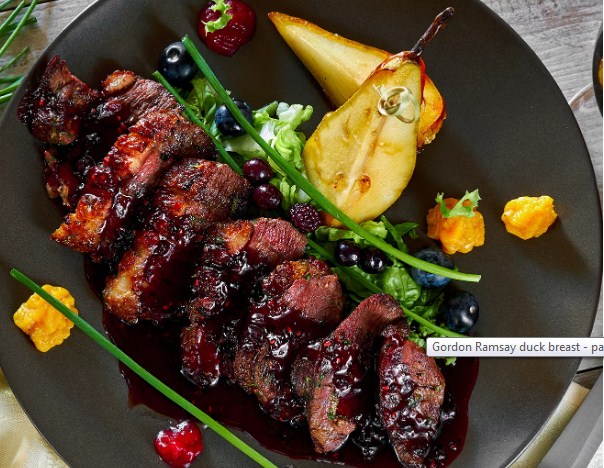
Gordon Ramsay Duck Breast Recipe

The first time I tried Gordon Ramsay-style duck breast, I set off my smoke alarm, burned a spot on my forearm the size of a quarter, and served something with skin like a wet bath mat. Not my finest hour. The fix turned out to be almost embarrassingly simple, and it had to do with patience, not skill. This pan-seared duck breast with crispy skin takes about 25 minutes, needs maybe seven ingredients, and tastes like something you’d pay $38 for on a restaurant menu. I’ve made it roughly thirty times now, so let me save you my early mistakes.
Why You’ll Love This Recipe
It looks fancy, but it’s really just one pan and a bit of waiting. The skin turns shatteringly crisp, the meat stays pink and juicy in the middle, and you get a jar of liquid gold (duck fat) as a bonus.
It’s also forgiving once you know the one rule: don’t rush the first side. Fair enough, that rule is hard when you’re hungry. But trust me on it.
And honestly? It’s a great date-night move. Nobody expects duck from you on a Wednesday.
Equipment Needed
You don’t need much. A heavy skillet, cast iron or stainless steel, is the main thing. Add a sharp knife for scoring, tongs, a small bowl or heatproof jar for the rendered fat, paper towels, and an instant-read thermometer. I skipped the thermometer for years and guessed. I was wrong about half the time, so now I just use it.
Ingredients
- 4 duck breasts, skin-on, about 6 to 7 oz (170 to 200 g) each
- 1½ teaspoons kosher salt
- ½ teaspoon freshly ground black pepper
- 2 tablespoons unsalted butter
- 4 sprigs fresh thyme
- 3 garlic cloves, smashed with the side of a knife
- 1 shallot, finely diced (for the optional pan sauce)
- ⅓ cup (80 ml) red wine
- ½ cup (120 ml) chicken stock
- 1 teaspoon honey
Step-by-Step Cooking Instructions
- Take the duck out of the fridge about 20 minutes before cooking. Cold meat seizes up in the pan and cooks unevenly.
- Pat the skin completely dry with paper towels. Then pat it again. Wet skin steams, and steamed skin is sad skin.
- Score the fat in a crosshatch pattern, cutting through the skin and fat but not into the meat. Space the cuts about ¼ inch apart. This lets the fat escape.
- Season generously with salt and pepper on both sides, pressing the salt into the skin.
- Place the breasts skin-side down in a cold skillet. Yes, cold. Turn the heat to medium-low.
- Render the fat for 8 to 10 minutes. You’ll hear a gentle sizzle that slowly builds. Every few minutes, spoon off the fat into your heatproof jar so the skin fries rather than swims. The skin should turn deep golden brown.
- Flip the breasts once the skin is crisp and most of the fat has melted out. Turn the heat up to medium.
- Add butter, thyme, and garlic. Cook 3 to 4 minutes more, tilting the pan and spooning the foaming butter over the meat.
- Check the temperature. Pull the duck at 130°F (54°C) for medium-rare, or 140°F (60°C) for medium. It’ll climb a few degrees as it rests.
- Rest the duck on a board for 6 to 8 minutes, skin-side up, uncovered. Covering it traps steam and softens the skin.
- Make the quick sauce. Pour off all but a tablespoon of fat from the pan. Cook the shallot for 2 minutes, add the wine, scrape up the browned bits, and let it reduce by half. Add stock and honey, simmer 3 minutes, and season to taste.
- Slice against the grain into ½-inch pieces and serve with the sauce spooned underneath, not on top of the skin.
Cooking Tips
Start with a dry bird, always. If you bought your duck vacuum-packed, it’ll be wetter than you expect. I sometimes leave the breasts uncovered on a plate in the fridge for an hour, which dries the skin like magic.
Keep the heat low at the start. When I first made this, I cranked it to high because that’s what I do with steak. The skin burned before the fat melted, and my kitchen filled with smoke. My smoke alarm and I are no longer on speaking terms.
Don’t throw out that rendered fat. Strain it into a jar, and it keeps in the fridge for months. Actually, let me correct myself, I’ve never kept mine past about three months, but only because it’s gone by then.
Oh, and a quick tangent: I once poured hot duck fat into a thin plastic container. It warped on my counter within seconds, and I spent the next ten minutes cleaning up. Use glass or metal.
Why This Recipe Actually Works
Duck skin is mostly fat, and fat needs time to melt. A cold pan lets the temperature climb slowly, so the fat renders out gently while the skin crisps from underneath. A hot pan sears the surface and traps the fat inside, which gives you rubbery skin.
Scoring helps the fat escape, and salt pulls out moisture so the skin dries as it cooks. Resting lets the juices redistribute, so you don’t lose them all on the cutting board.
The Small Change That Made a Big Difference
For years I flipped the duck too soon, maybe at 4 or 5 minutes, because it looked brown enough. It wasn’t. The skin was only crisp on the very top and chewy underneath.
Now I wait until the skin is the color of an old penny and feels firm when I tap it with tongs. That’s usually around the 9-minute mark. Same duck, same pan, completely different result.
What I’d Do Differently Making It Again Tomorrow
I’d salt the duck an hour ahead and leave it uncovered in the fridge. I used to skip this because it felt fussy, and that was a mistake. The skin gets crispier and the meat is better seasoned.
I’d also use a bigger pan. Four breasts in a 10-inch skillet is a squeeze, and crowding slows the rendering. Two at a time in a smaller pan works better.
What I Skip When I’m Short on Time
I skip the pan sauce, honestly. A squeeze of orange or a spoonful of cranberry sauce from the fridge does the job. I also skip the garlic and thyme butter-baste on busy nights and just sear, rest, and slice. It’s still very good, just a little less glossy.
Substitutions & Variations
If you can’t find duck breast, a skin-on chicken thigh works with the same cold-pan method, though the cooking time is longer, around 25 minutes total. For the sauce, swap the red wine for port or even a splash of balsamic vinegar and an extra bit of stock.
Want something sweeter? Replace the honey with orange marmalade, or add the zest of one orange. Fruit and duck are old friends, so cherries, plums, or figs all fit. For a spicier take, rub the skin with a pinch of five-spice before searing.
What to Serve With It
Duck is rich, so I like something to cut through it. Crisp roasted potatoes (cooked in the leftover duck fat, naturally), sautéed greens, or a sharp arugula salad with lemon all work nicely. Mashed potatoes and a parsnip purée are cozier options for winter.
For a drink, a Pinot Noir is the classic pairing. I once served it with a cheap fizzy lemonade because that’s all I had, and nobody complained.
Storage & Reheating
Leftover duck keeps in an airtight container in the fridge for up to 3 days. The skin won’t stay crispy, sadly, but you can bring some of it back.
To reheat, place slices skin-side down in a dry skillet over medium heat for about 2 minutes, then flip briefly. Don’t use the microwave unless you like duck that’s chewy and a bit grey. I’ve learned that one the hard way.
Cook and Prep Time
- Prep time: 10 minutes (plus 20 minutes to come to room temperature)
- Cook time: 20 minutes
- Resting time: 6 to 8 minutes
- Total time: about 40 minutes
- Servings: 4
Nutrition Facts
Per serving (1 duck breast with a spoonful of sauce): about 380 calories, 26 g fat, 9 g saturated fat, 3 g carbohydrates, 2 g sugar, 32 g protein, 520 mg sodium.
Nutrition disclaimer: Nutrition information is an estimate calculated using an online nutrition calculator and is provided as a courtesy. Actual values vary depending on the specific brands and ingredients you use and how much fat you render off. For accurate results, please run the ingredients through your preferred nutrition calculator.
FAQ
Why is my duck skin not crispy?
Usually, it’s one of three things: the skin was wet, the heat was too high, or you didn’t render long enough. Dry it well, go low and slow, and be patient.
Is duck breast safe to eat pink?
Duck breast is commonly served medium-rare, around 130°F to 135°F, and many cooks and chefs do so. Food safety agencies recommend 165°F (74°C) for poultry, though, so choose what you’re comfortable with. If you’re cooking for kids, pregnant people, or anyone with a weak immune system, cook it to the higher temperature.
Do I have to start in a cold pan?
For the crispiest skin and the least splatter, yes. It’s the whole trick.
What do I do with the leftover duck fat?
Roast potatoes in it, fry eggs in it, or toss it with vegetables before roasting. It’s wonderful stuff.
Can I cook duck breast in the oven?
You can finish it in a 400°F (200°C) oven for a few minutes if the breasts are thick, but I find the stovetop alone works fine for most.
Final Thoughts
This Gordon Ramsay-style duck breast really comes down to a cold pan, dry skin, and not panicking. I messed it up plenty of times before getting it right, and each failure taught me something, usually something smoky. Give it one try, even if you’re nervous. Worst case, you’ve got duck fat and a story. Best case, you’ve got crispy-skinned duck on a weeknight and a very impressed dinner guest.











 Pumpkin Protein Pancake Recipe