Chicken Piccata Skillet Recipe
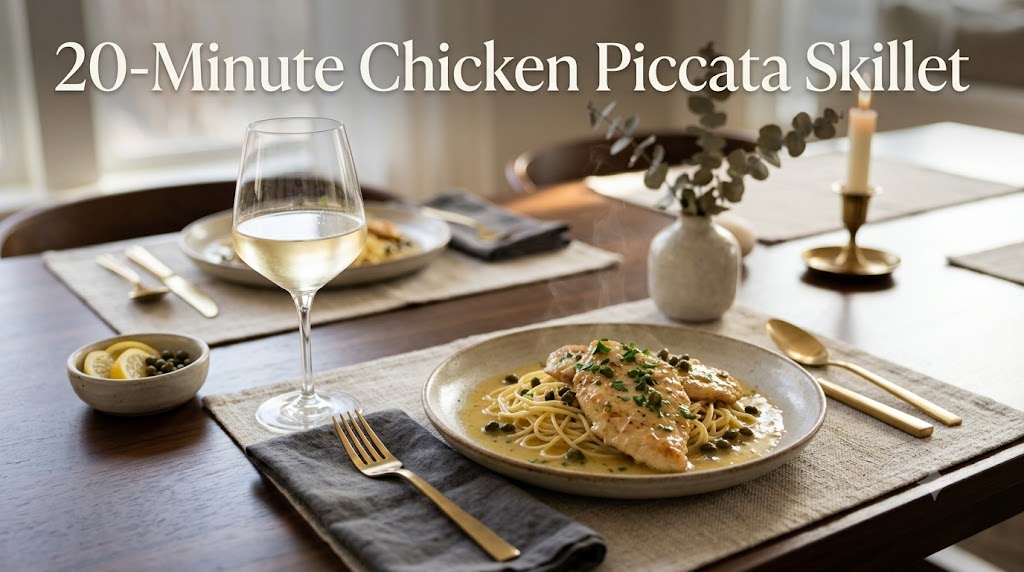
I made my first 20-minute chicken piccata skillet on a Thursday night after a day so long I could barely remember my own name, and it changed the way I think about “fancy” dinners forever. Turns out you don’t need a culinary degree, a fussy technique, or forty minutes of babysitting a sauce to get that bright, buttery, lemon-caper flavor everyone loves at Italian restaurants. You just need one pan, some chicken, and about twenty-five minutes. That’s it. My neighbor Denise used to swear piccata was “restaurant-only” food, and honestly, I believed her for years — turns out that was a mistake, because this chicken piccata skillet recipe is easier than half the stuff I make on a regular Wednesday.
This isn’t some watered-down version either. It’s got the crispy edges, the tangy lemon punch, the little salty bursts from capers that make you go back for one more bite even when you’re full. And because it all happens in a single skillet, cleanup takes about four minutes, which, if you have kids or a job or a pulse, matters a lot.
Why You’ll Love This Recipe
Let’s be real — nobody wants a recipe that takes longer to cook than it does to eat. This one’s fast. Dinner’s on the table in under 30 minutes, start to finish, and most of that time is just waiting for the chicken to get golden.
It’s also forgiving. Overcooked your chicken a little? The sauce covers a multitude of sins. Ran out of capers? Fine, we’ll talk about that later. And it tastes like something you’d order at a nice little bistro, not something that came together on a random Tuesday using ingredients you already had in the fridge.
Plus, my kids — who claim to hate “sauce” on principle — devour this. My youngest called it “lemon chicken but fancy,” which, fair enough, that’s basically the whole pitch.
Ingredients
- 4 boneless, skinless chicken breasts (or 6 thin cutlets, about 1.5 pounds total)
- 1/2 cup all-purpose flour
- Salt and black pepper, to taste
- 4 tablespoons unsalted butter, divided
- 3 tablespoons olive oil
- 3 cloves garlic, minced
- 1 cup low-sodium chicken broth
- 1/3 cup fresh lemon juice (about 2 large lemons)
- 1/4 cup capers, drained
- 1/4 cup heavy cream (optional, for a richer sauce)
- 2 tablespoons fresh parsley, chopped
- Lemon slices, for garnish
Equipment Needed
You really just need one large skillet — cast iron or stainless steel both work great here, though I lean toward stainless because the sauce releases easier for deglazing. A meat mallet or rolling pin helps if you’re pounding chicken breasts thin, and you’ll want a good pair of tongs, a whisk, and a cutting board. That’s the whole list. No blender, no food processor, nothing that needs its own cabinet shelf.
Step-by-Step Cooking Instructions
- Pound the chicken breasts to an even thickness, about 1/2 inch, so they cook evenly and don’t dry out on one side while the other’s still pink.
- Season both sides generously with salt and pepper.
- Set up a shallow dish with the flour and dredge each piece of chicken, shaking off the excess.
- Heat 2 tablespoons of butter and the olive oil in a large skillet over medium-high heat until it shimmers.
- Add the chicken in a single layer (work in batches if needed) and cook for 3–4 minutes per side, until golden brown and cooked through. Remove and set aside on a plate.
- Lower the heat to medium and add the garlic to the same skillet, stirring for about 30 seconds until fragrant — don’t let it burn, or the whole sauce turns bitter.
- Pour in the chicken broth and lemon juice, scraping up all those browned bits stuck to the bottom of the pan. That’s where the flavor lives.
- Add the capers and let the sauce simmer for 4–5 minutes, until it reduces slightly and thickens just a touch.
- Stir in the remaining 2 tablespoons of butter (and the cream, if using) until the sauce turns glossy and smooth.
- Return the chicken to the skillet, spooning sauce over each piece, and let everything warm through for 2 minutes.
- Sprinkle with fresh parsley and lay a few lemon slices on top before serving straight from the skillet.
Section B
Cooking Tips
Don’t skip the flour dredge — I tried once, in a rush, thinking it wouldn’t matter much, and the sauce never got that same silky cling to the chicken. Big mistake. Also, use a real whisk when you add the butter at the end; it helps the sauce emulsify instead of looking greasy and separated. And taste your sauce before you add salt, since capers and broth already bring plenty of saltiness to the party.
One more thing: don’t crowd the pan. If your skillet’s on the smaller side, cook the chicken in two batches. I learned this one the hard way at 6:47 on a Thursday, watching four chicken breasts steam instead of sear because I’d jammed them all in together. Patience pays off here.
Substitutions & Variations
You’ve got room to play around with this one. Swap chicken breasts for boneless thighs if you want something juicier — they take a couple extra minutes to cook through but taste amazing in that lemony sauce. No capers on hand? Chopped green olives work in a pinch, though the flavor shifts a bit more briny than tangy. Gluten-free folks can use a 1-to-1 flour blend instead of regular all-purpose, no other changes needed. If you want it dairy-free, skip the cream and use extra olive oil instead of butter — you’ll lose a little richness, but it still tastes great. Some people even toss in a handful of baby spinach right at the end so it wilts into the sauce, which adds color and sneaks in some greens for picky eaters.
What to Serve With It
I almost always serve this chicken piccata skillet over angel hair pasta because the sauce soaks into those thin noodles so well, but mashed potatoes or a big scoop of rice work just as nicely if pasta’s not your thing. A simple arugula salad with a squeeze of lemon on the side balances out the richness. Crusty bread is basically mandatory in my house, mostly because everyone fights over who gets to mop up the leftover sauce.
Storage & Reheating
Leftovers keep well in an airtight container in the fridge for up to 3 days. Reheat gently in a skillet over low heat with a splash of chicken broth to loosen the sauce back up — microwaving works too, but the sauce can separate a little, so stir it well halfway through. I don’t recommend freezing this one; the sauce texture gets weird once it thaws, kind of grainy, and honestly it’s quick enough to just make fresh again.
Cook and Prep Time
Prep time: 10 minutes Cook time: 20 minutes Total time: 30 minutes Servings: 4
Nutrition Facts (per serving)
Calories: 410 | Protein: 34g | Fat: 24g | Carbohydrates: 12g | Fiber: 1g | Sodium: 620mg
Nutritional values are estimates only, calculated using standard ingredient data, and may vary based on brands, portion sizes, and substitutions used. Please consult a registered dietitian or your healthcare provider for precise dietary needs.
Why This Recipe Actually Works
The magic here is really about balance. You’ve got the acidity from the lemon juice cutting through the richness of the butter, and the capers bring these little pops of salt that keep every bite interesting instead of one-note. The flour dredge does double duty too — it helps the chicken brown properly and it thickens the sauce slightly as it cooks, so you don’t need cornstarch or anything extra. Simple mechanics, big payoff.
The Small Change That Made a Big Difference
For years I made piccata with bottled lemon juice because, well, it was already in the fridge and squeezing lemons felt like an extra step I didn’t need. Then my friend Rachel practically gasped when she watched me grab the bottle, and made me try fresh lemons side by side. The difference floored me — fresh juice tastes brighter, almost floral, where the bottled stuff just tastes flat and a little metallic. I haven’t gone back since, and now I keep a bag of lemons on my counter at all times like some kind of citrus hoarder.
What I’d Do Differently Making It Again Tomorrow
Honestly? I’d double the sauce. Every single time I make this, someone at the table asks for more sauce to pour over their pasta, and I end up scraping the pan for the last few drops like it’s treasure. Next time I’m using an extra half cup of broth and lemon juice from the start instead of pretending one batch will be enough — it never is.
What I Skip When Short on Time
When I’m in a hurry, I skip pounding the chicken breasts thin and just butterfly them instead, which takes half the time and still cooks evenly enough. I’ve also used pre-minced garlic from a jar more times than I’d like to admit, don’t judge me, and the sauce still tastes great. The one thing I never skip is deglazing the pan properly, because that’s where all the flavor is hiding.
FAQ
Can I use chicken tenders instead of breasts? Yes, tenders work well and actually cook faster, so keep an eye on them to avoid overcooking.
Is chicken piccata supposed to be sour? It should taste bright and tangy, not sour. If it tastes too sharp, add a touch more butter or a pinch of sugar to balance it out.
Can I make this ahead of time? You can prep the ingredients ahead, but the dish itself tastes best fresh since the sauce loses some of its glossy texture after sitting.
What wine pairs well with chicken piccata skillet? A crisp white wine like Pinot Grigio or Sauvignon Blanc complements the lemon and capers nicely.
My sauce turned out too thin. What happened? It probably needs a few more minutes of simmering to reduce, or you can whisk in an extra tablespoon of butter to thicken it slightly.
Final Thoughts
At the end of the day, this 20-minute chicken piccata skillet recipe proves you don’t need a restaurant kitchen to make something that tastes like you fussed over it for hours. It’s quick, it’s forgiving, and it’s turned into one of those meals my family requests by name now, right up there with tacos and spaghetti night. Give it a try this week — worst case, you learn what not to do next time, and best case, you’ve got a new weeknight favorite on your hands.