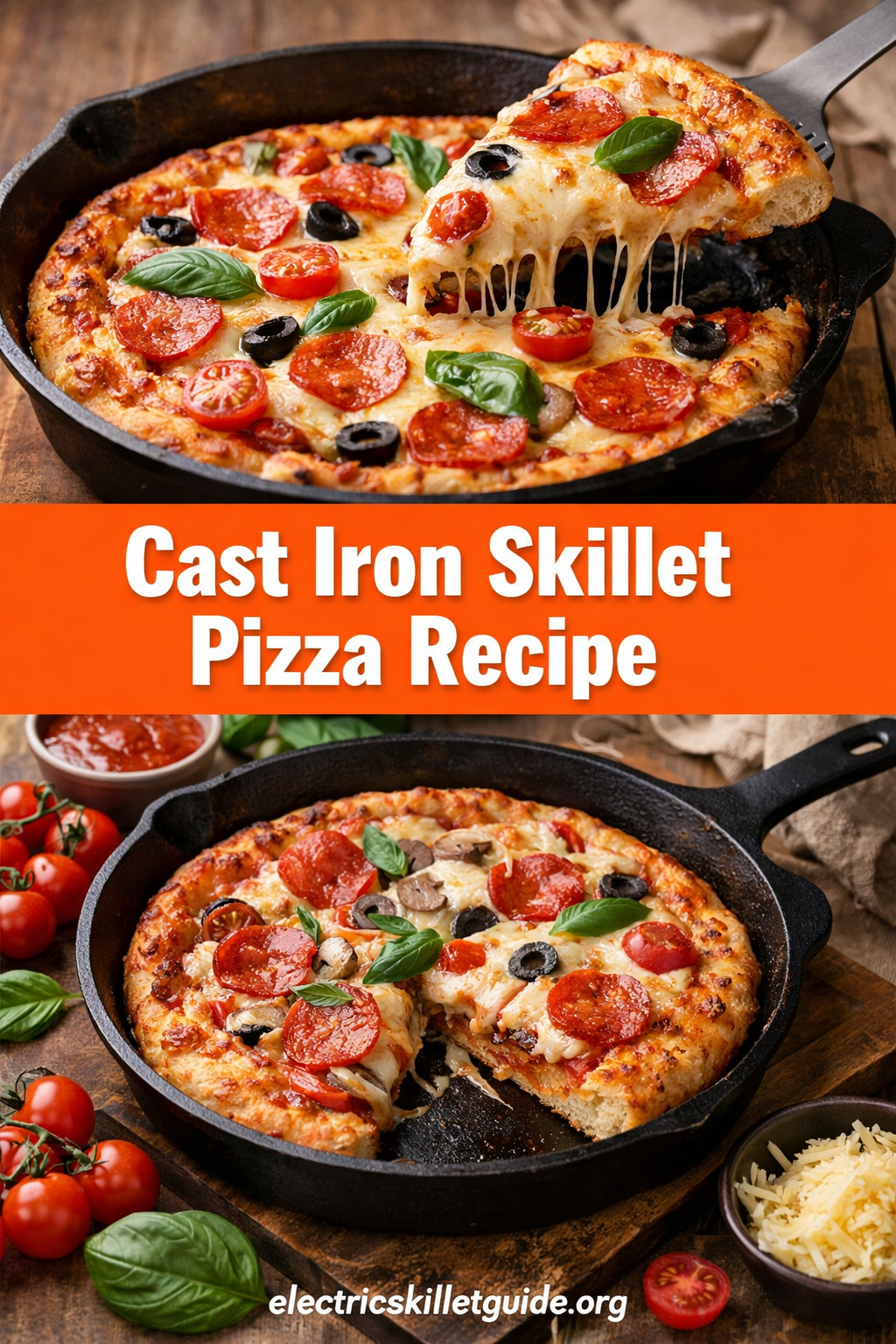
Cast Iron Skillet Pizza Recipe
I’ll admit something right away — I used to think that writing about cast iron skillet pizza recipe as well as making pizza at home was kind of… exhausting to even think about. Not physically, just mentally.
Like, it felt like one of those “Saturday afternoon projects” where you need to be in the right mood, maybe watch a couple of videos first, double-check ingredients, and then still end up slightly unsure if you’re doing it right.
Also, I bought a pizza stone once. Used it maybe twice. Then it just… existed in the kitchen like a decoration I felt guilty about.
So yeah, that was my mindset. Pizza = effort.
Then one random evening (I don’t even remember why), I tried making pizza in a cast iron skillet. No big expectations. I was honestly just hungry and didn’t want to over-complicate things.
And the result?
Not dramatic, but definitely one of those quiet “oh… wait” moments.
Because it worked. Really well.
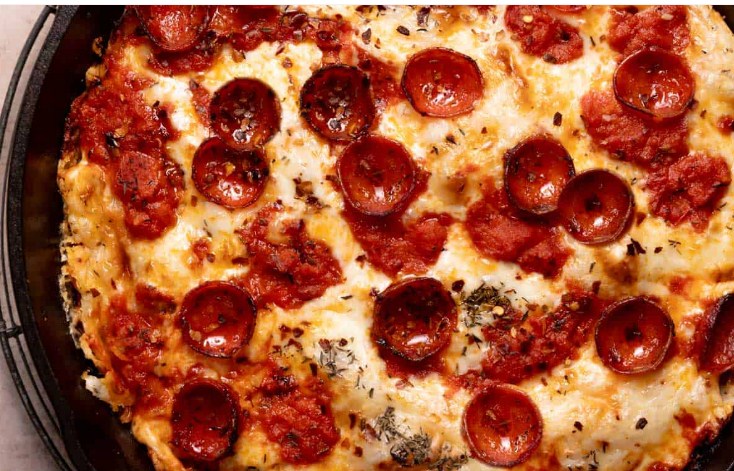
The crust came out crispy underneath — like actually crispy, not fake crispy — and soft in the middle. Not thin crust, not deep dish, something in between that just felt right.
And the whole process didn’t feel stressful. That’s the part that stuck with me.
Now it’s one of those recipes I fall back on when I want something comforting but don’t want to think too much.
This isn’t a complicated recipe. But it’s also not completely foolproof unless you know a few small things that matter more than they seem.
So yeah, I’ll walk through everything. Including the mistakes I made early on — because those are honestly the most useful parts.
Why You’ll Love This Recipe
Let’s start simple.
First — no pizza stone. I know I already mentioned it, but it’s worth repeating. You don’t need special equipment that you’ll forget about later. Just a cast iron skillet, which you probably already have.
And cast iron is doing a lot of heavy lifting here without you really noticing. It holds heat in a way that regular pans don’t, and that changes everything about how the crust turns out.
Second — the crust itself.
This isn’t one of those pizzas where the base collapses when you pick up a slice. It has structure. It holds toppings without turning into a floppy situation.
But at the same time, it’s not dry or stiff. The inside stays soft and a little chewy.
I wouldn’t call it perfect pizza (because that’s subjective anyway), but it’s very satisfying. That’s probably the better word.
Third — time.
You can make this on a weekday without regretting your life choices halfway through. Start to finish, it’s under an hour. And that includes dough resting.
And lastly — flexibility.
You can go classic with it, or you can just throw in whatever’s in your fridge. I’ve made versions of this pizza that were very planned… and others that were basically leftovers on dough. Both worked.
So yeah, not a lot of pressure here.
Ingredients
For the Dough:
- 2¼ tsp active dry yeast
• 1 tsp sugar
• ¾ cup warm water (not hot, just slightly warm — if it feels too hot on your finger, it probably is)
• 2 cups all-purpose flour (plus extra, because you will need it at some point)
• 1 tsp salt
• 1 tbsp olive oil, plus more for the skillet
For the Sauce:
- ½ cup crushed tomatoes
• 1 small garlic clove, minced
• ½ tsp dried oregano
• Salt and red pepper flakes (adjust as you like)
For the Toppings:
- 1½ cups shredded low-moisture mozzarella
• Any toppings you like — pepperoni, onions, mushrooms, olives, random vegetables, whatever works
Quick note here — low-moisture mozzarella is important.
I ignored that advice the first time and used fresh mozzarella because it sounded better. It tasted fine, but the center turned slightly watery. Not terrible, just not ideal.
So yeah, low-moisture is the safer choice.
Step-by-Step Instructions
Step 1: Make the dough
Mix the warm water, sugar, and yeast in a bowl. Let it sit for about 5–7 minutes.
You’re looking for foam. Not a huge dramatic reaction, just some visible activity.
If nothing happens… your yeast is probably dead. It’s annoying, but it happens more often than people admit. Just start again.
Once that’s done, add flour, salt, and olive oil. Mix until it forms a rough dough. It might look slightly messy — that’s fine.
Knead it on a floured surface for about 5 minutes.
You don’t need perfection here. Just aim for smooth and elastic-ish. If it sticks too much, add a bit of flour. If it feels too dry, maybe your measurements were slightly off — it happens.
Put it in an oiled bowl, cover it, and let it rest for 30 minutes.
It won’t double in size dramatically in that time. That’s okay. It just needs to relax. That’s the goal.
Step 2: Preheat the skillet
This step is… honestly the most important one.
Put your cast iron skillet in the oven and preheat to 500°F (or as high as your oven goes).
Let it sit in there for at least 15 minutes.
I know it’s tempting to skip this when you’re hungry. I’ve done it. The pizza still cooks, but the crust doesn’t develop the same way. It stays pale, slightly soft in the wrong way.
So yeah, this step matters more than it seems.
Step 3: Make the sauce
While the dough is resting, mix the crushed tomatoes, garlic, oregano, salt, and red pepper flakes.
That’s it. No cooking required.
And yes, it might taste a little sharp or raw if you try it now. That’s normal. It changes in the oven.
If you overthink the sauce, you’ll just make things harder than necessary.
Step 4: Shape the dough
Take the skillet out of the oven carefully. I mean it — that handle is extremely hot.
Add olive oil and swirl it around so the bottom is coated.
Place the dough in the pan and start pressing it out with your fingers.
It might keep springing back. That’s normal. Dough does that when it hasn’t fully relaxed. Just wait a minute and try again.
You don’t need it perfectly shaped. Just aim to cover the base evenly, with slightly thicker edges.
Perfection here doesn’t really change the outcome much.
Step 5: Add toppings and bake
Spread the sauce over the dough, leaving a small border at the edges.
Add cheese first, then toppings.
Bake for 12–15 minutes.
You’re looking for a deep golden crust and bubbling cheese with some slightly browned spots.
Let it sit for a couple of minutes before slicing. It’s tempting to cut immediately, but the texture improves slightly if you wait. Not dramatically, just enough to matter.
Why This Recipe Actually Works
It mostly comes down to heat.
When the dough hits the hot skillet, the bottom starts cooking immediately — almost like frying. You might even hear a faint sizzle if you listen closely.
That’s what creates that crispy base.
At the same time, the sides of the skillet radiate heat inward, so the dough cooks from multiple directions.
And the olive oil plays a bigger role than it seems. It helps with texture, flavor, and prevents sticking.
It’s not just there for convenience — it actually changes the result.
Small Changes That Made a Big Difference
At first, I used to skip preheating. Mostly out of impatience.
The pizza wasn’t bad, but it always felt slightly off.
Once I started preheating properly, the difference was immediate. Like… noticeably better without changing anything else.
The other mistake I made was overloading toppings.
It’s very tempting to add everything. But too many toppings weigh the dough down and trap moisture.
Now I keep it simpler. Or I add extra toppings halfway through baking if I really want more.
Also — garlic butter on the crust after baking.
This wasn’t part of the original idea. But once I tried it, it became hard to skip.
Cooking Tips
Alright, a few things here — some of these I learned the normal way, some the slightly frustrating way.
First, and yes I’m saying it again, don’t skip preheating the skillet.
At this point it probably sounds repetitive, but it’s genuinely the one step that changes everything. If the skillet isn’t properly hot, the crust just won’t develop the same way. It’ll cook, sure, but it won’t feel right when you bite into it.
Second — use enough oil.
Not a ridiculous amount, you’re not deep frying anything, but the bottom of the pan should clearly have a layer. If you’re hesitant with oil here, the texture suffers a bit. I tried using less once, thinking it wouldn’t matter much. It did.
Also, check the bottom before you take it out.
This is one of those small habits that makes you feel like you know what you’re doing. Just lift an edge gently with a spatula after around 12 minutes.
If it’s golden and crisp, you’re good. If it still looks pale, give it a couple more minutes.
Ovens are inconsistent. Cast iron is also… slightly unpredictable depending on the brand, thickness, how old it is, all that. So yeah, visual checking helps more than strict timing.
Another thing — if possible, avoid pre-shredded cheese.
It works, I’m not saying it doesn’t. But it melts a bit differently because of the anti-caking stuff. When you shred it yourself, the melt is smoother. Not a huge difference, but noticeable enough if you care.
And one random tip — don’t rush the cooling step.
Even just 2 minutes makes slicing easier and stops everything from sliding around. I used to ignore this and immediately regretted it every time.
Substitutions & Variations
This is where things get a little more relaxed. There’s no single “correct” version.
If you don’t want to make dough, store-bought dough works perfectly fine. I use it sometimes when I’m not in the mood to deal with yeast at all.
There’s also a slightly chaotic option — biscuit dough.
It gives you a thicker, fluffier base. Not traditional pizza, obviously, but honestly? It’s good in its own way. Feels more like a pan pizza hybrid.
For sauce, you can switch things up a lot.
Pesto works really well. White sauce too — like a simple garlic butter base or even something closer to béchamel if you feel like it.
BBQ sauce is another option. Not something I use often, but when it works, it works.
Or you can go minimal — just olive oil, garlic, herbs. That’s it.
Cheese-wise, mozzarella is the safe choice. But mixing cheeses is where things get interesting.
Provolone adds more flavor. Fontina melts really nicely. Even a small amount of parmesan on top at the end changes the overall taste.
Dairy-free cheese? It works. Not identical, but decent enough.
Toppings… honestly, this could go on forever.
A few combinations that stood out for me:
- Caramelized onions + goat cheese
- Roasted red peppers + feta
- Mushrooms + garlic + a bit of thyme
- Prosciutto added after baking (important, otherwise it gets too dry)
And then there’s hot honey.
I didn’t expect to like it, but drizzling a little on top after baking adds this sweet-spicy thing that somehow works. Not for everyone, but worth trying once at least.
What to Serve With It
This is one of those meals that doesn’t really need sides.
Like, if you just make the pizza and sit down with it, that’s already enough. No one’s going to complain.
But if you’re cooking for other people or just want to balance things out a bit, something fresh helps.
A simple salad works best. Nothing complicated — just greens, maybe lemon juice, olive oil, a bit of parmesan. Something slightly bitter cuts through the richness of the cheese.
Garlic bread… feels unnecessary.
You’re already eating bread with cheese. But at the same time, I wouldn’t question it if someone served both.
And yeah, some kind of cold drink makes a difference. Even just water, honestly. Pizza tends to be heavier than you realize halfway through.
If you’re making this for a small group, doing two skillets with different toppings is a good idea.
It looks more impressive than it actually is, which is always a bonus.
What I Skip When I’m Short on Time
There are days when I don’t want the full process.
On those days, I use store-bought dough. No hesitation.
I also skip making fresh sauce and just use jarred marinara. It’s not exciting, but it works.
And sometimes I shorten the dough resting time a bit. Not ideal, but it doesn’t completely ruin the result.
But one thing I don’t skip anymore is preheating the skillet.
It’s just not worth cutting that corner. Everything else you can compromise on slightly. That one step? Not really.
Storage & Reheating
If you somehow end up with leftovers (which doesn’t always happen), they keep well in the fridge for about 3 days.
Store them in an airtight container or just wrap them properly. Nothing complicated.
Reheating is where things can go wrong.
Microwaving works, technically. But the texture becomes soft in a not-great way. The crust loses everything that made it good in the first place.
A better option is reheating in a skillet.
Medium-low heat, lid on, about 4–5 minutes. The bottom crisps back up, and the cheese melts again. It’s surprisingly close to fresh.
Oven works too — around 375°F for 8 minutes or so if you’re reheating multiple slices.
Not perfect, but still good.
If I Were Making This Again Tomorrow
I’d probably go for something a bit different.
Maybe a white pizza — olive oil, garlic, mozzarella, small spoonfuls of ricotta.
Fresh basil added at the end. Maybe thin slices of zucchini if I have them.
I might experiment with cheese combinations again. That’s usually where the biggest flavor changes happen.
But a few things would stay exactly the same.
Preheating the skillet.
Using low-moisture mozzarella as the base.
And brushing garlic butter on the crust at the end.
At this point, those feel less like steps and more like habits.
FAQ
Can I use a non-stick pan instead of cast iron?
You can, but it’s not ideal. Most non-stick pans can’t handle very high oven temperatures, and they don’t retain heat the same way. The result will be different — not bad, just not the same.
Why does my dough keep shrinking when I press it?
It just needs more time to rest. Give it 5–10 minutes and try again. Fighting it usually doesn’t help.
Can I make the dough ahead of time?
Yes. You can refrigerate it for up to 24 hours after mixing. Just let it come back to room temperature before using.
How do I know when the pizza is done?
Look for a golden bottom, bubbling cheese, and slightly crisp edges. Also, the pizza should pull away from the sides of the pan a bit.
Can I freeze the dough?
Yes. Wrap it tightly and freeze for up to 3 months. Thaw it overnight in the fridge before using.
Final Thoughts
Cast iron skillet pizza is one of those recipes that slowly becomes part of your routine without you really planning for it.
At first, it feels like an experiment. Then it turns into something you rely on when you don’t want to think too much about cooking but still want something satisfying.
It’s easy, yes — but not in a boring way.
The crust alone makes it worth it. Crispy on the bottom, soft inside, slightly charred cheese edges… the kind people notice immediately.
And the best part is, once you get used to making it, ordering pizza starts to feel slightly unnecessary. Not completely — let’s be honest — but enough that you pause and think, “I could just make this instead.”
And usually, that’s exactly what ends up happening.