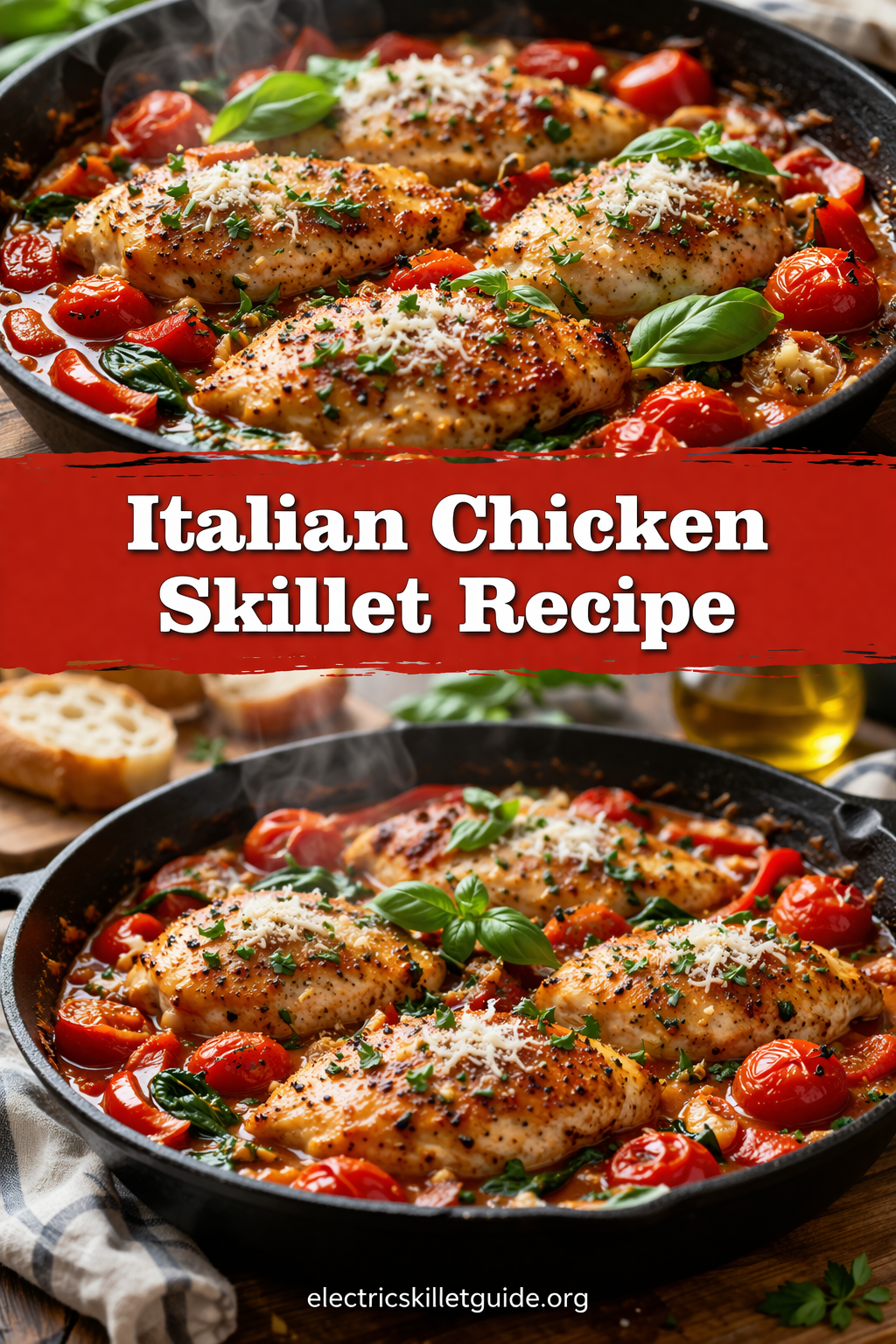
Italian Chicken Skillet Recipe
Some nights, I want to cook something that feels a little fancy but doesn’t involve me standing in the kitchen for two hours while my family circles the island like hungry sharks. And yes, that has absolutely happened more than once.
That’s exactly where this Italian chicken skillet swoops in and saves the evening. It’s got everything — juicy chicken, a tomato-herb sauce that smells like something you’d order at a cozy little trattoria, and the best part? The whole thing comes together in one pan. One. Pan. I know I already said that, but it really does matter on a random Tuesday when you’re already tired.
This recipe has quietly become a weeknight staple in my house. I didn’t really plan for that, it just… happened over time. And once you make it, there’s a good chance it’ll sneak into your regular rotation too.
Why You’ll Love This Italian Chicken Skillet Recipe
Alright, quick pitch — or at least I’ll try to keep it quick.
First, it’s genuinely fast. We’re talking about 35 to 40 minutes from fridge to table, which honestly sometimes beats delivery. Well… most days, anyway.
The flavor, though — that’s the part that still surprises me a little. Garlic, crushed tomatoes, Italian herbs, a splash of white wine… it all comes together into a sauce that tastes like it’s been simmering for hours. It hasn’t. Not even close. But it sort of tricks you into thinking it has.
Cleanup is also refreshingly minimal. One skillet, one cutting board. That’s it. And on some nights, that alone is enough reason to make something twice.
It’s also flexible in a way that I didn’t fully appreciate until I started making it on repeat. No white wine? Skip it — I’ve done that plenty of times. Got spinach that’s about to wilt into nothing in the fridge? Toss it in. Diced tomatoes instead of crushed? Slightly different texture, still works.
This is one of those recipes that doesn’t punish you for improvising. And honestly, that’s rare.
Ingredients
Here’s what you’ll need. Nothing complicated, nothing that sends you on a last-minute grocery run.
For the chicken:
- 4 boneless, skinless chicken breasts (or thighs — I’ll get to that)
- Salt and black pepper to taste
- 1 teaspoon garlic powder
- 1 teaspoon onion powder
- 1 teaspoon smoked paprika
- 2 tablespoons olive oil
For the sauce:
- 4 garlic cloves, minced
- 1 small yellow onion, finely chopped (or not-so-finely — it’s forgiving)
- ½ cup dry white wine (or chicken broth)
- 1 can (14 oz) crushed tomatoes
- 1 teaspoon dried oregano
- 1 teaspoon dried basil
- ½ teaspoon red pepper flakes (optional, but I usually add it)
- ½ teaspoon sugar
- Fresh basil leaves for garnish
- Grated Parmesan for serving
Short list. Big payoff. It sounds like something people just say, but here it actually holds up.
Step-by-Step Instructions
Step 1: Season the chicken
Pat the chicken dry with paper towels. I used to skip this step — for years, actually — and I can tell you it’s worth doing.
Season both sides with salt, pepper, garlic powder, onion powder, and smoked paprika. Nothing too precise here, just make sure everything’s coated.
Step 2: Sear the chicken
Heat olive oil in a large skillet over medium-high heat. Once it starts to shimmer, add the chicken.
And then… don’t touch it. Seriously. Just leave it alone for about 4 to 5 minutes.
The first time I made this, I kept flipping too early and ended up with pale, kind of sad chicken. Still edible, just not great. Haven’t rushed this step since.
Flip and cook the other side for another 4 minutes or so. It doesn’t need to be fully cooked through yet.
Remove it to a plate and set aside.
Step 3: Build the sauce
In the same skillet — and don’t wipe it out — reduce heat to medium.
Add a little more oil if needed, then sauté the onion for about 3 minutes. If it browns slightly, that’s fine.
Add the garlic and cook for about a minute. Maybe less. I’ve burned garlic before by walking away “just for a second,” so now I try not to.
Step 4: Deglaze and simmer
Pour in the white wine and scrape up all the browned bits from the bottom of the pan.
Let it bubble for a couple of minutes. It doesn’t need to be perfect.
Add the crushed tomatoes, oregano, basil, red pepper flakes, and sugar. Stir and let it simmer for about 5 minutes.
If it goes longer because you got distracted, it’s fine. Happens.
Step 5: Finish the chicken in the sauce
Return the chicken to the skillet and spoon some sauce over the top.
Cover and cook on medium-low heat for about 10 to 12 minutes, until done. I sometimes check by cutting into the thickest piece instead of using a thermometer. Not the most precise method, but it works.
The sauce thickens slightly, and everything starts to come together.
Step 6: Garnish and serve
Add fresh basil and a generous sprinkle of Parmesan.
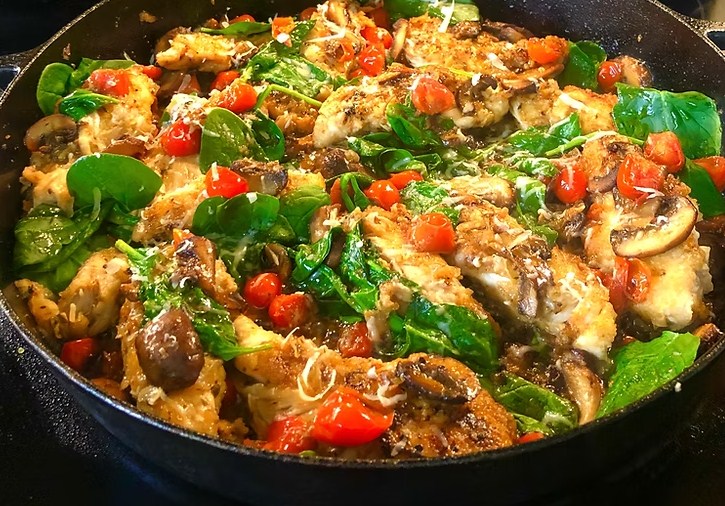
You can bring the skillet straight to the table. I do it all the time. It saves dishes, and honestly, it looks nice without trying too hard.
Cooking Tips
A few things I’ve learned along the way:
- Use a wide, heavy skillet if possible
- Don’t crowd the pan (I’ve done it — not worth it)
- Taste the sauce before adding the chicken back
- Let the chicken rest for a couple of minutes before serving
None of these are complicated, but together they make a difference. Not huge individually, but noticeable.
Substitutions & Variations
This is where things get a bit more flexible.
Chicken thighs instead of breasts
I prefer thighs. They’re juicier and harder to mess up. If you overcook them slightly, they still turn out fine, which is… helpful.
Make it creamy
Add a few tablespoons of cream at the end. The sauce changes completely — richer, softer. I don’t always do it, but when I do, it feels like a different meal.
Add vegetables
Zucchini, peppers, spinach — whatever’s around. Spinach is the easiest, since it cooks in seconds.
Use Italian sausage
Adds depth and a bit more richness. Makes it feel less like a quick meal and more like something planned.
Olives and capers
Not traditional here, but really good if you like that briny flavor.
What to Serve With It
You’ll want something to catch the sauce.
Pasta
Always works. Any shape, really.
Crusty bread
Possibly the best option. Simple, but very satisfying.
Polenta
Soft polenta with this on top is underrated. I didn’t expect to like it as much as I did.
Roasted vegetables
Balances things out a bit.
Salad
Something simple. Nothing complicated.
Or honestly… even rice works. Not traditional, I guess, but I’ve done it on days when that’s all I had.
Storage & Reheating
This actually tastes better the next day. I didn’t expect that, but it does.
Refrigerator: up to 4 days
Freezer: up to 3 months
Reheat gently on the stove with a splash of liquid.
Microwave works too. I use it sometimes. Just go slowly so the chicken doesn’t dry out.
Why This Recipe Actually Works
I don’t know if there’s one “secret” here, honestly.
It’s more like a bunch of small things adding up — searing the chicken first, using the same pan, letting everything finish together.
None of it is complicated. But together, it works. That’s really it.
Small Changes That Made a Big Difference
A few small things made more impact than I expected.
Adding a bit of sugar helps balance the tomatoes.
Fresh garlic instead of jarred — noticeable difference.
And drying the chicken before searing. I ignored that for years. Turns out it matters.
If I Were Making This Again Tomorrow
I’d probably use chicken thighs.
Maybe add cream. Maybe not.
Serve it over pasta… or polenta… depends on what’s in the kitchen.
I’d also make extra. Not always on purpose, but it just makes sense once you’ve had the leftovers.
What I Skip When I’m Short on Time
Usually the wine. I just use broth and move on.
I also stop chopping the onion neatly. Rough chop works fine.
No one notices.
FAQ
Can I use diced tomatoes?
Yes. Slightly chunkier, still good.
No white wine?
Use broth. Works.
Dairy-free?
Skip cheese and cream. Still solid.
Sauce too thin?
Let it simmer longer. Or add tomato paste.
No fresh basil?
Dried works. Not the same, but fine.
Final Thoughts
This Italian chicken skillet is one of those recipes that just sticks. Not because it’s fancy or impressive, but because it works — consistently.
It’s simple. Almost too simple, honestly. But somehow, it turns into something that feels like more effort than it actually is.
I’ve made this on days when I didn’t feel like cooking at all, and it still turned out better than expected.
Whether you serve it with pasta, bread, or just eat it straight from the skillet (which I’ve done), it delivers.
Make it once — you’ll get it.