What Does Okra Taste Like?

What Does Okra Taste Like?

What does Okra taste like?

What does okra taste like? If you are looking for an authentic answer, you should not look anywhere else since this detailed post will give you all the information about okra and how to cook it.

What does okra taste like? If you are looking for an authentic answer, you should not look anywhere else since this detailed post will give you all the information about okra and how to cook it.

To begin with, the origin ok okra has always remained a bone of contention. The majority of people think of Okra as a famous Southern crop, while most others view it as an Indian or south Asian food.

The crop, in fact,  is grown in subtropical and tropical areas across the globe. This includes Asia as well as Africa.

Okra is sometimes referred to as ochro, lady fingers, or Gumbo. Okra is an ingredient in a variety of delicious dishes across the globe.

This article will explain the flavor of okra as well as commonly asked questions regarding its taste.

What Does Okra Taste Like?

What’s the taste of okra? It is a mild and pleasant taste. The flavor is similar to grass but not to the point that it’s excessive.

The taste of Okra is unique in every way. It is possible to discover people who compare its flavor with eggplants. Many also compare it to green beans.

What makes okra stand out is its distinctive texture. The texture of okra varies from dish to dish according to how you cook it.

If the vegetable known as lady finger is cooked slowly, the result will be incredibly soft. If cooked quickly it becomes quite crunchy.

The texture and taste of okra are generally a source of conflict among a number of people. It’s possible to know the taste of okra by tracing its roots.

The vegetable is part of the family of mallows. It is closely related to cotton and cacao.

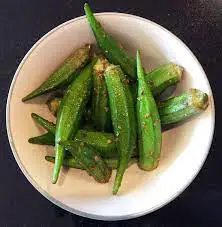
The most notable feature of Okra is the way it grows. It becomes elongated, and its pod is protruding as fingers. This is why it’s called “lady fingers”.

it is the mucilaginous property that gives a distinctive twist to the okra’s flavor. The word “mucilaginous” indicates that the plant creates slime, or “goo” when cooked.

The slime is derived from the soluble fiber. This fiber alters the taste as well as the texture plant.

If you enjoy vibrant flavor profiles Okra may seem rather boring to you. Many people are hesitant about taking a stab at the vegetable due to the fact that it’s not appealing to the eye.

It’s even more confusing after being cooked, with what is thought to be excessive slime hairs, fine hairs, and tiny pods.

The plant is sticky when cut. Fingers are vulnerable to break easily. When they are broken they release the goo, making them difficult to manipulate.

If you know how to cook it correctly the flavor of peas is subtle and enriching. In essence, other spices and other ingredients work nicely with the Okra.

If cooked correctly when cooked properly, soups and meals made from okra are actually quite tasty.

The vegetable is loved by many who consider it to be a more fibrous and more tender variety that of eggplant.

If picked at the perfect moment, okras can have the most delicious flavors. They have a silky texture with a crunch.

Many people believe that the okra plant is spicy due to its resemblance to the bell shape of a pepper. However, that isn’t the reality.

Okra is not spiced whatsoever. It’s all it offers is a slight taste of nutty when chewing at the seed.

Whatever the case, okra is cooked to be spicy. It quickly absorbs the flavor of the ingredients that it cooks with.

If you cook your okra with a spicy flavor, it will come out extremely delicious.

For many , however it is too bland. The majority of people view it as to be a boring vegetable.

Okra lovers have learned to enjoy it with various dressings and condiments.

Can You Eat Okra Raw?

Yes, you can consume the vegetable in its raw form. This is assuming you are not concerned about how okra tastes raw.

The people who eat raw okra believe that the flavor is like green peppers. Because they’re not spicy they are just an herbier, earthier vegetable that lacks the zing.

If you consume raw okra, then you are going to be in for a tasty experience. Many people love the crunch of okras cooked in their natural state.

However, okra will only taste this great when it’s properly picked.

When harvesting okra correctly take care of the hairs on the pant. They could cause irritation.

Additionally, select those that are bright and green, which haven’t been bruised. Be sure that their tips aren’t squishy.

If you pick them properly and carefully, you can use them in salads or simply eat them without cooking. You can also incorporate them in stir-fry recipes.

The entire plant of okra can be eaten. Similar to other vegetables fresh, eating it raw is beneficial for your health.

The less cooked the okra its cooking time, the more nutrients it contains. When it is in its raw form Okra is rich in fiber, folate, and antioxidants. Additionally, it contains Vitamins A as well as C.

To eat raw okras it is possible to cut off the stem and then cut into pods. Cut into pieces of 1 inch.

Simply cook them for a few minutes. This will lessen the green flavor.

The mucilage content assists digestion. If consumed in raw form it also helps retain nutrients.

Can You Eat the Stem of Okra?

Yes, you can eat the stems of okra.

The majority of people cut off the stems prior to making the Okra vegetable. Even when eating it raw, it’s but without the stem.

However, you can also eat the stems, too.

It is true that they are different from the rest in the plants. They are softer and more difficult to chew, particularly when consumed in raw form.

After cooking, they keep their crunchiness, but not so as to make it unpleasant.

Okra stems can be roasted or dry them before eating them for snacks.

Why Is Okra Slimy?

Okra makes up the mallow family of plants, a lot of them are famous for their mucilaginous textured textures.

A cup of Marshmallow Root tea can be an excellent example of the slimy Mucilaginous Fiber. While it might initially seem unappealing, it is very beneficial to your gut and digestive health.

Okra is slimy due to the fact that it’s brimming with insoluble fiber. That’s the reason it is gelatinous when it is cut open.

The flax seed and the chia seeds can be also typical foods with the mucilaginous fiber texture.

For these foods, you have to first add water, while with okra, the sliminess will be obvious when you cut the open part and begin to release the liquid as well as water from the plant.

Although this fiber might seem a bit odd initially, if you are able to be used to it you’ll be able to add significant amount of depth and flavor to your food and aid in reaching your daily intake of fiber.

How to Eat Okra?

There are a variety of ways to consume Okra.

It is popular to eat it raw, however, some prefer cooking it. To reduce its sliminess, you can cook it by broiling or roasting. Okra can also be steam-cooked.

Another method of getting rid of slime is to mix okra with cornmeal or flour. Then, deep fry until crispy. It is, in actual an extremely very popular southern food.

Some cooks also include eggs in okra to remove the slime. It can also be cooked in curried form.

Okras picked with pickled are a delicious treat.

Okras can be combined with other types of meats to make a pickled variety. Okra is well-suited to different flavors, including Cajun seasonings. They are great together with the black peppercorns.

It is also possible to cook it using catfish, corn chili, catfish, or even sausages made of andouille.

Convert Okra into Gumbo. Utilize seafood, chicken as well as sausages, to create Gumbo.

This dish is extremely famous and very delicious when made correctly. It is also possible to make Okra Gumbo with no meat whatsoever.

Oven-roasted okra tastes great. Okra can be roasted using pepper, olive oil, and salt to get a simple flavor.

To enhance the flavor of the dish, cover it with a variety of spices that work well. Okra lovers love this spicy dish.

In places such as West Africa, okra soups are tasty treats. This is for people that aren’t too enthusiastic about the flavor of okra by itself.

Make use of a beef broth to mask the bland flavor from the vegetable. Okra stews are also cooked with lamb that is tomato-based and bamya.

What Happens When You Eat Okra Every Day?

Okra has magnesium in large amounts. This helps maintain and control blood pressure.

The leafy vegetables are also packed with antioxidants. These substances found in foods are responsible for fighting free radicals, which are dangerous molecules.

If you consume Okra, you boost the health of your heart. Lady fingers reduce the danger of blood clots as well as an oxidative injury.

Okra’s antioxidants assist in keeping cholesterol levels down You significantly lower the chance of suffering from heart disease. Thus, you are less likely of suffering from heart disease.

Mucilage binds itself with cholesterol in the process of digestion and aids digestion.

What is Okra similar to?

Okra is quite unique.

But, there are some who believe the flavor profile is similar to the eggplant flavor. Others believe it is similar to green beans.

Certain recipes for meals may permit these two veggies to substitute for Okra.

But, okra’s inherent characteristics of thickening mean you won’t be able to incorporate them in all recipes for okra.

Cornstarch can be used in conjunction with flour to thicken stews, soups, and stews using eggplants or green beans.

Many people compare okra’s taste to green peppers, but with no spice. Additionally, okra is thought to be earthier than green peppers.

How to Freeze Okra?

When you harvest the vegetable, it will be used for only a few days before they begin to spoil. Luckily, okras freeze well.

Pick tender pods that are young from the backyard or at the supermarket.

Split into small pods (less than 4 inches) and larger ones.

Rinse thoroughly.

Take the stems off, but don’t allow the seeds to be exposed.

Blanch the larger pods in water for 4 minutes , and smaller ones for 3 minutes.

Then drain the water. Let the pods cool.

You can choose to leave it as is or slice it crosswise.

However, don’t try to squeeze it all together.

Cover and then freeze.

How To Reduce The Sliminess Of Okra

If you’re trying to cut down on the okra’s slimy appearance, there are some small tips and tricks for cooking that you can use to achieve this.

It’s unlikely to entirely eliminate all insoluble fiber however, you can cut it down enough so that you don’t even realize that it exists.

Some of the basics are waiting for your okra to be at room temperature prior to preparing it.

You should also clean it off and let it dry prior to cutting it into pieces. Do not wash it until when you are in a position to make use of it, as it can cause excessive sliminess if stored it in water.

1.Try to soak it in vinegar

One method for reducing the mucilaginous taste of okra is to soak in vinegar for about one hour prior to make use of it.

You’ll need the cut-off portion of it to the shape you’ll make your recipe, and then completely submerge it in vinegar.

After about 30 minutes then, you can remove the okra from the vinegar and rinse it and then rub it dry. Follow the directions in the recipe.

2.Cut your okra into larger pieces

The fiber escapes from the inside of the okra after the okra is cut. Therefore, the more surface available to release this fiber slimier the okra is.

Make sure to cut into chunks larger than pieces. You can allow it to rest for a while before rubbing the liquid off the surface before applying it.

3. Let it rest in salt

Allowing your okra to sit under salt water for short while is a method I have used when cooking cucumbers. It helps draw moisture from them prior to when I incorporate them into recipes. Because salt draws moisture, it is able to draw the liquid towards the surface and permit you to wash it away.

Chop the okra to the dimensions you intend on using in your recipe.

Then, generously coat the okra with salt and allow it to sit on a dish or in a bowl approximately half an hour.

After half one hour, clean the okra using a towel or a cloth towel, and then remove the salt. If any remains, you can modify the level of seasoning in the final dish.

4. Make holes in on the top part of Okra.

Another easy trick is to poke a few holes through at the top of your okra using an instrument such as a toothpick, and then pressing some fiber and liquid out.

This method might not eliminate all the mucilage like other methods but it’s faster.

While none of these strategies can guarantee to remove all the mucilage that is in the okra, they could aid in reducing the amount of it that is left in the final dish.

What Vegetables Taste Most Like Okra?

If you’ve come across an interesting recipe that seems appealing, however, you don’t have Okra, you may be thinking about what you could substitute for it. While no other vegetable can exactly replicate the taste however there are some which can work when you’re in the event of a shortage.

What you can replace the okra with will be contingent on how it will work within your dish.

If the recipe uses the okra as a thickener like in a gumbo dish it is likely to require the vegetable as well as an agent to thicken it to mimic both the flavor and texture.

Some of the vegetables you could make use of to replace okra cooked dishes or stews and soups include zucchini, eggplant, summer squashes, as are green beans.

Be aware that although these vegetables will provide you with a similar flavor however, they do not have the fiber content that can thicken.

If you are able to get the nopal plant, a cactus species which is the perfect alternative to okra because it has the same texture and delicious flavor that is slightly tart and sweet and tangy.

This flavor profile is able to bring brightness to heavy and rich dishes.

If you are looking to substitute Okra in a gumbo or stew, in which it functions as a flavoring agent and thickener, but you don’t have nopales, then you’ll need to add one of these vegetables:

  • Summer squash and zucchini
  • Eggplant
  • Green beans

It is evident that, there are a variety of substitutes can be used to recreate the flavor and texture of the okra in recipes.

What Are Some Great Okra Recipes And Preparations?

Okra is a very versatile ingredient in the kitchen that can be utilized in a variety of recipes. Although it is the most well-known ingredient in gumbo, this is only the start of what this small seed pod can provide you.

If you’re looking to be inventive, try various cooking techniques for example:

Deep Frying

Deep-fried okra is a great treat and is among the most delicious methods to make it crisp and delicious, and also lessen the slimy texture.

It is possible to make everything from an extremely thick batter to a thin dusting of flour to impart a crisper texture to your Okra. Don’t be afraid to cook it plainly in its natural state.

Pickling

Another wonderful way to cook and preserve your Okra is to pickle it.

You can follow the traditional method of making pickles and then add some delicious spices.

A blend that I like begins with a base of apple cider vinegar. It has a distinctive taste that’s a bit more intriguing than plain white vinegar.

Then, I include chili flakes for an extra kick of spice along with peppercorns, paprika, garlic, and sea salt.

Find a recipe that will guide you in properly making okra pickles and explore the possibilities of ingredients and flavors you incorporate.

Pickled okra can be used to add flavor to cocktails for use as a vessel for dips, or to enjoy as a snack on its own.

Stir-Frying/Sautéing

Okra is a wonderful ingredient in stir-fries and is a great method to achieve a bit of a crisp taste.

Follow these tips to lessen their sliminess. okras If you want your okra to be crisp.

In addition, you could add okra as a thickener to a stir-fry sauce by cutting it up and serving it by itself. Include it in the sauce as you cook it, then add it into the stir-fry.

Roasting

I love roasting veggies Roasting Okra, for instance is a great method to make it crisp and chewy.

Follow these directions to cook your okra:

Preheat your oven at 400 degrees F and then line a baking sheet by using parchment.

Clean and dry your Okra. It is possible to roast small pods in one piece, or if they’re larger, you can cut the lengthwise into halves. If you like a bite that is smaller it is possible to cut the pods into rounds.

You can soak in vinegar for about half an hour, or try one of the other ways to reduce sliminess prior to roasting. Although it’s not required, it can give them a crisper appearance.

In a bowl, mix your okra with olive oil and sprinkle with salt, pepper garlic powder, smoked paprika onion powder, some flour.

Spread the okra into an even layer on the baking sheet. Make sure to leave a little space between each piece, so that they don’t end steaming. If the pieces are in contact the other pieces, they will likely not become crispy.

Watch this video for a very popular okra recipe:

How to Store Okra?

You can keep okra in plastic bags and place it in your refrigerator’s cooler drawer or vegetable compartment for up to 4 days. You can also make use of the plastic wrap wraps to cover it in a loose.

If you are planning to cook refrigerated okra ensure that you remove it from your refrigerator and allow it to cool to ambient temperature.

The Okra doesn’t release too much water during cooking.

If you happen to own an abundance of okra or have grown in your backyard and want to store it, you can put it in the freezer for up to a year.

Make sure you thoroughly clean and then stem the pods. Then, cook them in boiling water for a couple of minutes.

After that, put them in an ice water bath , and cut them up.

Flash freeze the chopped okra , then put the frozen slices in a sturdy freezer bag. Place the bag in your freezer.

How to Pick Okra?

Unfortunately, okra isn’t the most well-known fruit, which is the reason you won’t see fresh okra in every grocery store. Okra is available for purchase from May to September, which means it is possible to find fresh okra at this time.

If you are unable to find fresh okra, you can substitute frozen, pre-cut ones which are available in most supermarkets.

If you’re planning to purchase fresh okra make sure you choose pods that seem firm, but not too soft to feel. Make sure you buy green, brightly colored pods that are free of flaws or blemishes.

It’s okay when the stems are slightly brown. However the more green the okra’s stem and pod are, the more likely you can be sure that your okra will be incredibly fresh.

Do not buy soft, dull or bruised Okra pods or pods that exceed 4 inches.

If the okra seeds have an emollient texture, it is a sign that they are not ripe enough.

Wrapping up

What does okra taste like?

Okra may seem to be an obnoxious plant. However,  it holds lots of potential if prepared properly.

It is a common misconception that people avoid it because due to its slime, but there are methods to keep this “goo” from being too exaggerated. Furthermore, the slime is extremely healthy and beneficial for you. You should eat more Okra by trying a variety of recipes in various styles. And I am sure you would love the taste of these exotic dishes!


You may also like: What does cactus taste like?

What Does Dragon Fruit Taste Like And How To Eat It?

what does dragon fruit taste like

What Does Dragon Fruit Taste Like?

what does dragon fruit taste like

If you’ve ever come across the dragon fruit, then you’ve probably wondered about what it tasted like. So, what does dragon fruit taste like?

In all likelihood, it looks like it’s going to have a delicious taste, does it not? It’s all pink and spiky and the inside is stunning. It’s seen in many pictures and videos from cooks to influencers to your fashionable friends.

So let’s check if a dragon fruit is like any other or not. If it does, then what’s that flavor? This will help determine whether it’s worth purchasing this costly food item or not.

So, what exactly do you think of the taste of dragon fruit?

Dragon fruit has a mild and slightly sweet taste that reminds us of an amalgamation of watermelon and pear and has the texture of a Kiwi.

However, its flavor does not match its stunning appearance. The flavor of the fruit is different in ripeness and when it is not and picking a mature one can be very difficult.

Dragon fruit doesn’t have a distinct flavor in the early stages; this is the reason that most people think it is tasteless.

Ripe dragon fruit is sweet and has a syrupy flavor, while unripe ones taste unappetizing with a little bitterness.

Additionally, it’s difficult to determine the true flavor of the fruit since its taste may differ from person to. The fruit that tastes sweet to one individual may seem very boring to another and the flavor of dragon fruit isn’t always clear.

How do you define dragon fruit?

Dragon fruit gained popularity together with travel writers who began to explore further into Asia as well as expose the West to exotic fruits as well as food items and places.

It’s most likely that you also saw the image of dragon fruit for the first time.

Dragon fruit, more commonly referred to as pitaya or strawberry is an exotic tropical Cactus plant that thrives in desert areas. The fruit is indigenous and is native to Central America, but is commercially grown in Vietnam and the majority in Southeast Asia.

The Dragon Fruit was named as such because of its appearance–which is a bit like an artichoke. The sharp “scales” around the oval-shaped fruit remind us of dragons. The fruit is available in four varieties and colors.

Different Varieties of Dragon Fruit

The majority of people don’t know there are many kinds of dragonfruit. They include:

White-fleshed Pitaya: This variety has red skin and white flesh. It’s the most popular variety that is sold in markets and supermarkets and is most likely what you’ll want to take in. The skin is regarded as red, but it’s actually pink with green bits everywhere. The leaves haven’t yet sprouted and won’t be. If you cut open the flesh, the inside is stunningly white and seeds are visible. There are many varieties of it out there This one is a bit plain.

Red-fleshed Pitaya: If you buy the red-fleshed pitaya, it is easy to will notice that it is similar to the white-fleshed variant. After you cut the pitaya open, you will see an orange or crimson red hue inside. I believe that this variant offers a more complex taste profile when compared to the white variant. There’s a little acidity also. Make sure to be cautious when making it, since the red juice may make your clothes and skin smudge.

Yellow Pitaya: The yellow dragon fruit is extremely difficult to come across in a store or in the market. If you find these, get whatever you can! They are yellow with white flesh and spiky hairs. It is not evident that they exist since they are removed before when you buy it kind of plant, which is the reason that stores don’t have these. This kind of wine has a lot of flavors and has a sweeter, more appealing scent.

What part of the dragon fruit do you eat?

A lot of fruits and vegetables have skin, membranes stalks, leaves, and stalks that aren’t edible. Dragon fruit is one of them. It has skin that is thinner and can be eaten as seeds. It is a good alternative for people who want the most bang for their money.

There aren’t any special tools to cut the dragon fruit. Simply cut the fruit by cutting it in two from bottom to top, and take the pulp out. Each part is edible. If you’d prefer to peel off the skin just like you would peel off the skin of a banana.

Dragon fruit is lovely to behold with its vivid and vibrant shades. Set them on the table for a centerpiece that can be eaten. The skins can be used when they’re taken off as mini-displays to hold desserts and ice cream!

Dragon fruit is richer in fiber than other fruits and is rich in vitamin A, magnesium and calcium. It’s a great choice for vegans as it’s hard to obtain these nutrients without meat or dairy in certain instances.

How do you select and store a dragon fruit?

When picking a dragon fruit ensure that it is firm with some flex when you squeeze it lightly. If you notice that it’s difficult to squeeze, buy it and allow it to mature for a couple of days before letting it ripen. The skin should be clear and vibrant with no stems becoming shriveled or brown spots.

When you have purchased the fruit and taken it home, you may place it on the kitchen counter or table for around three days. Dragon fruit that is cut can stay inside an airtight container stored in the fridge for about 3-4 days.

If you’d prefer to hold off for them to be eaten, place them in a plastic bag and place it in the refrigerator’s vegetable drawer for up to 3 weeks. They must remain in their original state with their skins on up to the point that you’re set to consume them.

How does dragon fruit taste like?

Ways to eat dragon fruit

The majority of people like eating it fresh on its own. Cut your fruit into half, then scoop out the inner parts using the help of a spoon. Add chili powder and black pepper in order to enhance the flavor.

Cut the fruit into small cubes and mix it into your fruit salad. Add it with melon, pineapple and any other fruit you’d like to add.

Make the juice of dragon fruit or include it in a non-dairy smoothie to make nutritious food.

You can make sorbet or fruity Ice cream (made using non-dairy milk products) to make dessert.

You can make jam or jelly, chutney, or preserves using it.

Incorporate fruit into cakes or muffins for an ethereal touch of tropical taste.

How do you tell if a dragon fruit is ready?

It is easy to tell whether a fruit is ripe, or not based on its skin. It means that you won’t be able to judge how the fruit feels in your palm or even a half-sized fruit.

Inside the fruits will not change color when it matures and will remain the same.

Once the skin color is uniform, the wings become yellow and the edges begin browning. The fruit is considered to be overripe when its skin shows dark spots or splotches.

The fruit can be stored in a fridge or store at room temperature.

However, be aware that dragon fruit is a difficult fruit to choose. Farmers take the fruit down a bit early to ensure it doesn’t spoil in transport.

This results in some fruits not being ripe, and therefore not being very delicious.

How to eat Dragon fruit?

Despite its sometimes unappetizing taste, the majority of people use it because of its many health benefits (aside from the fact that it looks cool).

It’s a great source of vitamin C, fiber, and omega-three fats that are contained in the seeds. Due to its nutty flavor, it is usually blended with other fruits to make frozen smoothies or bowls.

Here’s an easy way to devour this dragon fruit. Slice the fruit lengthwise or crosswise and eat its flesh with spoons. It is also possible to cut the fruit into quarters, and then peel off its skin starting at the sharp edge, in case you wish to remove the flesh easily.

Choose a fruit that is ripe It should have evenly colored skin. This is deep pink, red or yellow.

Utilizing a knife, cut the fruit into half, and cut straight across it.

Remove the outer skin, then slice the flesh or make use of a spoon to eat it.

The fruit can slide down a bit on the plate or into your hands, similar to the kiwi that has been peeled. Be careful, especially when your knife has sharp edges.

When you eat dragon fruit in its natural state, you’ll get to taste the full flavor without any other ingredients. However, if you feel that it requires an extra boost, here are a few suggestions.

What can be added to dragon fruit?

The fruit is easy for any recipe and can be served with other dishes in a balanced meal or eaten on its own.

It’s possible to chop the fruit into small pieces and eat them as is. Many people say that this isn’t the ideal way to eat fruit because the bland ones aren’t the best.

Cut the dragon fruit into smaller pieces and enjoy the fruit with chopped nuts, along with Greek yogurt. A drizzle of honey could be beneficial too.

Include chopped dragon fruit in salads, whether it’s the form of a salad or fruit salad is entirely up to you

Add chunks of frozen dragon fruit into smoothies to make an ice cream-like bowl similar to soft-serve cream.

Health benefits of dragon fruit

It’s evident that when you ask people what they enjoy more about the dragon fruit they will not necessarily respond that it tastes delicious.

Dragon fruit is delicious If you choose an excellent one. However, what people focus on is the health benefits of the fruit, which is one of the main reasons to eat dragon fruits.

Here are a few of the top reasons to eat dragon fruit, in addition to the flavor.

  1. Dragon fruit is excellent for skincare

Because of its levels of antioxidants, the fruit can be an all-natural treatment for beauty. For instance, people from Southeast Asia believe making a paste out of pitahaya, and then apply it on their face can help them look older for a longer time. The paste can also be great for treating acne and sunburns.

  1. Aids in the fight against chronic illness

Dragon fruit is abundant in antioxidants, which neutralize free radicals which cause chronic illness, thereby protecting cells from injury and inflammation. According to research, antioxidants could stop chronic diseases like arthritis, cancer and heart disease, as well as diabetes.

Here are a few of the antioxidants in the dragon fruit:

Betalains can combat the effects of oxidative stress, as well as suppressing cancer cells.

Vitamin C: Consuming a high amount of vitamin C can reduce the risk of cancers of the head and neck.

Carotenoids: Dragon fruit’s color is derived from Beta-Carotene and Lycopene plant pigments. The high carotenoid-content of diets helps protect against cancer and heart disease.

  1. Magnesium-rich source

Contrary to other fruits, dragon fruits contain an increased amount of magnesium. Research has shown that magnesium is crucial in the daily life of people as well as in other foods like cocoa powder, nuts and avocado, to mention a few.

  1. Dragon fruit promotes a healthy gut

In the gut, there are billions of different microorganisms that include bad and good bacteria. These microorganisms could cause asthma and heart diseases when there is a serious imbalance. Dragon fruit is thought to be an effective treatment for this because it is able to regulate the balance.

The fruit is rich in probiotics that have the potential of helping balance microorganisms. If you consume probiotics regularly they will help reduce digestive tract infections as well as diarrhea.

  1. Strengthens the immunity system

Dragon fruit is rich in carotenoids and Vitamin C that boosts your immune system. They protect white blood cells from damage.

  1. Dragon fruit increases the iron level

As with other fruits such as apples, fresh dragon fruits are an excellent iron supplement. Iron is a vital component for the distribution and transportation of oxygen throughout the body.

It also assists to break down food in order to give energy. If you’re suffering from a low amount of iron, the dragon fruit is a great option for you.

The fruit has around 4 percent of the recommended daily intake of iron in a single serving. Furthermore, the fruit contains an abundance of vitamin C for the absorption of iron to an excellent level.

Side effects of dragon fruits

In general, dragon fruit appears to be safe. However, this isn’t true for all. Some individuals develop allergic reactions to the fruit after eating it however, these are very rare instances.

According to research, there are only two cases reported of an allergic reaction to the fruit.

Wrapping up

What does dragon fruit taste like?

Dragon fruit is often very tasteless, particularly when you discover an unripe fruit.

If you can discover a mature dragon fruit, it’s quite sweet and refreshing. Similar to watermelon, kiwi and pear, the amount of water is high and it’s a delicious fruit.

Dragon fruit is vibrantly colored and is a great source of vital body nutrients. Even if you happen to find a dull one, it is going to taste well in smoothies.

The idea of eating dragon fruit might be to be a bit scary for some. It’s so difficult to prepare and cook which can turn off a lot of people who are new to the concept. A lot of people love it once they’ve gotten past the look.

Dragon fruit brings lots of enjoyment to food and is a beautiful addition to the table. Its refreshingly mild tropical taste is similar to Kiwi, but it’s less invigorating. It’s a fantastic beginner fruit because it’s easy to open and you can eat without any difficulty.