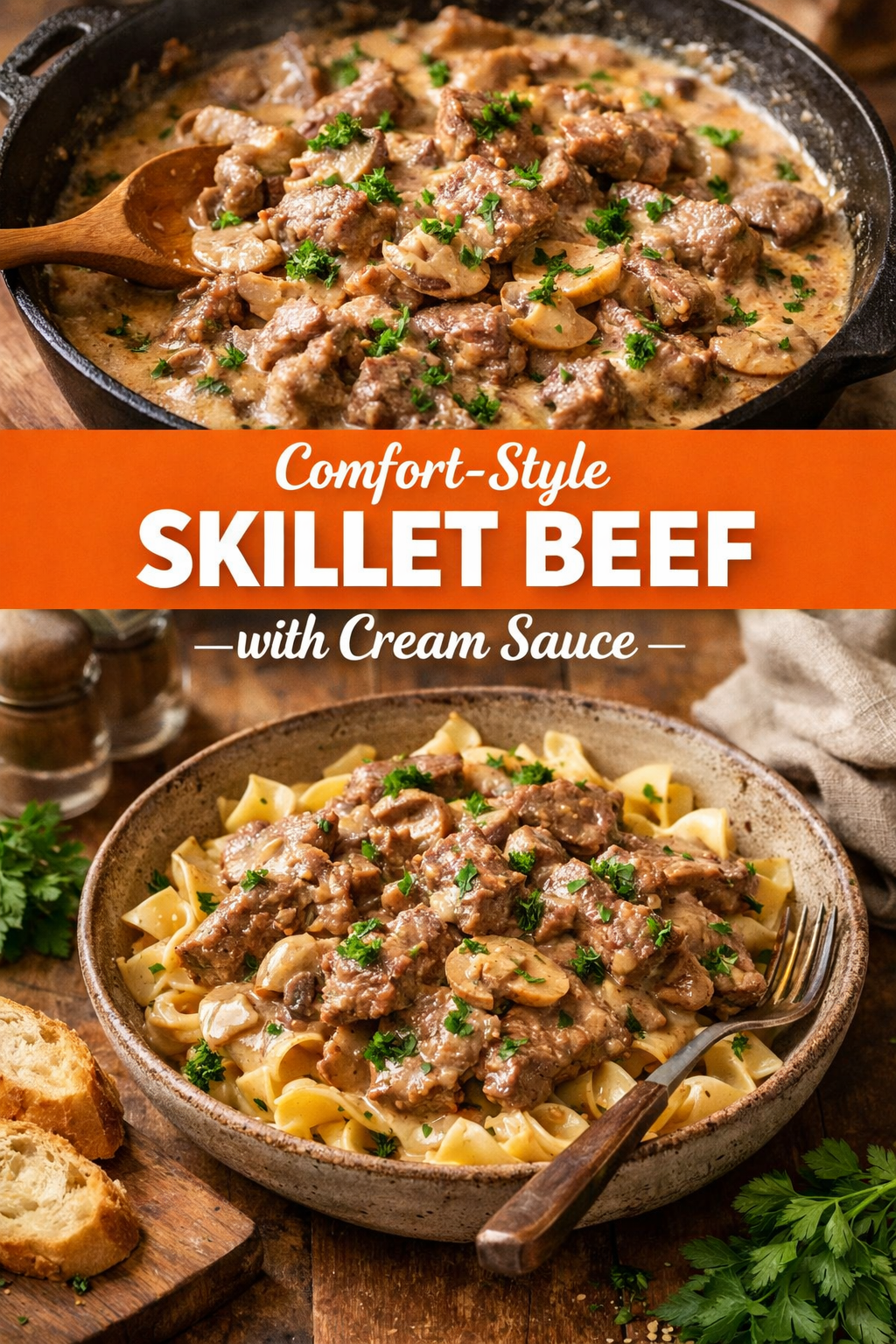
Comfort-Style Skillet Beef with Cream Sauce
I didn’t plan to make this the first time. That’s usually how it goes with the meals that stick. I had beef out because it needed to be used, a half-carton of cream lingering in the fridge door, and the kind of evening where you’re hungry but not inspired. The stove was already warm from boiling pasta for someone else. I figured I’d just sear the beef, splash something creamy in there, and see where it landed.
Somewhere between the sound of the meat hitting the pan and the smell of garlic warming in butter, it turned into this—comfort-style skillet beef with a cream sauce that doesn’t pretend to be elegant. It’s cozy, filling, and forgiving. The kind of food you eat from a bowl if you’re tired, or from a plate if you’re pretending the day wasn’t long.
This isn’t a recipe I follow line by line anymore. It’s more like a shape I recognize. Beef, heat, cream, patience in small doses. And a pan you don’t want to scrub too hard afterward because all the flavor lives there.
The beef matters, but not in a fancy way
I’ve made this with different cuts, and honestly, some worked better than the ones I thought would. Thin-sliced sirloin is great if you want something quick. Chuck works too, but only if you’re willing to slow down and let it soften. I’ve even used leftover roast beef once, sliced thin and reheated gently in the sauce, which felt a little wrong at first but turned out surprisingly good.
What matters more than the cut is how cold the beef is when it hits the pan. Straight from the fridge, it steams. You don’t want that. Let it sit out while you prep everything else. Not forever—just long enough to lose that chill. Dry it well. Really well. I forget this step sometimes and regret it every time.
Salt early. Not aggressively, just enough that it doesn’t feel like an afterthought later.
The pan sets the mood
I always reach for my heaviest skillet here. Cast iron if it’s clean. Stainless if it’s not. Nonstick works, but you lose some of the little browned bits that make the sauce taste like it took more effort than it did.
Heat matters more than people admit. Too hot and the butter burns before you even get started. Too low and the beef releases liquid, sulks, and refuses to brown. Medium-high usually gets me there, but I still wait for the pan to tell me it’s ready. A flick of water should dance, not sit there thinking about life.
Butter first, then a touch of oil so it doesn’t scorch. I’ve tried just oil. It’s fine. But butter makes it feel like comfort food instead of just dinner.
Searing without fussing (this is harder than it sounds)
Once the beef goes in, leave it alone. This is where I mess up when I’m impatient. I poke, stir, flip too early. Don’t. Let one side brown properly. If it sticks, it’s not ready. That’s annoying advice, but it’s true.
Work in batches if you need to. Crowding the pan ruins the whole thing. I know it feels like extra work. It is. But it’s also the difference between beef that tastes rich and beef that tastes… boiled.
When it’s browned, pull it out. All of it. Put it on a plate and don’t worry that it’s not cooked through. It’ll finish later, gently, in the sauce.
The quiet middle part (where the flavor builds)
Turn the heat down a notch. This is not the moment to rush.
I usually add chopped onion here—sometimes shallot if I’m feeling a little fancy, but onion is more honest. Let it soften in the leftover fat and browned bits. Scrape gently. The pan should look messy in a good way.
Garlic goes in next. Briefly. I count to maybe fifteen in my head. Burnt garlic kills the mood faster than almost anything.
This is where I sometimes hesitate. Do I add mushrooms? Sometimes yes. If I have them and they’re not slimy. They soak up the sauce beautifully, but they also make the dish heavier. On nights when I want something simpler, I skip them and don’t miss them.
A small spoon of flour can go in here if you want a thicker sauce. Not always necessary, but helpful if your cream is on the thin side. Cook it out for a minute so it doesn’t taste raw.
Cream sauce without overthinking it
Pouring in the cream always feels dramatic, even though it’s not. The pan hisses, everything loosens up, and suddenly it smells like something you’d order instead of cook.
Heavy cream is safest. It won’t split, even if you get distracted. I’ve used half-and-half in a pinch, but you have to be gentler. Lower heat, more patience. If it looks like it might break, pull it off the burner for a second and whisk like you mean it.
I add a splash of broth sometimes, especially if the sauce feels too thick too fast. Beef broth makes sense, but chicken works too. I wouldn’t tell anyone if you didn’t.
This is where seasoning starts to matter more. Salt, yes. Pepper, definitely. Sometimes a little Dijon mustard sneaks in—not enough to announce itself, just enough to sharpen the cream. A pinch of paprika or thyme if I’m in the mood. Not every spice cabinet needs to be involved.
Let the sauce simmer gently. Not boil. Boiling makes it grainy and impatient.
Bringing the beef back, carefully
The beef goes back in once the sauce looks settled. Not watery, not gluey. Somewhere in between. Stir it in and let it warm through.
This part is quiet. The pan barely bubbles. The beef finishes cooking, relaxes, and takes on the sauce instead of fighting it.
Taste. Adjust. This is usually when I realize it needs more salt than I expected. Cream hides salt the way mashed potatoes do.
If it tastes flat, a tiny splash of acid helps. Lemon juice, a few drops of vinegar, even a little white wine if there’s some open. You don’t want it sour. Just awake.
What to serve it with (or not)
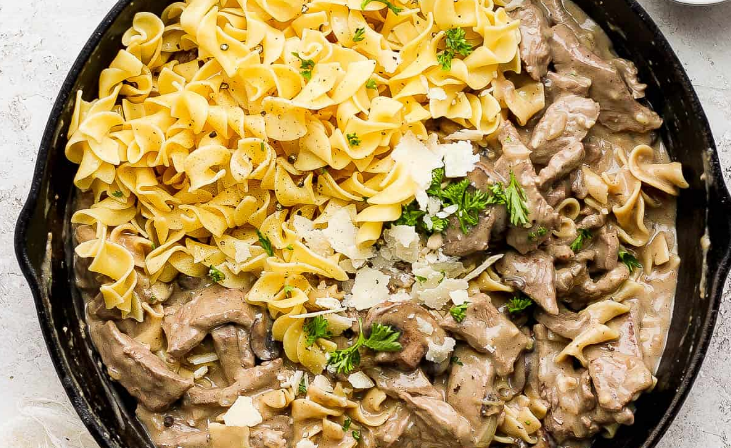
I’ve spooned this over mashed potatoes more times than I can count. That’s the classic move, and it works. Egg noodles are a close second, especially when they catch the sauce in their curves.
Rice is fine. Crusty bread is better. Sometimes I eat it straight from a bowl with a fork and tear bread with my hands. No regrets.
If there’s something green on the plate, it’s usually an afterthought. Steamed beans, a quick salad, maybe broccoli if I remembered. The dish doesn’t demand balance. It just accepts it if you offer.
Cleanup thoughts (because they matter)
If you did it right, the pan shouldn’t be terrible. A soak while you eat helps. Don’t scrub too hard—you want to remember this meal next time you cook in it.
The sauce thickens as it sits, which makes leftovers even better. Reheat gently. Add a splash of cream or broth if needed. High heat will break it and make you sad.
Why this one stays in rotation
I think I keep coming back to this comfort-style skillet beef with cream sauce because it doesn’t pretend. It’s not trying to be light or impressive or clever. It’s just good, in a way that feels earned but not exhausting.
It forgives substitutions. It forgives distraction. It even forgives a slightly overcooked piece of beef now and then. On nights when cooking feels like one more thing, this dish meets you halfway.
I’ve made it while tired, distracted, and once while slightly annoyed at everyone in the house. It still worked. That counts for a lot.
And every time I think I’m done tweaking it, I change something small. Different cut. Different herb. No mushrooms. Extra pepper. It adjusts. Like comfort food should.
If you make it once and then never exactly the same way again, that feels right. That’s how it started for me, and honestly, I hope it ends up that way for you too.