Creamy Brie Pasta Recipe
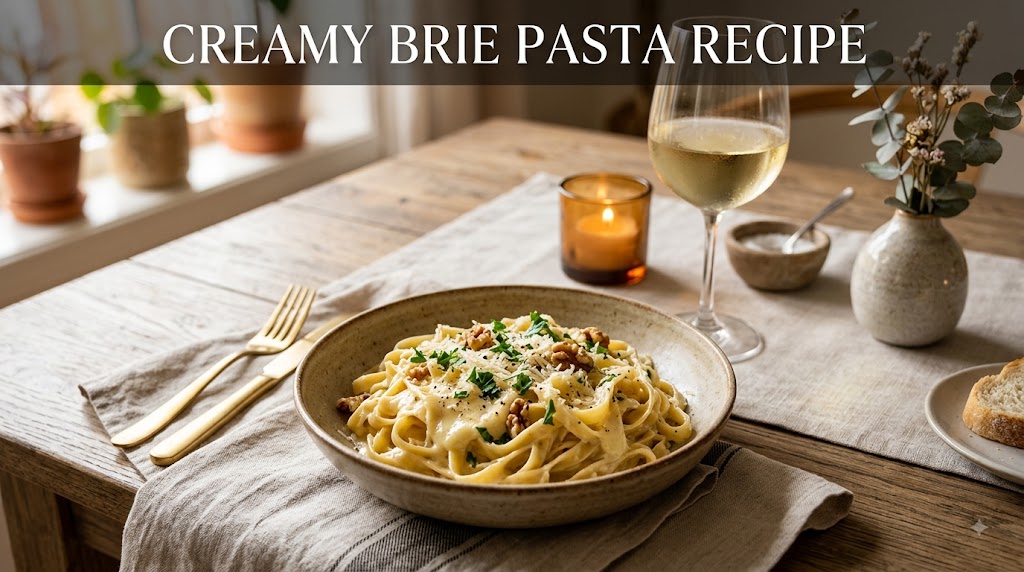
I made this creamy brie pasta recipe for the first time on a random Tuesday because I had half a wheel of brie sitting in my fridge and no real plan for it. My husband Mark walked into the kitchen, took one bite, and just stopped talking mid-sentence, which for him is basically a five-star review. That’s the moment I knew this dish needed to be written down properly instead of living in my head as “that pasta I kind of winged.”
This isn’t a fussy, restaurant-only kind of meal. It’s the sort of thing you can throw together after work, in maybe 25 minutes, using ingredients you probably already have except for the brie itself. And honestly, that’s the whole point of a good creamy brie pasta recipe — it should feel a little bit fancy without asking you to dirty five pots.
Why You’ll Love This Recipe
There’s something almost unfair about how easy this is compared to how impressive it tastes. The brie melts down into this silky, slightly funky sauce that clings to every noodle, and you don’t need heavy cream or a roux or any of that stuff to get there. Just cheese, pasta water, and a little patience.
It’s also forgiving. I’ve made this dish with pasta that sat a bit too long draining in the colander, and it still turned out fine. Try that with a béchamel sauce and see how it goes — trust me, it won’t end well.
And it’s a one-skillet situation for the sauce part, which matters more to me at 6:45 on a Tuesday than almost anything else on this list.
Ingredients
- 12 ounces short pasta (I like rigatoni or fusilli, something with ridges to grab the sauce)
- 8 ounces brie cheese, rind removed, cut into chunks
- 2 tablespoons unsalted butter
- 3 cloves garlic, minced
- 1 cup reserved pasta water (you’ll use less, but save more just in case)
- 1/2 cup freshly grated Parmesan cheese
- 1/4 teaspoon crushed red pepper flakes, optional
- Salt and black pepper, to taste
- 2 tablespoons fresh chives or parsley, chopped, for topping
- A squeeze of fresh lemon juice, about half a lemon
Equipment Needed
You really just need a large pot for boiling the pasta and a big skillet or sauté pan for the sauce. A wooden spoon helps. I also use a cheese knife for the brie, but a regular kitchen knife works fine too, don’t overthink it.
Step-by-Step Cooking Instructions
- Bring a large pot of salted water to a boil. Salt it more than you think you should — it should taste like the ocean, or close to it.
- Add the pasta and cook according to the package directions until al dente. Before draining, scoop out at least a cup of that starchy pasta water and set it aside.
- While the pasta cooks, melt the butter in a large skillet over medium heat. Add the minced garlic and stir it around for about 45 seconds, just until it smells amazing and starts turning golden at the edges. Don’t walk away here — garlic burns fast and there’s no saving it once it does.
- Lower the heat to medium-low. Add the brie chunks straight into the skillet.
- Pour in about 1/2 cup of the reserved pasta water and stir slowly. The brie will look kind of clumpy and weird at first. Keep stirring. It comes together, I promise.
- Once the brie has mostly melted into a smooth-ish sauce, add the grated Parmesan and stir until it disappears into the mixture.
- Add the drained pasta directly into the skillet. Toss everything together, adding a little more pasta water a splash at a time if the sauce feels too thick or tight.
- Stir in the red pepper flakes if using, plus a good pinch of salt and black pepper. Taste it. Adjust as needed.
- Turn off the heat and add the squeeze of lemon juice. This part matters more than it sounds like it should.
- Plate it up, scatter the chives or parsley over the top, and serve immediately while it’s still glossy and warm.
Cooking Tips
Take the brie out of the fridge about 20 minutes before you start cooking. Cold brie fights you the whole way, and warmer brie melts faster and smoother, which saves you time and frustration standing at the stove.
Also — and I learned this the hard way — don’t skip removing the rind. I used to leave a little of it on thinking it wouldn’t matter. It matters. You end up with weird rubbery bits floating in an otherwise smooth sauce, and nobody wants that texture surprise mid-bite.
Keep your heat low once the brie goes in. High heat makes cheese sauces break and turn grainy, and there’s no undoing that once it happens.
Substitutions & Variations
If you can’t find brie or just don’t love it, camembert works in almost exactly the same way, since the two cheeses are close cousins. Some people swap in goat cheese for a tangier version, though the texture ends up a bit looser. You could add crispy bacon bits, sautéed mushrooms, or a handful of baby spinach wilted right into the sauce at the end. My neighbor Denise adds sun-dried tomatoes to hers and swears it’s the only way to make it, which, fair enough, I get the appeal, though I still like mine plain.
For a vegetarian version, just double check your Parmesan, since some brands use animal rennet. Gluten-free pasta works fine too, just watch your cook time since it can go mushy faster than regular pasta.
What to Serve With It
A simple green salad with a sharp vinaigrette cuts through the richness nicely. Garlic bread is basically non-negotiable in my house. If you want to go a bit further, roasted asparagus or green beans add some color and crunch on the plate, and a glass of dry white wine doesn’t hurt either.
Storage & Reheating
Store leftovers in an airtight container in the fridge for up to 3 days. The sauce firms up quite a bit once it’s cold, so don’t panic when you open the container and it looks nothing like it did the night before.
To reheat, add a splash of milk or water to a skillet over low heat, then add the pasta and stir gently until it loosens back up. Microwaving works too in a pinch, just do it in short bursts and stir between each one so the cheese doesn’t separate.
Cook and Prep Time
Prep time: 10 minutes Cook time: 15 minutes Total time: 25 minutes Servings: 4
Nutrition Facts (per serving)
Calories: 520 Total Fat: 24g Saturated Fat: 14g Carbohydrates: 54g Protein: 20g Sodium: 480mg
Nutritional values are estimates only, calculated using standard ingredient databases. Actual values may vary depending on specific brands, exact measurements, and any substitutions you make, so please use this information as a general guide rather than an exact figure, especially if you’re tracking intake for medical reasons.
The Reason This One Actually Works
Most creamy pasta sauces rely on cream or flour to get that thick, clingy texture, but brie does something different. It’s already got a soft, almost custardy interior once you strip the rind off, so when it hits warm pasta water, it breaks down into a sauce on its own without needing a bunch of extra thickeners. That’s really the whole trick. You’re not building a sauce from scratch, you’re just coaxing one out of a cheese that basically wants to become a sauce anyway.
The Small Thing That Changed Everything
For a long time I made this without the lemon juice at the end, and it was good, just a little flat somehow. One night I was out of nutmeg, which I used to add instead, and grabbed a lemon out of desperation more than anything. That tiny bit of acid woke the whole dish up. It cuts through the richness just enough that you don’t feel like you need a nap after two bites. Small change, honestly kind of a big deal.
What I’d Do Differently Next Time
I’d probably add the garlic a little later in the process. I tend to get impatient and toss it in too early, right when the butter’s still foaming, and it browns faster than I want. Next time I’m giving the butter an extra 30 seconds alone in the pan first. Small thing, but it’d save me from that slightly bitter edge I sometimes get in the finished sauce.
What I Skip When I’m Short on Time
On busy nights I skip toasting anything extra, skip the fresh herbs, and just use whatever grated Parmesan is already sitting in the fridge door instead of grating a block myself. I’ve even used the pre-shredded stuff, which purists will yell at me for, but it still tastes great and honestly nobody at my dinner table has ever noticed the difference.
FAQ
Can I use a different pasta shape? Yes. Short pasta with ridges or curves works best because it grabs onto the sauce, but honestly spaghetti works fine too if that’s what you’ve got.
Why is my sauce grainy instead of smooth? That usually means the heat was too high when the cheese went in, or the pan was still too hot from the garlic step. Low and slow is the way to go here.
Can I make this ahead of time? You can prep the ingredients ahead, but the sauce itself is best made fresh, since brie sauces don’t reheat quite as silky the second time around.
Is brie pasta very rich? It’s on the richer side, yes, but a smaller portion alongside a salad balances it out nicely.
Can I freeze leftovers? I wouldn’t recommend it. Cream and cheese-based sauces tend to separate once thawed, and you’ll end up with a texture that’s more sad than satisfying.
Final Thoughts
This creamy brie pasta recipe has become one of those dishes I make when I want something that feels a little special but doesn’t actually take any real effort. It’s quick, it’s forgiving, and it turns a fridge full of odds and ends into something that tastes like you tried way harder than you did. Give it a shot on a random weeknight, maybe even a Tuesday like mine, and don’t be surprised if it becomes a regular thing in your house too.