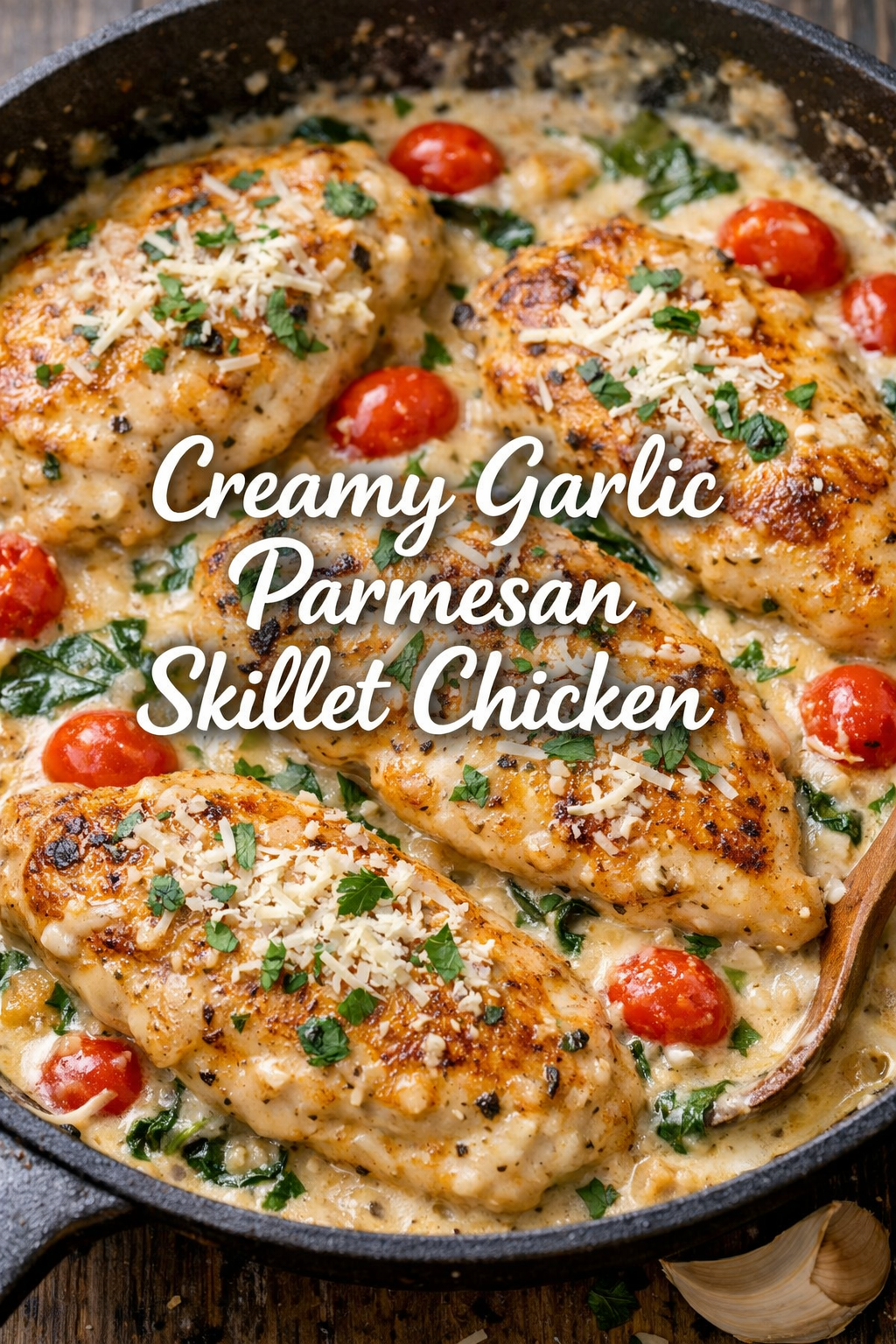
Skillet Chicken with Garlic Parmesan Sauce
Have you ever opened the fridge late at night and just stood there longer than necessary?
Not even looking for anything specific. Just staring. Like the answer might rearrange itself on the shelves.
That’s usually when this creamy garlic parmesan skillet chicken happens.
It’s not exciting in theory. It’s chicken. Garlic. Cream. Cheese. Nothing revolutionary. But once the pan heats up and the garlic hits butter, the whole kitchen smells like you meant to cook something impressive all along.
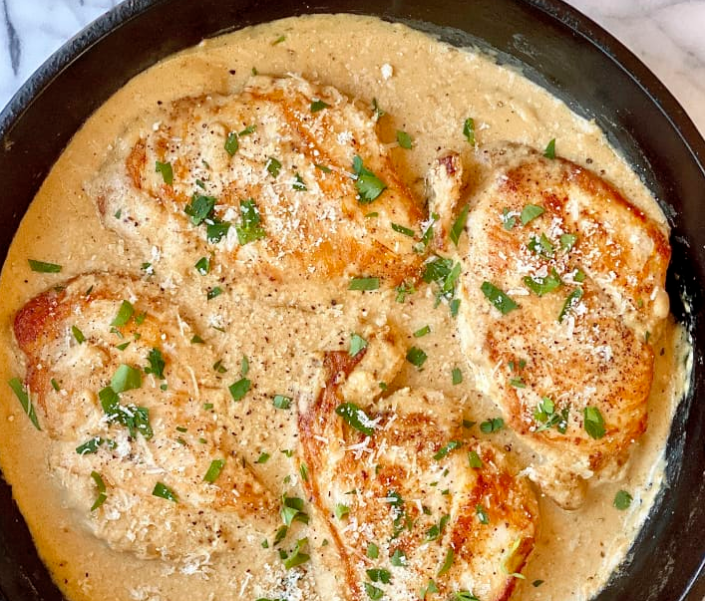
The chicken browns. The sauce thickens slowly. Parmesan melts in and turns everything glossy. You spoon it over the top and suddenly it looks like something you’d order somewhere that uses cloth napkins.
It’s ready in about 30 minutes. No complicated prep. No strange ingredients hiding in the back of a specialty aisle.
The first time I made it, it wasn’t planned. I just needed something low carb that didn’t feel like diet food. Now it shows up regularly — especially on nights when I don’t want to think too hard.
And honestly? The sauce carries the whole thing.
Why This Recipe Actually Works
Some low-carb dinners technically check the boxes — high protein, low carb — but they don’t really satisfy. You finish eating and start wandering back into the kitchen twenty minutes later.
This one doesn’t usually do that.
Each serving gives you solid protein from the chicken — roughly 35–40 grams depending on portion size. The butter, heavy cream, and Parmesan bring enough fat to make it feel complete without tipping into greasy territory.
Carbs stay low. Typically under 4g net per serving.
But what really makes it work isn’t the macro math.
It’s the sequence.
You brown the chicken first and don’t rush it. That builds flavor. Then you make the sauce in the same pan. You scrape up those browned bits stuck to the bottom. They dissolve into the cream and suddenly the sauce tastes deeper than it should for such a short ingredient list.
Nothing fancy is happening. It just builds on itself.
And that simplicity matters — especially if you’re newer to keto and don’t want recipes that feel like science experiments.
The Flavor Profile
Garlic and Parmesan together aren’t groundbreaking.
But heat changes things.
Butter melts. Garlic softens. Cream simmers and thickens. Parmesan goes from crumbly to smooth and pulls everything together. A little Italian seasoning hums quietly in the background.
It’s rich, but not heavy. Savory without being sharp. The sauce clings instead of running thin across the plate.
I’ve served this to people who aren’t eating low carb. No one asked questions. They just went quiet for a minute and kept eating.
That’s usually how I measure success.
It’s More Flexible Than It Looks
Once you’ve made the base version once, it stops feeling rigid.
You can add spinach at the end. It wilts quickly in the sauce.
You can stir in sun-dried tomatoes if you want something slightly tangier.
Mushrooms work well too, especially if you cook them before adding the cream so they release some moisture first.
Chicken thighs instead of breasts? Absolutely. They’re a little more forgiving if you accidentally leave them on the heat too long. Which happens. Not often. But sometimes.
The point is, the structure holds.
And when you’re eating low carb long-term, having meals that adapt instead of getting boring makes a difference.
Ingredients Required
The ingredient list is short. Nothing complicated.
For the Chicken:
2 large chicken breasts (about 1.5 lbs total), pounded to even thickness
2 tablespoons olive oil (or avocado oil)
Salt and black pepper
1 teaspoon Italian seasoning (optional)
½ teaspoon garlic powder
For the Garlic Parmesan Sauce:
3 tablespoons butter
4–5 cloves garlic, minced
1 cup heavy cream
¾ cup freshly grated Parmesan cheese
½ teaspoon Italian seasoning
Salt and pepper to taste
Fresh parsley for garnish (optional)
A Few Notes
Chicken:
Breasts cook quickly and stay lean. Thighs work just as well, just adjust the time slightly.
Heavy Cream:
This is one of those situations where substitutions don’t behave the same way. Lower-fat dairy won’t thicken properly.
Parmesan:
Freshly grated melts more smoothly. Pre-shredded cheese can turn the sauce slightly grainy. It’s not a disaster, but it’s noticeable.
Garlic:
Fresh gives the best flavor. Jarred is fine if that’s what you have. Just use a bit less.
Step-by-Step Instructions
Step 1: Prep the Chicken
Pat the chicken dry. It feels minor, but surface moisture prevents browning.
If the breasts are thick, slice them horizontally or pound them to about ¾ inch thick. Even thickness makes everything simpler later.
Season both sides with salt, pepper, garlic powder, and Italian seasoning.
You don’t need to overthink this part. Just don’t under-season.
Step 2: Sear the Chicken
Heat olive oil in a skillet over medium-high heat until shimmering.
Place the chicken in the pan. You should hear it immediately. If you don’t, give the pan another minute.
Let it cook undisturbed for 6–7 minutes. Don’t poke it. Don’t slide it around. Just let it do its thing.
Flip and cook another 5–6 minutes. Internal temperature should reach 165°F.
If you don’t have a thermometer, it’s worth getting one eventually. It removes guesswork. But people cooked chicken long before thermometers existed, so don’t panic if you’re eyeballing it.
Transfer to a plate and loosely tent with foil.
The pan will look messy. That’s good.
Step 3: Build the Garlic Parmesan Sauce
Lower the heat slightly and add butter.
Once melted, add minced garlic. Cook for about 30–60 seconds. You’ll smell it right away. If it starts browning, you’ve gone too far.
Pour in the heavy cream and scrape the bottom of the pan. Those browned bits loosen and melt into the sauce. That step alone changes everything.
Let the cream simmer for a few minutes until it thickens slightly.
Reduce heat to low and stir in Parmesan gradually. Don’t dump it all in at once. Add a handful, stir until smooth, then add more.
Season with Italian seasoning, salt, and pepper.
Taste it.
Sometimes it needs a pinch more salt than you expect. Cream dulls seasoning slightly. Adjust slowly.
Step 4: Bring It Together
Return the chicken to the skillet.
Spoon the sauce over the top and let everything simmer together for 2–3 minutes.
You don’t need much longer than that.
The sauce thickens a little more as it sits. If it feels too thick, add a splash of broth. If it feels thin, give it another minute.
It doesn’t have to be perfect. It just has to taste good.
Garnish with parsley if you want it to look polished. Or skip it. It won’t change the flavor.
Practical Tips
Don’t overcrowd the pan.
Keep heat low after adding cheese.
Let the chicken rest before slicing.
Adjust sauce slowly — small changes matter.
None of these steps are dramatic. They’re just small details that stack up.
Storage Instructions
Refrigerator
Store in an airtight container for 3–4 days.
The sauce thickens in the fridge. That’s normal.
When reheating, add a splash of cream or broth and stir gently.
Reheating
Stovetop over low heat works best.
Microwave works too — just use shorter intervals and stir between them. Cream sauces don’t love aggressive heat.
Freezing
Cream-based sauces can separate after freezing.
It’s possible, but texture may change slightly. If you freeze it, thaw overnight and reheat slowly while stirring. Sometimes it smooths out. Sometimes it’s just… different.
Still edible though.
Meal Prep Friendly?
Yes.
Portion it with cauliflower rice, zucchini noodles, roasted broccoli, or even a simple salad.
Keeping the chicken in the sauce helps it stay moist during reheating.
Dry chicken usually comes from overcooking the first time, not from storage.
FAQs
Can I use chicken thighs instead of breasts?
Yes. Increase cooking time slightly — about 7–8 minutes per side depending on thickness.
Is this dairy-free friendly?
Not realistically. The sauce depends on butter, cream, and Parmesan.
What should I serve with this?
Cauliflower rice
Zucchini noodles
Roasted broccoli
Mashed cauliflower
A green salad
Can I make it ahead of time?
You can prep the chicken ahead. The sauce is best fresh, but leftovers reheat well.
How do I prevent sauce separation?
Keep heat low once cheese is added. High heat breaks dairy sauces.
Can I double the recipe?
Yes, just cook the chicken in batches if needed.
Is it kid-friendly?
Usually. If garlic is a concern, reduce it slightly. The creamy sauce tends to win people over.
Final Thoughts
Keto can feel restrictive at first. Cutting out grains and quick comfort foods takes adjustment.
Meals like this make that shift easier.
It’s not complicated. It doesn’t rely on specialty ingredients. It just uses basic technique and lets the flavors do their job.
I make this often — not because it fits a plan perfectly, but because it’s dependable. It tastes good. Cleanup is minimal. And on nights when you don’t want to experiment, that’s enough.
Sometimes dinner doesn’t need to impress anyone.
It just needs to work.