
Creamy Mushroom And Leek Chicken Thighs for Dinner
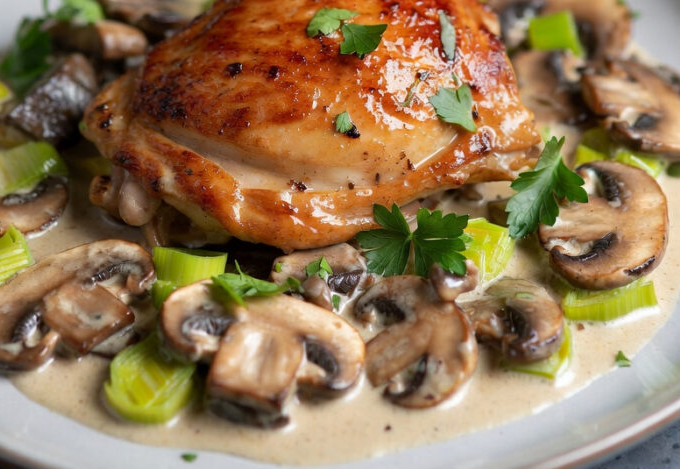
Some nights I don’t want a new idea. I want something that already feels decided before I even touch a pan. That’s usually when mushrooms and leeks end up on the counter without much conversation. Chicken thighs tend to follow. Not because I planned it, but because they’re forgiving and already thawed more often than not.
Creamy mushroom and leek chicken thighs fall into that category of dinners that feel calm while you’re making them. Nothing happens all at once. There’s no frantic timing, no step that punishes you if you answer a text or walk away for a minute. Things soften gradually. Smells build in layers. The pan does most of the work if you let it.
I’ve cooked versions of this more times than I can count. Some were great. A few were just fine. The good ones all had one thing in common, though—patience. Not a heroic amount. Just enough to not rush the parts that don’t like being rushed.
Why this combination keeps working
Mushrooms and leeks are naturally cooperative, which sounds obvious once you’ve cooked them together a few times. Mushrooms bring depth and that almost meaty quality that makes chicken feel more substantial. Leeks add sweetness, but in a quieter, rounder way than onions. Together, they build flavor without demanding attention.
Chicken thighs are the obvious choice here. They stay tender even when timing slips a little, and they don’t dry out while you’re waiting for the sauce to pull itself together. Chicken breasts technically work—I’ve used them—but they don’t relax into the dish the same way. They need more watching, and this isn’t a dish I like to hover over.
The cream doesn’t dominate if you’re careful. It rounds everything off and smooths the edges. It turns what could feel like a pile of separate ingredients into something cohesive, something that eats like a real dinner.
This isn’t flashy food. It doesn’t try to impress. It’s dependable food. And most nights, that matters more.
Ingredients, the way I actually think about them
Chicken thighs, bone-in or boneless. I reach for boneless more often because I’m impatient, but bone-in does give deeper flavor if you don’t mind the extra step.
Mushrooms. Button mushrooms are fine. Cremini are better. I slice some thick, some thin. Perfect uniformity doesn’t buy you much here, and I stopped trying.
Leeks. Just the white and pale green parts. Wash them well. They hide grit in places you wouldn’t expect, and you only forget that once.
Garlic. Not optional. Even when I consider skipping it, I don’t.
Heavy cream. I’ve tried half-and-half. It works, but the sauce ends up thinner than I want. Cream behaves better and gives you more room for error.
Butter or olive oil. Sometimes both, depending on my mood and what’s already on the stove.
Salt and black pepper. Always.
A little chicken stock, just in case the pan needs loosening later.
Fresh thyme if I have it. If I don’t, I don’t stress about it.
Getting the chicken right first
I start with the chicken because it sets the tone for everything else.
Pat the thighs dry and season both sides generously with salt and pepper. I used to under-season at this stage and tell myself I’d fix it later. That rarely worked out the way I hoped.
Heat a skillet over medium heat and add a bit of oil. Lay the chicken in and leave it alone. This is not the moment to multitask or get clever.
Let it brown properly. When it releases easily, flip it. You’re not cooking it through yet. You’re just building flavor and giving the pan something to remember.
Once both sides look good, pull the chicken out and set it aside. The skillet should have browned bits stuck to it. If it doesn’t, something went wrong earlier, but it’s usually salvageable.
Mushrooms first, leeks second (this order matters)
If the skillet looks dry, add a little butter. Then the mushrooms go in.
Don’t crowd them. Mushrooms need space or they steam and sulk instead of browning. Let them sit longer than feels necessary. Stir only when you have a reason.
Once they’ve released their moisture and picked up some color, add the leeks. Lower the heat slightly. Leeks don’t respond well to aggression. They soften on their own schedule.
Stir occasionally and let them turn silky. If they start browning too fast, turn the heat down. Burnt leeks are bitter, and there’s no fixing that after the fact.
Garlic goes in last. Thirty seconds is enough. Any longer and the kitchen tells on you.
Building the sauce without fussing over it
When the vegetables look soft and smell sweet, pour in a small splash of chicken stock. Just enough to loosen the fond from the pan. Scrape gently and let it settle.
Then add the cream. Not all at once if you’re unsure. I usually start with less than I think I need and adjust later.
Bring it to a gentle simmer. Not a boil. Cream gets cranky when rushed, and I’ve learned that the hard way.
Season lightly and taste. This is usually where I pause. If the sauce feels flat, salt fixes it. If it feels heavy, a splash more stock helps. I don’t add cheese here. It doesn’t need it, and it tends to muddy things.
Bringing the chicken back (and knowing when to stop)
Nestle the chicken thighs back into the sauce and spoon some over the top. Lower the heat and partially cover the skillet.
Let everything simmer until the chicken is cooked through and tender. The sauce will thicken as it goes, even if it doesn’t look like it at first.
Check once or twice. Not constantly. Overhandling makes everything worse.
When the chicken feels done and the sauce coats the back of a spoon, turn off the heat. Let it sit for a few minutes. The sauce tightens slightly as it rests, and the flavors settle into themselves.
That pause matters more than people think.
What this dish actually tastes like
The chicken stays rich and juicy. The mushrooms taste deeper than they did ten minutes earlier. The leeks melt into the sauce instead of announcing themselves.
The cream ties everything together without stealing attention. You taste mushrooms, chicken, and leeks first—not just dairy.
It’s comforting without being heavy-handed. You finish the plate feeling satisfied, not slowed down.
How I usually serve it
Most often, with mashed potatoes. They just make sense here.
Rice works too. Crusty bread works if that’s what you have. I’ve even spooned it over pasta on nights when I didn’t feel like making another decision.
A green vegetable on the side is nice. Not mandatory.
Variations I’ve tried (and would repeat)
For a lighter version, I’ve used less cream and more stock. The sauce is thinner, but still comforting.
I’ve added a splash of white wine when deglazing. It adds brightness if you like that direction.
Thyme is my favorite herb here, but parsley works in a pinch. I avoid rosemary in this one. It overpowers the leeks more often than not.
I don’t add cheese. Ever. I’ve tried it. I didn’t like what it did.
Storage, leftovers, and reality
This keeps well in the fridge for two to three days.
Reheat gently over low heat, stirring occasionally. If the sauce tightens too much, add a splash of stock or water and let it loosen slowly.
It tastes even better the next day. The mushrooms deepen, and the leeks disappear into the sauce completely.
I don’t freeze it often. Cream sauces change texture after freezing. It’s edible, but not ideal.
FAQs (answered like a real person)
Can I use chicken breasts instead of thighs?
Yes, but watch them closely and pull them early.
Do I need heavy cream?
It works best. Half-and-half is thinner but usable.
Can I make this dairy-free?
You can try coconut cream, but the flavor changes noticeably.
What mushrooms are best?
Cremini if you have them. Button mushrooms still work.
Can I cook this ahead?
Yes. Reheat gently and stir.
Why are my leeks gritty?
They weren’t washed well enough. It happens once.
Is this good for guests?
Yes. It looks more impressive than the effort suggests.
Can I add cheese?
You can. I wouldn’t.
Final thoughts
Creamy mushroom and leek chicken thighs are the kind of dinner I come back to when I don’t want to think too hard but still want something that feels cared for.
It’s steady. Forgiving. It doesn’t rush you.
And most nights, that’s exactly how cooking should feel.