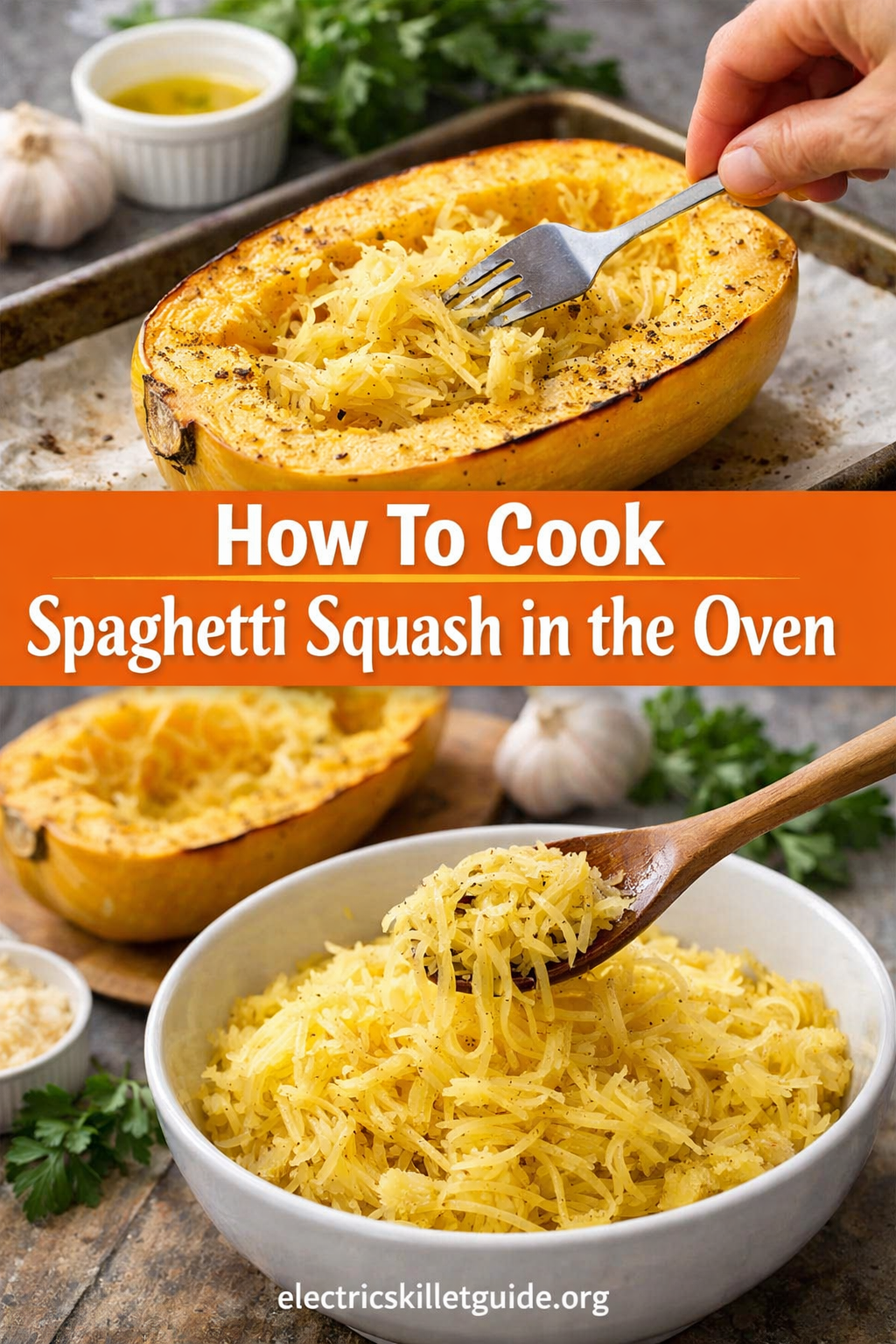
How To Cook Spaghetti Squash
I’ll be quite candid with you—the first time I bought the ingredients and contemplated on how to cook spaghetti squash in the oven, it sat on my counter for eleven days!
Not ten. Eleven.
I didn’t forget about it exactly. It was just… there. Every time I walked into the kitchen, I’d notice it and think, yeah, I should cook that. And then I wouldn’t.
It didn’t even look like food. More like something you’d keep on the table in October and quietly ignore until it felt too late.
At some point I started wondering if it would just stay there permanently.
Then one random Tuesday—I don’t even remember why that day—I finally cut it open, roasted it, and ended up eating it straight from the shell. Standing at the counter. No plate. Which wasn’t the plan, but it worked.
That was the moment it clicked.
Learning how to cook spaghetti squash in the oven isn’t complicated. It just looks like it might be. Big, hard, slightly uncooperative vegetable—that’s the main barrier.
And yes, cutting it is… not the best part. The first time I tried, the knife barely moved. I stopped halfway and just stared at it like, this can’t be right.
It was right. It’s just stubborn.
After that, though, things settle down. Not effortless—but easier. And once you’ve done it once, the second time feels a lot less like a challenge.
Why You’ll Love This Recipe
There’s a reason spaghetti squash keeps showing up in recipes again and again. It’s not really a trend anymore—it just works.
Not in a dramatic way. No big reveal. Just consistently decent results.
The oven method is what makes it worth doing.
If you steam or microwave it, you’ll get something soft. Edible, yes. But kind of flat. Roasting changes that. It pulls out a bit of natural sweetness and gives the edges a slightly deeper flavor.
Not strong. Just enough to notice.
The texture is better too. The strands hold together instead of turning watery. Still soft, but with a bit of structure.
Is it pasta? No. Not really.
But it doesn’t feel like a bad substitute either. Once you stop expecting pasta, it makes more sense.
Also—it’s simple. That’s probably the biggest reason people stick with it.
No draining. No complicated timing. You prep it, put it in the oven, and come back later.
Which, on most days, is exactly the kind of cooking that actually happens.
Ingredients
You don’t need much:
- 1 medium spaghetti squash (around 3–4 lbs)
- 2 tablespoons olive oil
- ½ teaspoon kosher salt
- ¼ teaspoon black pepper
- Optional: garlic powder, Italian seasoning, red pepper flakes
That’s it.
It almost feels like something is missing the first time you read that list. There isn’t.
Quick note—look for a squash that feels heavy and firm. Pale yellow is usually a good sign. If there are soft spots, skip it.
I’ve used one that wasn’t perfect before. It turned out fine. Not amazing, not terrible. Still ate it.
Step-by-Step Instructions
Step 1: Preheat your oven to 400°F
This temperature just works.
Lower tends to steam it. Higher can cook the outside too quickly. 400°F lands somewhere in the middle where things behave.
Step 2: Cut the squash in half lengthwise
This is the part people hesitate on.
Fair enough—it’s tough. The skin is thick, the squash is dense, and it doesn’t cooperate much. I usually slow down here a bit. Not dramatically, just enough to not rush it.
Use a large, sharp knife.
If it feels like it’s not going anywhere, microwave the whole squash for 3–4 minutes first. That helps more than you’d expect.
Also, putting it on a towel so it doesn’t roll around? Small thing, but worth doing.
Step 3: Scoop out the seeds
Once it’s open, it looks a little messy.
Use a spoon to scrape out the seeds and the stringy center. It’s similar to cleaning out a pumpkin, just less effort.
You can roast the seeds if you want. I have, once or twice. Most of the time I don’t.
Step 4: Brush with olive oil and season
Drizzle olive oil over the cut sides.
Add salt and pepper. That’s enough to start.
You can add garlic powder or something else if you want—but it’s not required.
Sometimes I add more seasoning than necessary. It doesn’t ruin it. Just makes it a bit louder.
Step 5: Place cut-side down on a baking sheet
This step matters.
Cut-side down helps moisture escape and allows the squash to roast properly instead of steaming.
If you flip it the other way, it still cooks—but the texture changes. Softer. Slightly watery.
I tried both. There’s a difference.
Step 6: Roast for 35–45 minutes
Put it in the oven and leave it.
You don’t need to check constantly. But you probably will anyway.
Or you’ll forget about it for a bit and then remember. That happens too.
It’s done when a fork goes through the skin easily and the inside looks slightly golden.
Step 7: Let it cool slightly, then fork the strands
Let it sit for a few minutes.
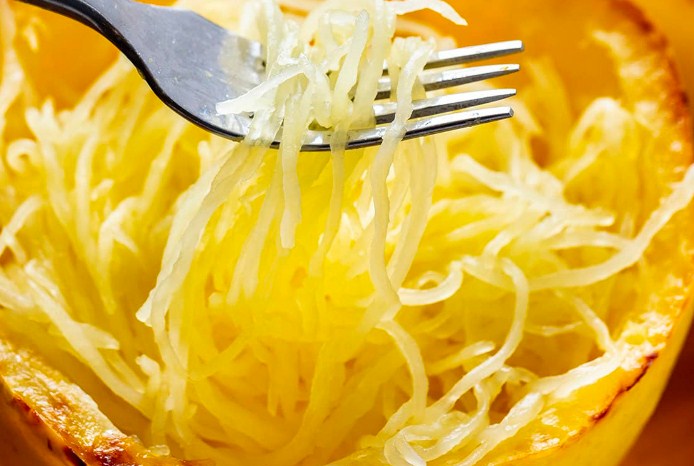
Then flip it over and scrape with a fork. The strands come apart into thin ribbons.
The first time you do it, it’s surprisingly satisfying. After that, you expect it—but it still feels a little satisfying anyway.
Cooking Tips
- Keep it cut-side down
- Microwave briefly if cutting feels difficult
- Don’t overcook it too much
That said, if you do overcook it slightly, it’s not ruined. Just softer.
- Line your baking sheet if you remember (I don’t always)
Actually—this probably should’ve been mentioned earlier—letting it rest for a few minutes before forking helps the strands come out better. Small thing, but noticeable.
Common Mistakes to Avoid
There aren’t a lot of ways to completely mess this up—but there are a few small things that can make it less good than it should be.
One of the biggest ones is placing the squash cut-side up. It feels like it should work either way, but it doesn’t really. The moisture gets trapped, and the strands end up softer and slightly watery. Still edible, just not great.
Another one is overcooking it without realizing. It happens slowly. You think it needs “just five more minutes,” and then suddenly it’s a bit too soft. Not ruined—but you lose that slight bite that makes it better.
Cutting it the wrong way can also make things harder. If the knife isn’t sharp enough, or if you rush it, it gets frustrating fast. This is one of those steps where slowing down actually saves time.
And then there’s under-seasoning.
It’s a mild vegetable to begin with, so if you go too light on salt, it can taste a little flat. Not bad—just… forgettable.
None of these are disasters. That’s kind of the nice thing about spaghetti squash. Even when it’s not perfect, it’s still usable. You just end up fixing it with sauce later.
Now that the basics are covered, you can keep it simple—or change it up a bit depending on what you feel like eating.
Substitutions & Variations
The basic version—olive oil, salt, pepper—is enough.
Really.
But once you’ve made it once or twice, you’ll probably start adjusting things without thinking about it.
Savory herb version
Add thyme, rosemary, or garlic powder before roasting. Finish with Parmesan after.
Nothing precise here—just a light sprinkle works.
Spicy version
Red pepper flakes or smoked paprika add a bit of heat.
Not overwhelming. Just enough to notice.
Butter instead of olive oil
Melted butter gives a slightly richer flavor.
Not better, just different.
Stuffed spaghetti squash
Mix the cooked strands with sauce, protein, cheese, then bake again for 10–15 minutes.
Looks like more effort than it actually is.
What to Serve With It
You can treat it like pasta:
- Marinara
- Pesto
- Garlic and oil
- Brown butter and sage
Or use it as a side with chicken, fish, or something heavier.
It balances richer food pretty well.
I’ve eaten it cold once. Just salt. Not amazing, not terrible.
Easy Sauce Ideas for Spaghetti Squash
If you’re not sure how to serve it, sauce usually solves that problem.
The easiest option is just jarred marinara. Heat it up, maybe add a small knob of butter (this helps more than you’d think), and toss the strands in. Done.
If you want something lighter, olive oil with garlic and chili flakes works well. It’s simple, a little sharp, and doesn’t overpower the squash.
Pesto is another easy one. Store-bought is fine. Just don’t overdo it—spaghetti squash doesn’t need as much sauce as regular pasta.
Sometimes I go even simpler than that. Just butter and salt. Maybe a bit of pepper.
It sounds too basic, but it works.
There’s also the option of mixing things together—like a bit of marinara and a bit of cream or butter. Not exactly a proper sauce, but it ends up somewhere in the middle and tastes good.
Honestly, this is one of those situations where you don’t need to follow a strict recipe. The squash is pretty neutral, so most things you already like will probably work with it.
Why This Method Works
Roasting helps remove moisture and develop flavor at the same time.
That’s really it.
At 400°F, the squash softens while the edges caramelize slightly. That’s what gives it that better texture and taste.
Other methods cook it—but don’t quite get the same result.
The cut-side-down step also helps moisture escape instead of getting trapped.
Small detail. Big difference.
Storage & Reheating
Store leftovers in the fridge for up to 5 days.
Though realistically, it doesn’t always last that long.
Reheat in a skillet if you can—it keeps the texture better. Microwave works too, just slightly softer.
Freezing is possible, but the texture changes.
When I Don’t Feel Like Cooking This Properly
There are days when I follow all the steps—cut carefully, season properly, check the timing.
And then there are days when I don’t.
On those days, I keep it very simple. Sometimes I don’t bother adding anything beyond olive oil and salt. Into the oven, done.
I’ve also rushed the cooling step more times than I can count. Ended up trying to fork it while it’s still too hot, switching hands, dropping bits back onto the tray. Not ideal, but it still works.
Once or twice, I’ve even slightly overcooked it and just… kept going anyway. Added sauce, mixed it up, and called it done. No one complained. Mostly because I was the one eating it.
That’s kind of the point, though.
This isn’t a recipe that falls apart if you don’t do everything perfectly. It’s flexible. A bit forgiving.
And sometimes that’s exactly what you want—something that works even when you’re not trying that hard.
FAQ
Do I need to peel it?
No.
Can I cook it whole?
Yes, but cutting it first works better.
How do I know it’s done?
Fork goes in easily, inside looks slightly golden.
Why is it watery?
Usually from cooking it cut-side up or at a lower temperature.
Final Thoughts
That’s it—that’s the method. Now you should get a better idea of how to cook spaghetti squash in the oven.
Nothing complicated. Just a few small things done right.
Once you’ve made it a couple of times, you stop thinking about it so much. You just do it.
And while it’s still just a vegetable—it’s one that turns into a pretty reliable meal without much effort.
If there’s one sitting on your counter right now, this is probably the moment to finally cook it.