
One-Pan Beef Skillet with Onion Gravy
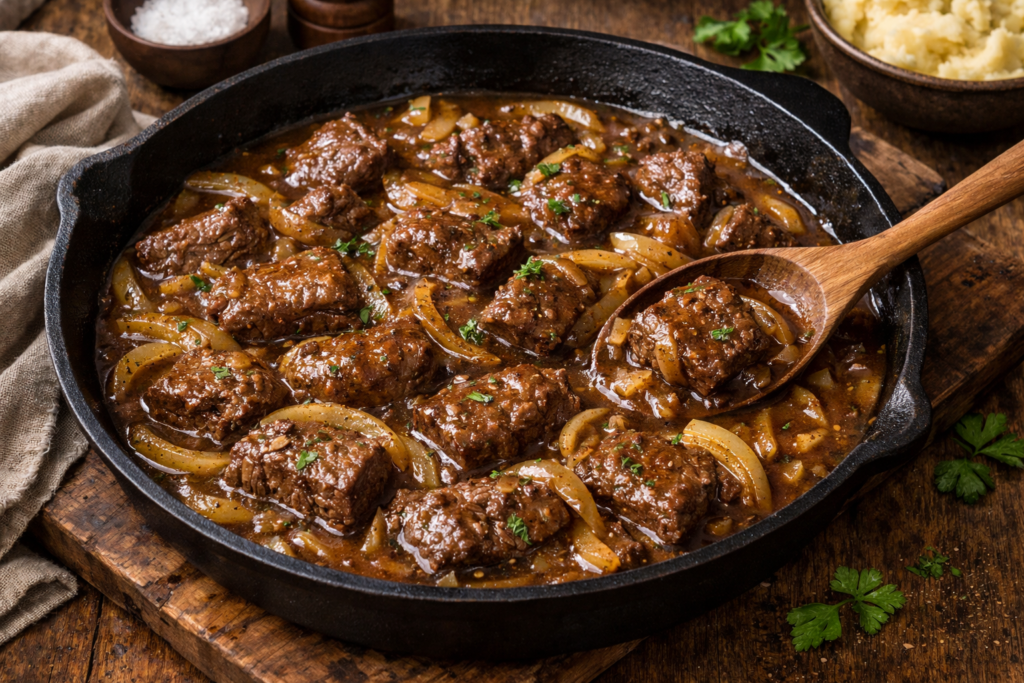
Some nights I don’t even think of it as “onion gravy.”
It’s just onions that stayed in the pan longer than usual, because I wasn’t in a hurry to move on.
The name only makes sense later, when you realize that somewhere between browning beef and scraping the pan clean, a sauce quietly formed on its own. No packet. No plan. Just time and heat doing what they do.
This one-pan beef skillet with onion gravy usually shows up when I want dinner to feel solid but uncomplicated. Beef, onions, one skillet, and the patience to let things take their course. That’s really it. The rest is mostly about not getting in the way.
By the time it’s done, the kitchen smells like something dependable.
Why beef and onions keep working
There’s nothing clever about pairing beef with onions, and that’s exactly why it works. Beef brings weight and savoriness. Onions bring sweetness, but only if you let them.
What I like about this dish is how little it asks from you. No thickening packets. No bottled sauces trying to sound convincing. The onions soften, collapse, and eventually turn into something that holds the whole pan together.
And because everything happens in one skillet, nothing gets lost. Every browned bit stays put, right where it belongs.
Ingredients, without dressing them up
Beef
Thin-cut steak is my usual choice—sirloin, flank, even stew beef sliced smaller. Ground beef works too, but it turns this into a different meal. Still good. Just not this one.
Onions
Yellow onions are the safest bet. Sweet onions cook faster and can get too soft if you’re distracted. Red onions change the flavor slightly. I use them when that’s what’s around.
Garlic
Optional. I add it more often than not, but sometimes I skip it and don’t miss it.
Beef broth or stock
This becomes the gravy. Water works, technically, but broth gives you more to work with.
Fat
Oil, butter, or both. I decide based on how lean the beef looks that day.
Salt and black pepper
Enough to make things taste like themselves.
Optional extras
A pinch of thyme, a splash of Worcestershire, or a dusting of flour if you want thicker gravy. None are required. I don’t always use them.
Start with the beef, and actually let it brown
Heat a wide skillet over medium-high heat and give it a minute. A lukewarm pan won’t brown anything—it just steams it, and that changes the whole direction of the dish.
Season the beef lightly with salt and pepper. Add oil if needed, then lay the beef in a single layer. If the pan looks crowded, pull some pieces out and work in batches. It’s annoying, but it matters.
Once the beef is down, leave it alone. Don’t poke it. When it releases easily, flip it and let the second side brown.
You’re not cooking it through here. You’re building flavor.
When the beef looks right—browned, not dried out—transfer it to a plate. Leave everything else behind.
That dark layer stuck to the pan isn’t a problem. It’s the foundation.
Onions don’t care if you’re impatient
Lower the heat slightly. Add butter if the pan looks dry.
Add the onions with a small pinch of salt. They’ll soften first, then release moisture, then finally start to color. This is where most people rush things. I still do sometimes, and I regret it every time.
Stir occasionally and scrape the pan as you go. If the onions start sticking too aggressively, turn the heat down. Burnt onions can’t be rescued.
After about 10 to 15 minutes, they should be soft, deeply golden, and noticeably sweet. This is the point where the dish quietly turns the corner.
If you’re using garlic, add it now. Stir for about 30 seconds. That’s enough.
Turning onions into gravy (without overthinking it)
Pour in the beef broth slowly, scraping the skillet as you go. Everything stuck to the bottom should loosen and melt into the liquid.
Bring it to a gentle simmer. Not a boil. A boil makes the gravy feel harsh.
At this stage, I taste before deciding anything else. Sometimes it’s perfect as is. Sometimes it wants a little more salt. Sometimes I add flour. Sometimes I don’t bother and just let it reduce.
There isn’t one right move here. That’s kind of the point.
Bringing the beef back, briefly
Return the beef and any collected juices to the skillet. Stir gently so everything gets coated.
Lower the heat and let it warm through. You’re not cooking the beef again—you’re finishing it.
This takes less time than you think. Overdoing it makes the beef tough, and there’s no fixing that.
When the gravy coats the back of a spoon and the pan smells right, turn off the heat.
What it actually tastes like
The beef stays savory and tender. The onions disappear into the gravy instead of sitting on top of it. The sauce feels deep but not heavy.
There’s nothing sharp or flashy about it. Just steady, comforting flavor.
It’s the kind of food that makes you slow down without realizing you’ve done it.
How I usually serve it
Most often, over mashed potatoes. That’s the obvious move.
Rice works. Egg noodles do too. Crusty bread is perfect if you want to swipe the pan clean.
Some nights, I skip the sides altogether and eat it straight from a bowl. That happens more often than I admit.
Variations I actually use
Mushrooms
Cook them after the beef and before the onions. Let them release all their moisture.
Herbs
Thyme or rosemary works, but keep it subtle. This dish doesn’t want perfume.
Creamy version
A splash of cream at the end changes the whole mood. Still good. Just different.
Longer simmer
For tougher cuts, leave the beef in and let it go low and slow. It turns into something closer to a braise.
Mistakes that make it worse
Crowding the pan
Rushing the onions
Letting the gravy boil hard
Cooking the beef twice
None of these ruin dinner, but avoiding them makes the difference obvious.
Leftovers, if there are any
This keeps well for a couple of days.
Reheat gently on the stove with a splash of broth if the gravy tightens. The microwave works too—just stir halfway through.
Like most things built slowly, it’s often better the next day.
Final thoughts
One-pan beef skillet with onion gravy isn’t trying to prove anything. It doesn’t need decoration or clever tricks. It just needs time, heat, and enough attention to not rush it.
I come back to this dish when I want dinner to feel steady. When I want something warm that doesn’t demand much from me.
It’s not impressive food.
It’s reliable food.
And honestly, that’s usually what I’m after.