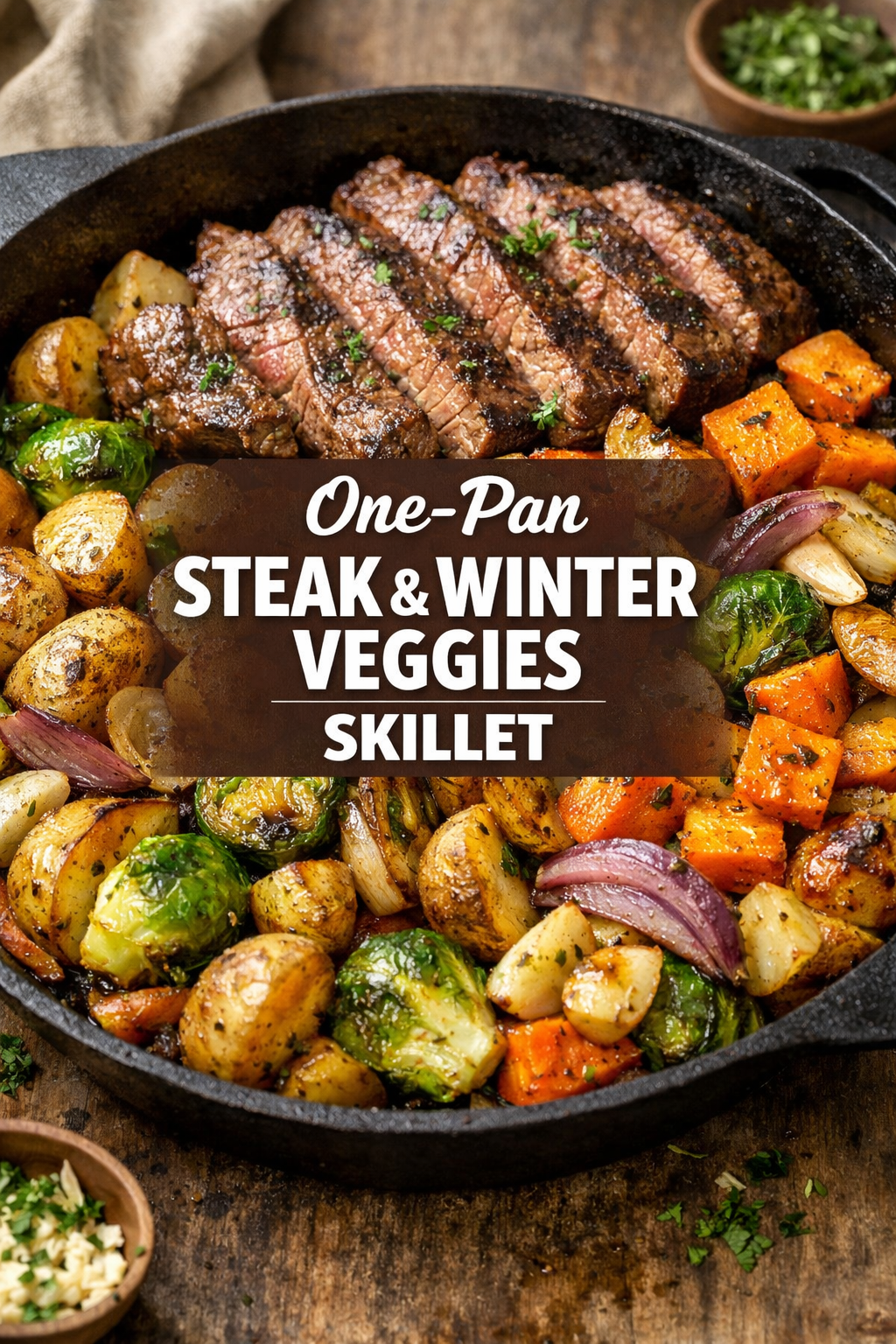
One-Pan Steak and Winter Veggies Skillet
Some dinners feel like a decision. Others feel like a solution.
This one is the second kind.
It usually happens on a cold evening when the kitchen already feels chilly and I don’t want to stack pans like I’m auditioning for something. I want heat, depth, and a plate of food that makes sense without a lot of explanation. Steak and winter vegetables in one skillet do that job quietly, without showing off.
There’s something grounding about cooking steak in a pan that already smells like onions and root vegetables. Everything shares space. Nothing feels fussy. And when it’s done, the skillet looks like it worked for a living.
That’s the kind of dinner I come back to.
Why this meal works when winter cooking feels heavy
Cold-weather food can get exhausting. Too many stews. Too much simmering. Too many meals that take all afternoon and still somehow feel flat.
This one-pan steak and winter veggies skillet stays direct. You get richness from the beef, sweetness from roasted vegetables, and enough browning to make the kitchen feel warmer than it actually is.
The vegetables carry their own weight. They’re not just filler. Winter vegetables—carrots, parsnips, potatoes, Brussels sprouts—actually improve when they hit hot fat and real heat. They caramelize. They soften slowly. They don’t rush you.
Steak, meanwhile, does what steak does best: brings confidence to the plate.
Choosing the steak (without overthinking it)
You don’t need a premium cut here. In fact, I’d argue against it.
Sirloin, strip steak, flat iron—these all work well. Ribeye works too, but sometimes feels almost excessive once you add the vegetables.You want something that cooks quickly, slices well, and doesn’t mind sharing space.
Thickness matters more than price. Too thin and you’ll overcook it while waiting for vegetables to behave. Too thick and everything else sits around awkwardly.
About an inch is comfortable. Season it simply. Salt, pepper. Nothing else yet.
Let it sit at room temperature while you prep the vegetables. That small pause helps more than people admit.
Winter vegetables I actually use (and why)
I rotate based on what looks decent, but a few show up again and again.
Carrots – Sweet, sturdy, and forgiving
Parsnips – Earthy and underrated
Baby potatoes or fingerlings – Creamy inside, crisp outside
Brussels sprouts – Halved, never whole
Red onion – Holds structure, adds sweetness
You don’t need all of them. Pick three or four. Too many vegetables crowd the pan and kill browning, which defeats the point.
Cut them unevenly on purpose. Thicker pieces take longer, thinner ones brown faster. That natural variation keeps the pan interesting.
What goes into the skillet
Most nights the ingredient list for this dinner is short enough that I don’t bother writing it down.
A pound of steak is the center of the plate—sirloin, strip steak, or flat iron all work well. Around that I usually add a mix of winter vegetables that handle heat without falling apart. Carrots and parsnips are almost always there, along with baby potatoes or fingerlings. Brussels sprouts join in when they look good at the store, and a small red onion adds sweetness as it softens in the pan.
Garlic is optional but hard to resist. A little olive oil helps everything brown, and a small knob of butter at the end makes the skillet smell better than it has any right to.
Salt and black pepper do most of the seasoning work.
If I have fresh herbs around, thyme or parsley finishes the dish nicely. A squeeze of lemon sometimes shows up too, especially if the vegetables feel particularly rich.
Cooking everything in one skillet
The vegetables always go first.
Heat a large skillet over medium-high heat and add a little olive oil. Once it shimmers, scatter the carrots, parsnips, potatoes, Brussels sprouts, and onion across the pan. Try to keep them in a loose single layer so they have room to brown.
Season lightly with salt and pepper, then leave them alone for a minute or two. Vegetables need contact with the hot pan to develop color, and constant stirring gets in the way of that.
After several minutes they start to soften and pick up caramelized edges. Stir them occasionally until they’re mostly tender.
At that point I either push the vegetables toward the edges of the pan or move them briefly to a bowl. The steak needs a clear spot in the center.
Season the steak generously with salt and pepper, then lay it into the hot skillet. If the pan is ready, it should sizzle immediately.
Let the first side cook undisturbed until a crust forms. Flip it once and cook the second side until it’s just shy of your preferred doneness. Then transfer it to a plate to rest.
Lower the heat slightly and add a small knob of butter along with the garlic. Thirty seconds is enough for the garlic to turn fragrant.
The vegetables go back into the center of the skillet and get tossed through the buttery juices left from the steak.
Slice the rested steak against the grain and return it to the pan along with any juices that collected on the plate. Stir everything gently so the flavors mingle.
Taste once more, adjust the seasoning if needed, and that’s dinner. Bringing everything back together without losing control
Lower the heat slightly. Add a knob of butter if you’re in the mood. It’s winter. No one’s judging.
Toss the vegetables back into the skillet. Stir to coat them in whatever the steak left behind. This is where flavors start to overlap.
Add garlic if you want it. Keep it brief. Garlic burns quickly and bitterness travels fast.
Slice the steak against the grain. Return it to the pan along with any juices that escaped while it rested. Those juices matter.
Toss gently. Taste. Adjust salt and pepper.
Then stop.
This dish doesn’t benefit from fussing. The skillet has already done the heavy lifting.
What it tastes like when it’s right
The steak stays tender, with crisp edges and a warm center. The vegetables are sweet and browned, not mushy. Potatoes soak up fat. Carrots taste richer than they have any right to.
Everything tastes connected, like it belongs on the same plate.
It’s filling without being sleepy. Rich without being heavy. You finish it and feel warmed instead of weighed down.
Small adjustments that actually help
Cooking isn’t predictable. Ingredients behave differently every time.
If vegetables brown too fast, lower the heat and add a splash of water.
If the pan feels dry, add oil before things start sticking aggressively.
If the steak cooks faster than expected, pull it early and let it rest longer.
If you want brightness, a squeeze of lemon at the very end works quietly.
You don’t need a sauce. The pan already made one.
How I usually serve it (and why I keep it simple)
This doesn’t need much help.
Sometimes I serve it straight from the skillet with nothing else. Sometimes with crusty bread. Occasionally with a simple green salad if I’m pretending balance was planned.
But usually, the skillet is the point. It’s generous. It doesn’t ask for sides to justify itself.
Leftovers and real-life reheating
This keeps surprisingly well.
Store leftovers in a container, not stacked too tightly. Reheat in a skillet if you can. Microwave works, but gently. Steak doesn’t like being bullied.
The vegetables actually improve overnight. The steak softens slightly but stays flavorful.
I’ve eaten this cold once, standing at the counter, and didn’t feel bad about it.
Variations I’ve tried and would repeat
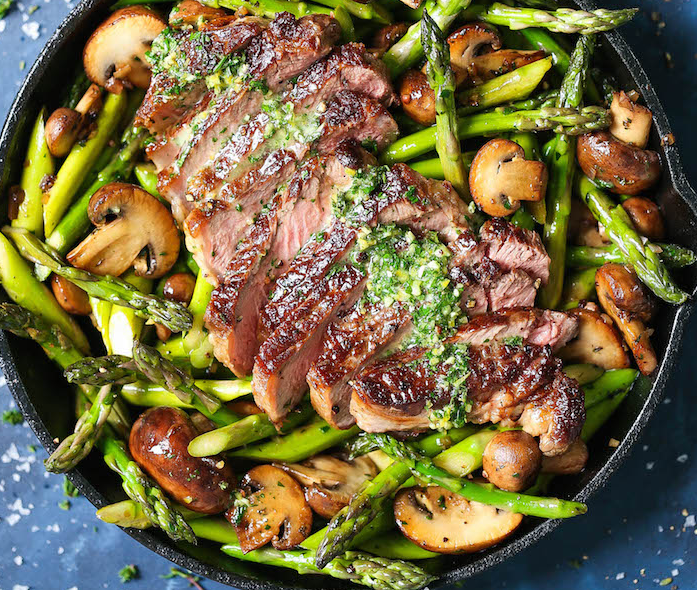
Add mushrooms if you want deeper earthiness.
Use sweet potatoes instead of regular ones for more contrast.
Finish with fresh herbs like thyme or parsley if you have them.
Swap steak for pork chops on nights when beef feels too much.
I avoid heavy sauces here. They take away from the honesty of the dish.
Common mistakes I see (and how to avoid them)
Crowding the pan is the big one. It kills browning and turns everything gray.
Moving things too often is another. Let heat do its job.
Overcooking the steak because you’re waiting on vegetables is why the vegetables go first. Always.
And finally, over-seasoning early. You can always add salt later. You can’t take it back.
Final thoughts
One-pan steak and winter veggies skillet isn’t clever food. It’s steady food.
It’s the kind of dinner that feels reassuring when days are short and everything outside the window looks tired. You don’t need to measure much. You don’t need to impress anyone. You just need a hot pan and a little patience.
It’s honest cooking. And honestly, that’s usually enough.