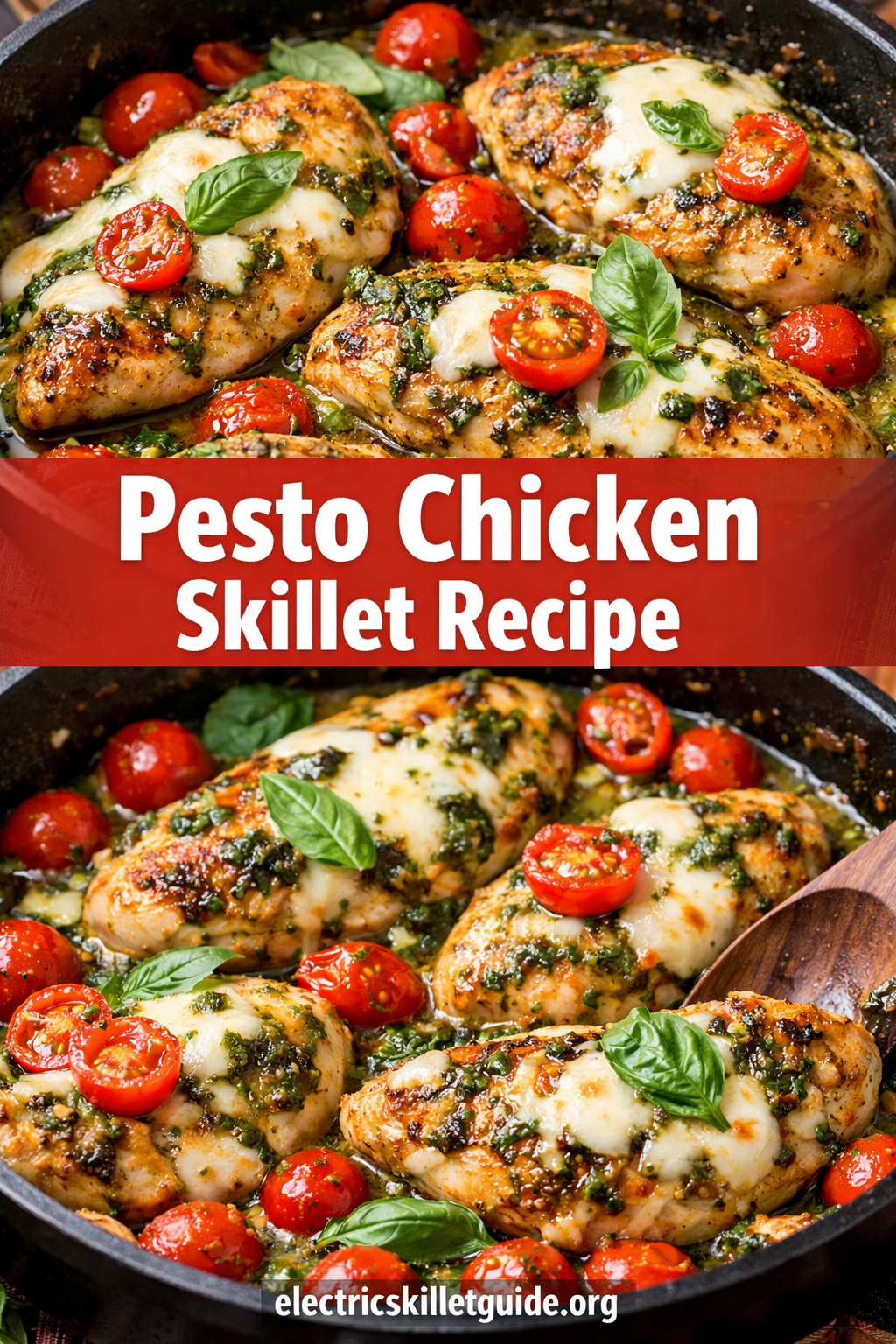
Pesto Chicken Skillet
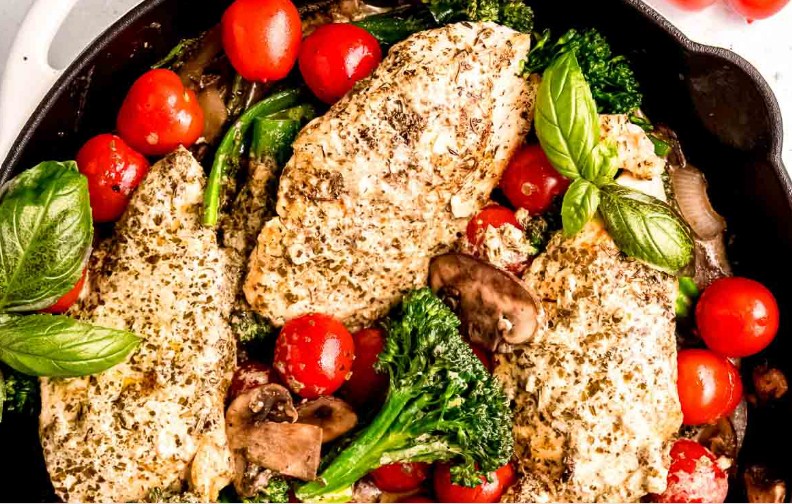
Today I am going to talk about the Pesto Chicken Skillet Recipe and how I found instant success with it.
It was a Tuesday. Not a fun Tuesday, not a productive one either. Just one of those slightly dragging, low-energy evenings where even deciding what to cook feels like a task you didn’t sign up for. I had about 30 minutes, maybe a little more if I pushed dinner late, one skillet sitting on the stove, and a jar of pesto that had been hanging out in the fridge door long enough that I kept noticing it every time I opened it.
You know that feeling — I should probably use this before it goes bad. That was the level of planning.
What came out of that pan was this pesto chicken skillet recipe. Nothing dramatic happened in the moment, but it quietly turned into one of those meals that just sticks around. The kind you don’t think too hard about, but somehow keep making again and again.There’s something about pesto that feels a little unfair, honestly. It does most of the work for you. Garlic? Already there. Herbs? Covered. That deep, almost slow-cooked flavor? Somehow packed into a spoonful. It’s like skipping a few steps without anyone noticing.
Add in some chicken, a handful of tomatoes, maybe spinach if you’re in the mood to feel slightly responsible (I am… sometimes), and dinner is basically handled.
And yes — everything happens in one skillet. That part matters more than it should. Because it’s not just about cooking, it’s about what happens after. Fewer dishes means you’re not standing at the sink questioning your life choices later.
Why You’ll Love This Pesto Chicken Skillet Recipe
Alright, quick pitch. Not the over-the-top version — just the honest one.
First, it’s easy. Not “easy once you get the hang of it,” just… easy. If you can flip chicken without overthinking it too much, you’re already qualified.
But beyond that, a few things make this one stick:
- It’s actually fast. Around 30 minutes, start to finish. Sometimes a bit longer if I get distracted midway (which happens more often than I’d like to admit), but still very manageable.
- It looks more impressive than it is. I’ve served this to people who assumed I’d put in real effort. I didn’t correct them. Didn’t feel necessary.
- One pan, no juggling. Everything happens in the same skillet. No extra pots, no timing three things at once.
- It’s flexible in a real way. Not the kind of “flexible” where changing one thing ruins it. You can actually swap ingredients and it still turns out good.
And then there’s the flavor. That’s really what carries it.
The pesto just wraps around everything — the chicken, the tomatoes, even the spinach if you add it — in a way that feels complete. Like you meant to cook something good, even if you didn’t fully plan it.
Also, small warning: once you make this, you might start keeping pesto in your fridge regularly. I didn’t intend to, but here we are.
Ingredients
Here’s what you’ll need to pull this together. Nothing complicated, nothing that requires a special trip.
For the chicken:
- 1.5 lbs boneless, skinless chicken thighs (or breasts)
- Salt and black pepper, to taste
- 1 teaspoon garlic powder
- 1 teaspoon Italian seasoning
- 2 tablespoons olive oil
For the skillet sauce:
- ⅓ cup basil pesto
- ½ cup cherry tomatoes, halved
- ¼ cup heavy cream or chicken broth
- 2 cups fresh spinach (optional)
- 2–3 cloves garlic, minced
- ¼ cup grated Parmesan cheese
- Fresh basil leaves (optional, for garnish)
That’s it. About ten ingredients, give or take.
A quick note on pesto — store-bought works completely fine here. I use it most of the time. Some brands are saltier than others, so it’s worth tasting before you start adjusting anything later.
Homemade pesto is great, obviously. But this is not the recipe where you need to prove anything.
Step-by-Step Instructions
Step 1: Season the chicken
Pat your chicken dry with paper towels.
I used to skip this step, mostly out of impatience. It turns out it actually matters. Dry chicken browns better. Not dramatically life-changing, but noticeable enough.
Season both sides with salt, pepper, garlic powder, and Italian seasoning.
Step 2: Sear the chicken
Heat olive oil in a large skillet over medium-high heat.
Once it’s hot (you’ll see it shimmer a bit), add the chicken. Try not to crowd the pan. If everything overlaps, it won’t sear properly — I learned that after a few slightly disappointing batches.
And then — don’t touch it.
Leave it alone for about 5 minutes. This is the part I still mess up sometimes. There’s a strong urge to flip early. But when you wait, you actually get that golden crust.
Flip, cook the other side, then remove and set aside.
Step 3: Sauté the garlic
Lower the heat slightly.
Add a little more oil if needed, then toss in the garlic. Stir for about 30 seconds.
Maybe 40. Not much more.
Garlic burns faster than you expect. I’ve pushed it too far before thinking it needed “just a bit more,” and yeah — not great.
Step 4: Add tomatoes
Add the cherry tomatoes.
Let them cook for a couple of minutes until they start to soften and blister slightly.
Sometimes I forget to stir them right away and they sit longer than planned — it still works. They just break down a bit more, which honestly isn’t a bad thing.
Step 5: Build the sauce
Add the pesto and cream (or broth).
Stir everything together and scrape up anything stuck to the bottom of the pan. That’s where most of the flavor is.
Let it simmer gently for a couple of minutes.
It usually thickens quicker than I expect, so I try not to walk away here.
Step 6: Add spinach
Add the spinach and stir until it wilts.
Or skip it. I do that sometimes when I don’t have any. The dish doesn’t fall apart without it.
Step 7: Finish the chicken
Return the chicken to the skillet.
Spoon some sauce over it, sprinkle Parmesan on top, and let everything sit together for a minute or two.
This is usually where I taste and adjust. Sometimes it needs a pinch of salt, sometimes not. Depends on the pesto.
Step 8: Serve
Serve straight from the skillet.
Or plate it if you’re feeling organized.
Both work.
Cooking Tips
A few things I’ve learned from making this more times than I planned:
- Dry chicken helps with browning
- Don’t crowd the pan (it really does matter)
- Let the chicken sit before flipping
- Taste before adding salt — pesto varies a lot
- Lower heat after adding cream
None of these are complicated. But skipping them usually shows.
Substitutions & Variations
This is where the recipe stops being strict and starts being useful.
I rarely make this the exact same way every time. Not intentionally — it just depends on what’s in the fridge, what I forgot to buy, or what I’m trying to use up before it goes bad.
And the nice part is… it usually still turns out good.
Chicken thighs vs. chicken breasts
I lean toward thighs most of the time.
They’re just more forgiving. If you cook them a minute too long, they’re still juicy. Chicken breasts can work really well too — I do use them sometimes — but they go from perfectly cooked to slightly dry faster than you expect.
Not a disaster, just something to keep in mind.
Cream alternatives
Heavy cream gives the sauce that richer, slightly velvety feel.
But I don’t always use it.
- Chicken broth → lighter, still flavorful
- Half-and-half → kind of in-between
- Coconut cream → surprisingly good, a little different but not in a bad way
I tried coconut cream once because that’s all I had — wasn’t planned — and it worked better than expected. Slightly different vibe, but still solid.
Different pestos
This is where things can change quite a bit.
- Classic basil pesto → the standard, always works
- Sun-dried tomato pesto → deeper, slightly sweeter
- Red pepper pesto → a bit smoky
- Arugula pesto → sharper, a little peppery
I once grabbed the wrong jar without realizing it (sun-dried tomato instead of basil), and honestly… I didn’t even mind.
Add-ins (a.k.a. “what needs to be used up”)
This recipe is really good for clearing out vegetables that are sitting around.
Some that work well:
- Zucchini
- Mushrooms
- Artichoke hearts
- Roasted red peppers
There’s no strict rule here. Just adjust cooking times a bit so nothing turns too soft or too undercooked.
I’ve thrown in random combinations before — not all planned — and it usually lands somewhere between “good” and “really good.”
Make it pasta (highly recommended)
This might actually be my favorite way to eat it.
Cook some pasta separately — penne, fettuccine, whatever — and toss it straight into the skillet at the end.
It turns into a full pesto chicken pasta situation without much extra effort.
Also helps stretch the meal a bit if you’re feeding more people.
Make it low-carb
Cauliflower rice or zucchini noodles both work.
I’ll be honest — I don’t always go this route, but when I do, it still feels like a complete meal. Not like you’re missing something.
What to Serve With It
This dish doesn’t really need anything else, but it definitely benefits from something that can soak up the sauce.
Because you’ll want to do that.
Bread (probably the best option)
Crusty bread, garlic bread, even just a basic toasted slice — anything works.
There’s always extra sauce in the pan, and it feels like a waste not to use it.
Pasta
Like I mentioned earlier, this is usually my go-to.
Sometimes I plan for it, sometimes I end up making pasta halfway through cooking because I realize I want something to go with the sauce.
Rice or orzo
Both absorb the sauce well.
Rice is more neutral. Orzo feels slightly more “put together,” even though it’s basically the same idea.
Roasted vegetables
Broccoli, asparagus, green beans — something simple on the side.
I don’t always do this, but when I do, it makes the meal feel a bit more balanced.
Simple salad
Something light — greens, lemon, olive oil.
Mostly just to cut through the richness a bit.
Mashed potatoes
This one sounds slightly random, but it works.
I didn’t expect it to, but the sauce over mashed potatoes is… actually really good.
Storage & Reheating
This is one of those meals that holds up better than expected.
Refrigerator
Store in an airtight container for up to 4 days.
And I’ll admit — I’ve eaten this cold before. Not intentionally at first, just one of those “quick bite straight from the fridge” moments.
Still good.
Freezer
You can freeze it for about 2 months.
The sauce might change texture slightly after thawing — especially if you used cream — but it’s still very usable.
If I’m planning ahead (which I don’t always), I sometimes freeze the chicken and sauce separately.
Reheating
Stovetop
Best option. Add a splash of broth or water and warm slowly.
Microwave
Works fine. I usually do short intervals so it doesn’t dry out.
Oven
I’ve tried it once. Wouldn’t recommend it. It just didn’t come out as well.
Pinterest-Friendly Sections
Why This Recipe Actually Works
I don’t think there’s one big “secret” here.
It’s more like a few small things that come together:
- Searing the chicken properly at the start
- Using the same pan so all those browned bits stay in play
- Letting the pesto and cream come together gently instead of rushing it
None of that is complicated. It’s just doing a few basic steps properly.
And when you do, the result feels more put together than it really is.
Small Changes That Made a Big Difference
This recipe didn’t land perfectly the first time I made it.
A few small tweaks helped:
- Patting the chicken dry before cooking
- Adding garlic after the chicken instead of before
- Keeping the heat lower once the pesto goes in
- Adding a small squeeze of lemon at the end (this one surprised me)
Individually, these don’t seem like a big deal.
Together, they made the dish noticeably better.
If I Were Making This Again Tomorrow
I probably would.
I’d maybe toast some pine nuts at the beginning and throw them on top at the end. I don’t always do that, but when I do, it adds a nice little crunch.
I’d also probably add a few sun-dried tomatoes alongside the fresh ones.
And I’d make a bit more than I think I need. That part I’ve learned the hard way.
What I Skip When I’m Short on Time
On busier days, I simplify things a bit.
- Skip fresh garlic → use what’s already in the pesto
- Skip spinach → not essential
- Use rotisserie chicken → huge time saver
That last one changes the texture slightly, but the flavor is still there.
And sometimes speed matters more than perfection.
FAQ
Can I use store-bought pesto?
Yes — and I usually do. Just taste it first since salt levels vary.
Can I make this dairy-free?
Yes. Use coconut cream or broth and skip the Parmesan.
Best skillet to use?
Cast iron or stainless steel works best. Nonstick is fine too — just less browning.
Can I use frozen chicken?
Only if it’s fully thawed. Otherwise it won’t sear properly.
Is this gluten-free?
Yes, as long as your pesto doesn’t contain additives.
Can I meal prep this?
Definitely. It reheats well and holds flavor.
Final Thoughts
At the end of the day, the Pesto chicken skillet recipe is one of those recipes that sticks — not because it’s perfect or impressive, but because it’s reliable.
It comes together quickly, uses simple ingredients, and still manages to feel like a proper meal.
I’ve made this on days when I didn’t feel like cooking at all, and it still turned out better than expected.
And honestly, that’s usually what I’m looking for.
If nothing else, it’s a good reason to keep a jar of pesto in the fridge.