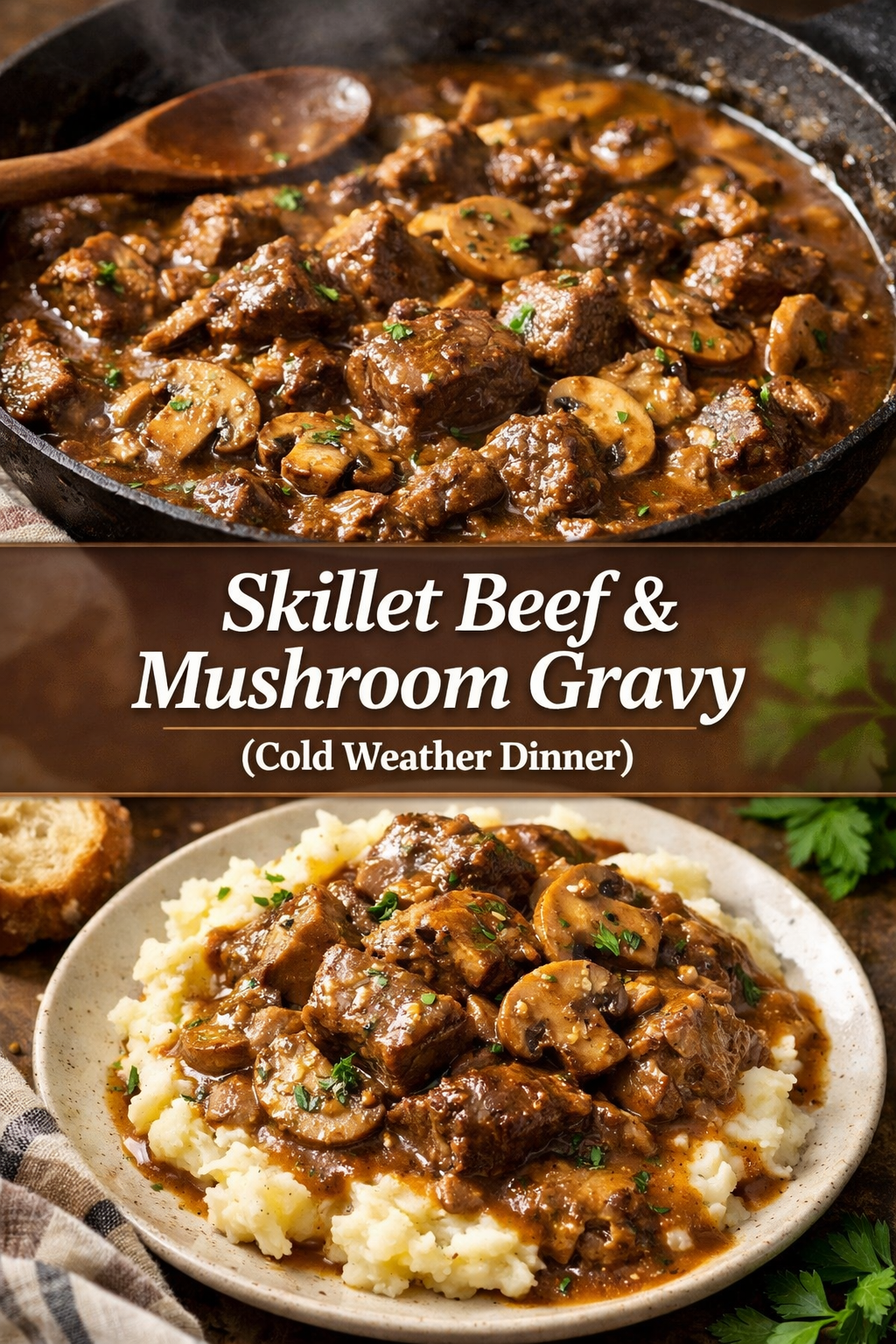
Skillet Beef and Mushroom Gravy (Cold Weather Dinner)
Cold weather dinners don’t need a plan. They need heat, a pan, and something that smells right while it’s cooking. This skillet beef and mushroom gravy usually shows up at my table when the day has already made too many decisions for me.
It’s one pan. No oven. No careful timing. Beef, mushrooms, and gravy tend to behave themselves if you don’t rush them.
This isn’t fancy food. It’s filling food. The kind you make when the temperature drops and you want dinner to feel steady.
Why this works when it’s cold out
Cold weather cooking is less about creativity and more about payoff. You want warmth. You want depth. You want something that holds heat while you eat it.
Beef does that naturally. Mushrooms stretch the flavor without stretching the effort. Gravy pulls everything together and makes even simple sides feel intentional.
And because it all happens in one skillet, the kitchen doesn’t end up colder than when you started.
The beef choice actually matters
I usually reach for chuck or stew beef here. Not because it’s trendy, but because it forgives mistakes.
Chuck has enough fat and connective tissue to stay tender once it simmers. Sirloin cooks faster but dries out if you’re distracted. Stew beef is fine, but quality varies, so I look for pieces with some marbling.
Thin slices cook fast but don’t give the gravy much body. Larger chunks take longer but reward patience. I usually cut the difference. Bite-sized, but not tiny.
If you rush beef, it pushes back. This dish works because you don’t.
Mushrooms aren’t just filler
Mushrooms do more than bulk this out. They hold onto fat, soak up gravy, and add that deep, savory note that makes the beef taste beefier.
Cremini mushrooms are my first choice. Button mushrooms are fine and cheaper. I slice some thick and some thin on purpose. The thin ones soften into the gravy. The thick ones stay noticeable.
Uniform slicing looks nice, but it doesn’t eat better.
Ingredients, the way I actually use them
I don’t line these up before I start. I grab them as I go.
Beef, cut into chunks. Mushrooms, sliced however they come out. Onion if I have one. Garlic, always. Butter or oil. Flour. Beef stock. Salt and black pepper.
Sometimes I add a splash of Worcestershire sauce. Sometimes I forget. Both versions get eaten.
This isn’t precise cooking. It’s responsive cooking.
Ingredients
1½–2 lbs beef (chuck or stew meat), cut into bite-sized chunks
8 oz mushrooms, sliced
1 small onion, chopped (optional)
3 cloves garlic, minced
2 tbsp butter or oil
2 tbsp flour
2 cups beef stock
salt and black pepper
optional: 1 tsp Worcestershire sauce
Browning the beef without hovering
Start with dry beef. Pat it down. Season it generously. Under-seasoning at this stage shows up later, and not in a good way.
Heat a heavy skillet over medium-high heat. Add oil. When it shimmers, add the beef in a single layer. Don’t crowd it.
Then stop touching it.
Let the beef brown properly. It should release easily when it’s ready. If it sticks, it’s not done yet.
Flip, brown the other side, then pull it out. The beef won’t be cooked through. That’s fine. It’s coming back.
What matters is the color left behind in the pan.
Building the mushroom base
Lower the heat slightly and add butter if the pan looks dry. Then add the mushrooms.
They’ll soak up fat at first. Ignore that. As they cook, they release moisture and settle down.
Resist the urge to stir constantly. Let them sit. Color equals flavor here.
Once they’ve softened and started to brown, add chopped onion if you’re using it. If not, skip ahead. This dish survives either way.
Salt lightly and let everything cook until the pan smells savory, not raw.
Garlic goes in last. Thirty seconds is enough. Longer than that and you’ll know you went too far.
Making gravy without turning it into paste
Sprinkle flour over the mushrooms. Stir until it disappears into the fat. You’re not making a thick roux. You’re just coating things lightly.
Cook the flour for a minute. It should smell nutty, not dusty.
Slowly add beef stock, stirring as you go. Cold stock works. Warm stock works better. Either way, go slow.
The gravy will look thin at first. That’s normal. Let it simmer gently and it thickens on its own.
If it gets too thick, add more stock. If it stays thin, give it time. Rushing gravy usually makes it worse.
Bringing everything back together
Return the beef to the skillet along with any juices it released. Stir gently to coat.
Lower the heat. Cover partially and let it simmer until the beef is tender. This can take anywhere from 15 to 30 minutes depending on the cut.
Check occasionally. Stir once in a while. This isn’t fragile food, but it doesn’t like being ignored completely.
When the gravy coats the back of a spoon and the beef cuts easily, you’re there.
Turn off the heat and let it sit for a few minutes. The gravy tightens slightly as it rests.
That pause matters more than it sounds.
What this actually tastes like
The beef is rich and soft without falling apart. The mushrooms taste deeper than they did ten minutes ago. The gravy is savory, not heavy.
It’s filling without being overwhelming. Warm without being sleepy.
You don’t need a lot of it to feel satisfied.
How I serve it most nights
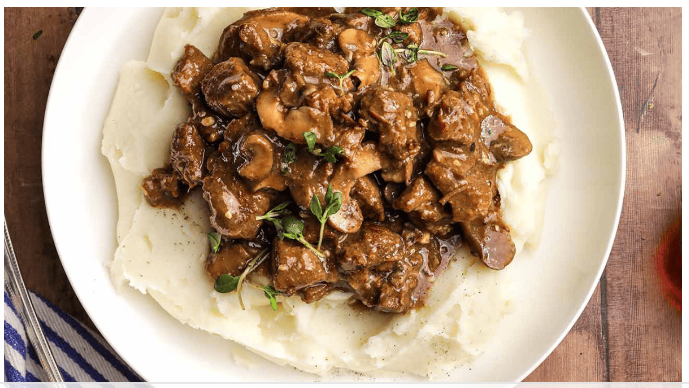
Mashed potatoes are the obvious choice. They soak up gravy and make the plate feel complete.
Egg noodles are a close second. Especially on nights when I don’t want to mash anything.
Toast works too. Thick slices. Nothing fancy.
I usually add something green if I remember. Sometimes I don’t.
Variations I actually repeat
If I want a lighter version, I use less flour and more stock. The gravy is thinner but still comforting.
A splash of cream at the end softens everything. I don’t always add it, but I don’t regret it when I do.
Thyme works well here. So does parsley. I skip strong herbs that fight the mushrooms.
I don’t add cheese. It doesn’t belong.
Leftovers and reheating
This keeps well in the fridge for up to three days.
Reheat slowly over low heat. Stir occasionally. Add a splash of stock or water if the gravy tightens too much.
It tastes better the next day. The mushrooms deepen. The beef relaxes even more.
Freezing works, but the gravy can change texture. It’s edible. Just not ideal.
FAQs
Can I use ground beef?
You can, but it becomes a different dish. Still good. Just not this.
What if my gravy is lumpy?
Lower the heat and whisk gently. It usually smooths out.
Can I make this ahead?
Yes. It reheats well if you’re patient.
Is this good for guests?
Yes. It looks better than the effort suggests.
Can I skip the flour?
You can, but the gravy will be thinner.
Final thoughts
Skillet beef and mushroom gravy is the kind of dinner that doesn’t ask much of you.
It doesn’t rush. It doesn’t punish small mistakes. It just warms the room and fills the plate.
On cold nights, that’s more than enough.