Skillet Chicken in Creamy Dijon Sauce
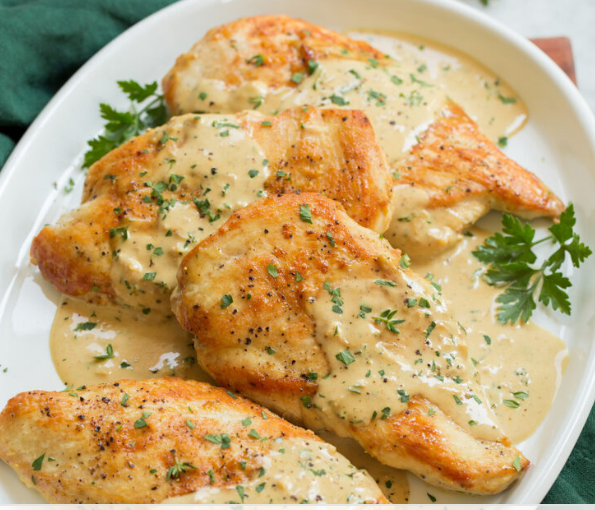
Some nights I want dinner to feel a little grown-up, even if I’m still cooking in socks and half-listening to something in the background. That’s usually when Skillet Chicken in Creamy Dijon Sauce shows up. Not because I planned it in advance, but because mustard, cream, and chicken are all things I tend to keep around. It usually starts as “let’s just cook the chicken” and slowly turns into something more intentional.
This is one of those meals that feels richer than the effort it asks for, which I don’t take for granted anymore.
Why this dish keeps working
First, it’s a single-skillet situation. That alone puts it high on my list. Everything happens in layers, in the same pan, and nothing feels rushed if you let it unfold the way it wants to.
Second, Dijon does a lot without taking over. It adds depth, but it doesn’t announce itself loudly. I like that. I’ve had mustard dishes that felt like a dare. This isn’t that.
And it adapts. I’ve made this on quiet weeknights and for people sitting at my table. The dish doesn’t really care which one it is.
Ingredients, as I actually decide on them
Chicken first. I reach for boneless, skinless thighs most of the time. They’re forgiving and don’t dry out easily if the sauce simmers longer than planned. Breasts are fine too. I just stay closer to the stove when I use them.
Dijon mustard matters, but not in a precious way. I use whatever jar is already open. Smooth Dijon melts right into the sauce. Grainy gives little pops of texture. I’ve mixed them before without realizing it until later.
Cream is what pushes this into comfort territory. Heavy cream is my usual choice. I’ve used half-and-half when that’s what I had, though the sauce ends up looser. Not bad. Just different.
Onion or shallot, depending on what’s in the drawer. Garlic if I remember before the pan is already hot. Butter and olive oil together, usually. Salt, pepper, and sometimes thyme. That’s about it.
Cooking the chicken (and not overthinking it)
I pat the chicken dry. I skipped this step for years and then kept wondering why browning felt unpredictable. Turns out it was mostly my fault.
Salt and pepper go on both sides. I keep it simple here because the sauce brings plenty later.
The skillet goes over medium-high heat. Oil first, then a little butter once it’s hot. The chicken goes in and I make myself leave it alone. This took practice. If it sticks, it’s not ready yet, even if I wish it were.
Once it releases, I flip it. I’m not chasing perfect doneness at this stage. I just want color and a bit of structure.
I pull the chicken out when it’s close, not finished. It rests while I deal with the sauce, which feels like the right rhythm for this dish.
The sauce (where things start to smell right)
I lower the heat slightly and add the onion or shallot to the same pan. There are usually browned bits left behind, and I don’t mess with them much. They sort themselves out.
The onion softens, picks up a little color, and starts to smell sweet. Garlic goes in briefly. If it hits the pan too early, I regret it. Thirty seconds is enough.
Then I add the Dijon. Just a spoonful at first. I stir it around and let it cook for a moment. It smells sharp right away, then settles down. That’s usually when I know it’s ready for the next step.
A splash of stock or even water loosens everything. I scrape the bottom, not aggressively. Just enough to bring the pan back together.
Then the cream. The sauce always looks thinner than I expect at this point. I’ve learned not to panic. It thickens as it sits, almost every time.
Bringing it together (and letting it finish)
The chicken goes back into the skillet, tucked into the sauce. I lower the heat and let it simmer gently.
This part rewards patience more than skill. Too much heat and the sauce tightens. Too little and it takes forever. I look for small bubbles and trust that.
I turn the chicken once or twice so it gets coated. The sauce thickens, clings, and starts looking like something I meant to make.
If it gets too thick, I add a splash of water. If it’s too thin, I wait. Waiting fixes more than I expect.
Mistakes I’ve already made for you
I used to add mustard at the very end. The flavor stayed sharp and a little disconnected. Letting it cook earlier makes everything smoother.
I’ve overheated the sauce and watched it separate. Lower heat solves that. So does stepping away from the stove for a second instead of fiddling.
And I once oversalted early, forgetting mustard already brings salt with it. Now I season lightly up front and adjust later.
Variations I actually return to
Sometimes I add mushrooms after the onions. They soak up the sauce and make the dish feel heavier in a good way.
On warmer days, I use half-and-half and finish with lemon. It’s not the same dish, but it still works.
I’ve added a little grated Parmesan when I wanted extra richness. I’ve also skipped cheese entirely and not missed it.
Fresh herbs at the end are nice if I have them. If I don’t, dried thyme earlier does enough.
What I usually serve it with
Most often, this goes over rice or mashed potatoes. The sauce likes something that can catch it.
Pasta works too, especially short shapes.
Sometimes it’s just bread and a salad. I don’t overthink sides with this one.
Storage and reheating, honestly
Leftovers keep two to three days in the fridge. I use shallow containers so they cool faster.
Reheating works best on the stove over low heat. The microwave is fine if I stop and stir halfway through.
The sauce thickens as it sits. A splash of water or milk brings it back.
Freezing works in theory. I don’t love the texture afterward, so I only do it if I really need to.
FAQs
Can I use chicken breasts?
Yes. Pull them earlier and let them finish gently in the sauce.
What kind of Dijon works best?
Whatever you already like. Smooth or grainy both work.
Can I make it dairy-free?
Coconut cream works, but the flavor shifts. Not bad, just different.
Why did my sauce break?
Too much heat is usually the reason.
Can I add wine?
A splash of white wine before the cream works well.
Is it spicy?
No. Dijon adds tang, not heat.
Can I make it ahead?
Yes. Reheat gently and loosen the sauce if needed.
What pan should I use?
A heavy skillet. Cast iron or stainless both work.
Final thoughts
I keep making Skillet Chicken in Creamy Dijon Sauce because it feels dependable without being boring. It’s the kind of dinner that makes an ordinary evening feel a little more pulled together, even if the day wasn’t.
It doesn’t ask for precision or perfect timing. Just enough attention to notice when it’s ready. Most nights, that’s exactly what I have to give.