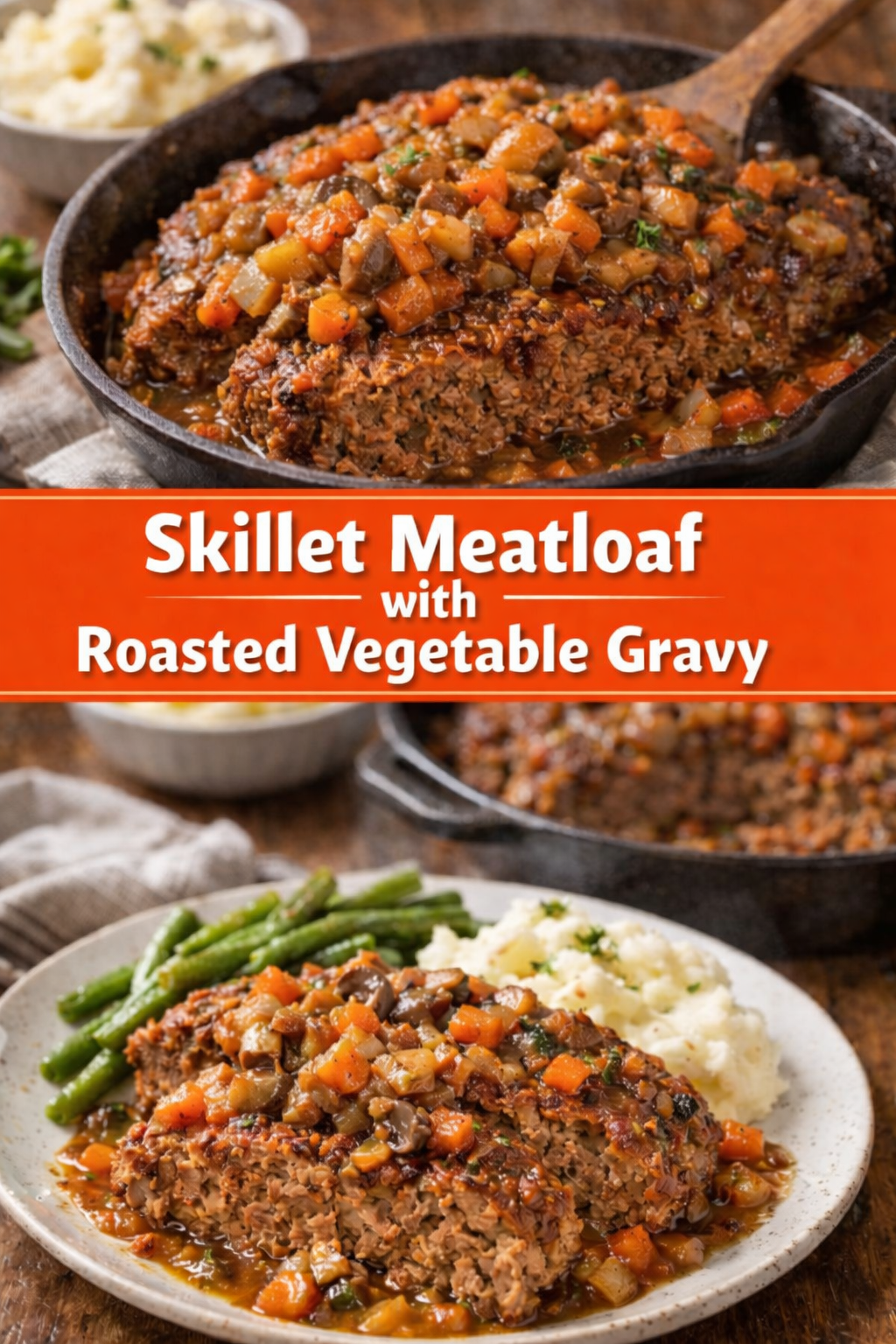
Skillet Meatloaf with Roasted Vegetable Gravy
Quick Recipe Overview
Prep Time: ~20 minutes
Cook Time: ~45 minutes
Total Time: About 1 hour 5 minutes
Servings: 4–6
Ingredients
For the Meatloaf
-
1½–2 lb ground meat (beef works well)
-
1 egg
-
½ cup breadcrumbs (or crushed crackers)
-
¼–½ cup milk (as needed)
-
½ onion, grated or finely chopped
-
Salt and black pepper
-
1–2 tablespoons oil (for the skillet)
-
Optional topping: ketchup or thinned tomato paste
For the Roasted Vegetable Gravy
-
2 carrots, roughly chopped
-
1 onion, cut into wedges
-
2 potatoes, roughly chopped
-
1–2 tablespoons oil
-
Salt
-
1–1½ cups broth or hot water
-
Black pepper (optional)
Basic Cooking Steps
-
Roast the vegetables – Toss carrots, onions, and potatoes with oil and salt. Roast at about 400°F / 200°C until browned and soft.
-
Mix the meatloaf – Combine ground meat, egg, breadcrumbs, onion, milk, salt, and pepper until it just holds together.
-
Brown in a skillet – Heat oil in an oven-safe skillet and sear the shaped loaf to form a crust.
-
Finish in the oven – Transfer the skillet to the oven and cook until the meatloaf is firm and cooked through.
-
Make the gravy – Blend most of the roasted vegetables with broth and pan scrapings. Simmer in the skillet and add reserved vegetables for texture.
-
Rest and slice – Let the meatloaf rest briefly before slicing and serving with the roasted vegetable gravy.
Skillet Meatloaf with Roasted Vegetable Gravy
The oven was already on because vegetables take longer than you think. I had a sheet pan out, carrots cut unevenly, onions in rough wedges, a couple of potatoes I almost peeled and then didn’t. Oil, salt, nothing fancy. They went in first. That part was decided before the meatloaf even crossed my mind.
The skillet meatloaf came later, mostly because I didn’t want to wash another pan.
I’d been standing there a minute, door open, checking the vegetables for color they didn’t have yet, when I realized I had ground meat thawed in the fridge. Not planned. Just there. One of those meals that starts forming once the heat is already happening.
By the time I pulled the skillet out, the vegetables were still pale but drying out at the edges, which is what you want before they actually brown. That gave me time.
Meatloaf, but not the careful kind
I don’t measure much when I make meatloaf. I know roughly how it should feel in my hands. Soft but not loose. Sticky but not wet. If it starts to slump when I shape it, I add something dry. Breadcrumbs, usually. Sometimes crackers. Once it was leftover rice and that worked fine, though I wouldn’t recommend it on purpose.
Egg goes in. Salt. Pepper. Onion, grated or finely chopped depending on my patience. A little milk if the meat looks tight. I don’t overthink seasoning here because the crust and the gravy do a lot of the work later.
I mix it gently, but not delicately. Meatloaf isn’t fragile. Still, I stop once it holds together. Overmixed meatloaf has a way of reminding you later.
The skillet gets hot before the meat does. Medium heat, oil first. I shape the loaf on a plate and slide it in rather than dropping it. There’s a sound when it hits—quiet, steady—not a hard sizzle. That’s what I’m listening for.
I let it sit. Longer than feels comfortable. This is where the skillet matters. You’re building a crust before the oven finishes the job. If you rush it, the loaf sticks and tears, and then you’re chasing it around the pan trying to fix something that didn’t need fixing.
Once one side releases, I nudge it. Turn it carefully. Not all the way around, just enough to give the sides color. It doesn’t need to be perfect. It won’t be.
Back to the vegetables, because timing overlaps here
By now the vegetables are starting to brown in spots. The onions soften first. The carrots take longer. I stir them once, maybe twice. Too much movement cools the pan and wastes heat.
This is one of those moments where cooking feels like coordination instead of steps. The meatloaf is browning, the vegetables are roasting, and nothing is fully done yet. That’s fine.
I check the skillet meatloaf again. There’s fat rendering out, pooling a little at the edges. I tilt the pan and spoon some of it away. Not all. Just enough that it doesn’t fry instead of roast once it goes in the oven.
The skillet goes straight into the oven after that. No rack juggling. Middle position. I don’t set a timer right away. I just note the time.
The gravy starts messy, on purpose
This gravy doesn’t come from stock alone. It comes from vegetables that have been roasted a little too hard in places and soft in others. That unevenness matters.
Once the vegetables are done—browned, slightly collapsed, smelling sweeter than raw—I pull them out. A handful gets set aside because I like texture later. The rest go into a bowl.
I pour a bit of hot water or broth onto the sheet pan and scrape. There’s flavor there. Don’t skip it. That liquid goes into the bowl too.
Blending is optional, but I usually do it halfway. I want some structure left. If it turns completely smooth, it feels separate from the meal, like it belongs to something else.
I don’t season much yet. Salt can wait.
Checking the meatloaf without poking it to death
At about the halfway mark, I pull the skillet out. The loaf has firmed up but still gives when pressed. There’s more fat now. I spoon a little more off, then leave it alone.
This is where I sometimes brush the top with something. Ketchup if I want that familiar thing. Tomato paste thinned with water if I don’t. Sometimes nothing at all. It depends on how browned it already looks.
Back into the oven it goes. The vegetables are resting. The gravy base is waiting. Everything feels paused for a moment, which usually means you’re on track.
The gravy finishes in the same skillet, eventually
When the meatloaf is done—firm, pulling slightly from the pan, juices clear—I move it to a board and tent it loosely. Not tightly. Steam ruins the crust you worked for.
The skillet stays on the stove. Heat goes back on, medium-low. There’s fat, browned bits, and a thin layer of residue stuck to the bottom. That’s the base.
I spoon off excess fat again, leaving enough to coat the pan. Then in goes the vegetable puree. It sizzles, thickens, picks up everything the skillet held onto.
This part takes a few minutes. I stir, scrape, watch it tighten. If it gets too thick, I thin it with broth. If it tastes flat, I add salt. Sometimes pepper. Rarely more than that.
The reserved roasted vegetables go in at the end. They don’t break down much, just soften further. The gravy becomes something between smooth and chunky. That’s intentional, even if it looks accidental.
Slicing before it’s fully ready (I still do this)
I tell myself every time to wait longer. I don’t always listen.
The meatloaf slices best after resting, but I usually cut into it a little early. The first slice is never perfect. It leans. It sheds a bit of juice. That’s fine. The rest behave better once the steam settles.
I spoon gravy over the top instead of underneath. It keeps the crust from going soggy too fast.
If I’m serving this to other people, I try harder. If it’s just me, I don’t.
What usually ends up on the plate
This skillet meatloaf with roasted vegetable gravy doesn’t need much alongside it. The vegetables are already there, folded into the sauce or resting beside it. Sometimes I add mashed potatoes. Sometimes I don’t bother.
Bread works. Something to drag through the gravy.
The plate looks heavy, but it eats lighter than you expect. The vegetables help with that, even though that wasn’t the point.
About leftovers, because they matter more than the first meal
This reheats well, but only if you’re gentle. Microwave on lower power. Stovetop with a splash of water or broth. The gravy thickens overnight. That’s normal.
Cold slices make decent sandwiches. Hot gravy poured over them later fixes anything that dried out.
I’ve eaten this standing at the counter the next day, skillet back on the stove, spoon in hand. That might be the best version, actually.
A few things I’ve learned the slow way
Skillet meatloaf behaves differently than baked. You get crust faster. You also get more fat rendered early. That changes timing.
Roasted vegetables make gravy taste fuller without much effort. They forgive uneven cuts and slight overbrowning.
Trying to make this neat makes it worse. Let it be what it is.
I still check the oven more than I need to. I still cut too soon. I still adjust seasoning at the very end instead of trusting earlier decisions.
It works anyway.
And once the pan is empty, I usually let it soak. Not because it’s ruined, but because I want to remember what came out of it before I scrub it clean.