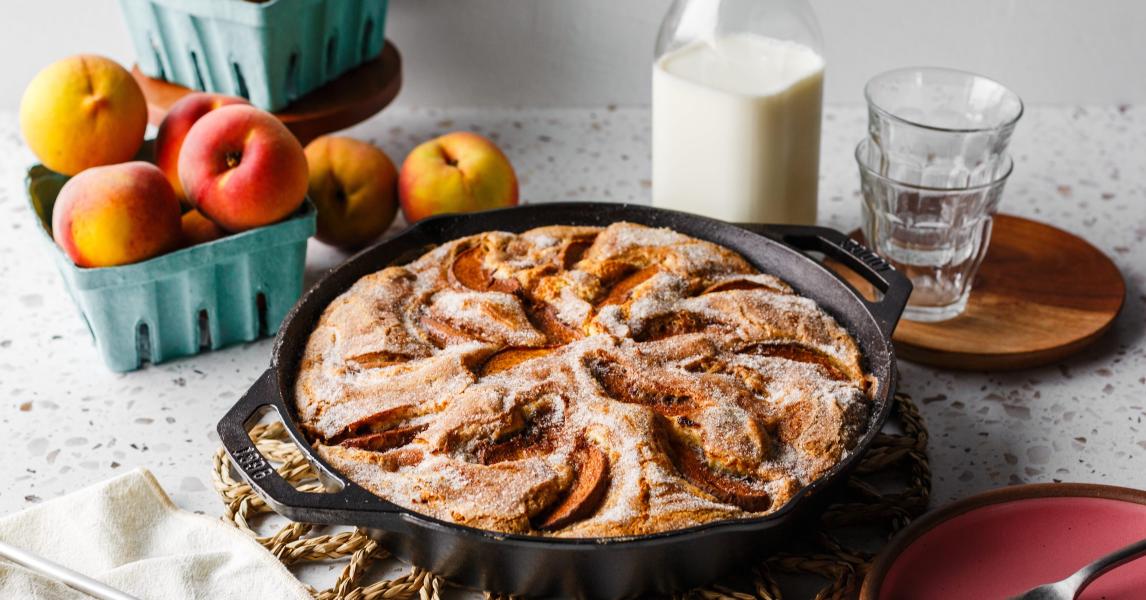
Skillet Peach cake: The way it is created in the kitchen

Alright. Let us talk about skillet peach cake.
This one feels different already.
Peaches don’t behave like apples. They collapse faster. They go from firm to almost syrupy in what feels like ten minutes. And when you cook them in a skillet, something happens at the bottom — the sugars caramelize just enough to make you feel like you did something clever, even if you didn’t.
Skillet peach cake is not dramatic. It’s soft. It leans slightly rustic. It smells like late afternoon in summer when the light turns warmer and everything feels slower.
And I’ve made it enough times now to know exactly where it can go wrong.
So let’s do this properly. Slightly messy. Still readable. The way it actually happens in my kitchen.
Skillet Peach Cake (The Soft Summer One That Never Lasts Long)
I don’t wait for perfectly firm peaches for this.
In fact, I prefer the ones that are almost too soft. The ones you bought with good intentions and then forgot about for two days. Those are ideal.
If they’re rock hard, they don’t melt into the cake. If they’re too far gone, you’ll know. There’s a line. You learn it.
I slice them thick. Not paper thin. I like visible fruit in cake.
Sometimes I peel them. Sometimes I don’t. The skin softens during cooking. If it bothers you, peel. If not, leave it. I’ve done both. No complaints either way.
First: The Peach Base
Before batter even enters the picture, I warm the skillet.
About 325°F. Not higher.
Add a small knob of butter. Let it melt slowly, not brown aggressively. Sprinkle a little brown sugar directly into the skillet — maybe two or three spoonfuls. Not measured precisely. Just enough to coat the bottom lightly.
Then the peach slices go in.
They sizzle quietly. Not loudly. If they’re loud, your heat is too high.
I let them cook for maybe five minutes. They release juice. The sugar melts into syrup. The peaches soften slightly but still hold shape.
At this point, your kitchen smells like caramel and fruit. It’s distracting.
Turn the heat down just a little before adding the batter. This helps prevent over-browning underneath.
The Batter (Simple and Soft)
I keep this cake base straightforward.
Butter and sugar creamed together. Not whipped into oblivion. Just lightened.
One or two eggs, depending on size.
A splash of vanilla.
Flour. Baking powder. Salt.
And a little milk to loosen everything.
The batter should be thick but spoonable. Not runny. Not stiff like cookie dough. Somewhere in between. If it feels too tight, I add a tablespoon of milk. If it’s too loose, a spoon of flour.
I don’t overmix. Once the flour disappears, I stop. Overmixed peach cake becomes slightly rubbery, and that’s disappointing.
Pouring Over Peaches (Trust the Process)
Spoon the batter gently over the warm peaches.
It will look uneven. That’s normal. I use the back of the spoon to nudge it toward the edges. Some peaches will peek through. Leave them.
Put the lid on.
This is where skillet baking feels different from oven baking. The heat comes from below and around the sides, so the bottom caramelizes first. The top cooks more gently under the lid.
After about 12–15 minutes, I crack the lid slightly so steam escapes. Otherwise the top stays too pale.
Total cook time? Usually around 25–35 minutes.
I check by gently pressing the center. It should spring back. Or insert a knife — it should come out mostly clean. A few moist crumbs are fine.
If the bottom smells too deeply caramelized, lower the heat immediately and give the top more time. Electric skillets can run hot without warning.
Mine does. I don’t fully trust it.
The Flip (Optional, Slightly Dramatic)
Sometimes I flip the cake onto a plate so the peaches end up on top like a rustic upside-down cake.
Sometimes I don’t.
If you flip, let it cool for at least 10 minutes first. Loosen the edges with a spatula. Place a large plate over the skillet. Take a breath. Flip confidently.
If a peach sticks, just press it back on top. No one needs to know.
If you don’t flip, just serve straight from the skillet. Spoon it warm. It’s less theatrical but equally good.
Texture Notes (Because This Matters)
The bottom should be slightly caramelized but not hard.
The cake should be soft and tender, not dense.
The peaches should feel almost jammy but still identifiable as slices.
If the cake feels dry, you probably overcooked it. Lower heat next time and check earlier.
If the center sinks slightly after cooling, it might have needed a few more minutes — but honestly, warm cake with ice cream hides small flaws.
What Makes This Different From Oven Peach Cake
The skillet gives you deeper caramelization underneath.
It also keeps the cake slightly more moist because of the trapped heat under the lid.
And — this matters in summer — you don’t have to heat the entire kitchen.
Peach season already comes with warm weather. Turning on a full oven feels aggressive.
The skillet feels manageable.
Small Variations I’ve Tried
A pinch of cinnamon in the batter.
A splash of almond extract instead of vanilla.
A handful of raspberries scattered among the peaches.
Coarse sugar sprinkled on top before cooking for slight crunch.
All worked. None required.
Peach and butter do most of the heavy lifting here.
When I Make This
Late afternoon. When peaches are soft and the light is golden.
It feels like a dessert that doesn’t demand a celebration but quietly becomes one.
Serve it warm. With vanilla ice cream if you have it. Or just as it is.
There’s something about the softness of peach cake that makes people go quiet for a moment while eating.
Then someone always asks for another slice.
And that’s usually the end of it.