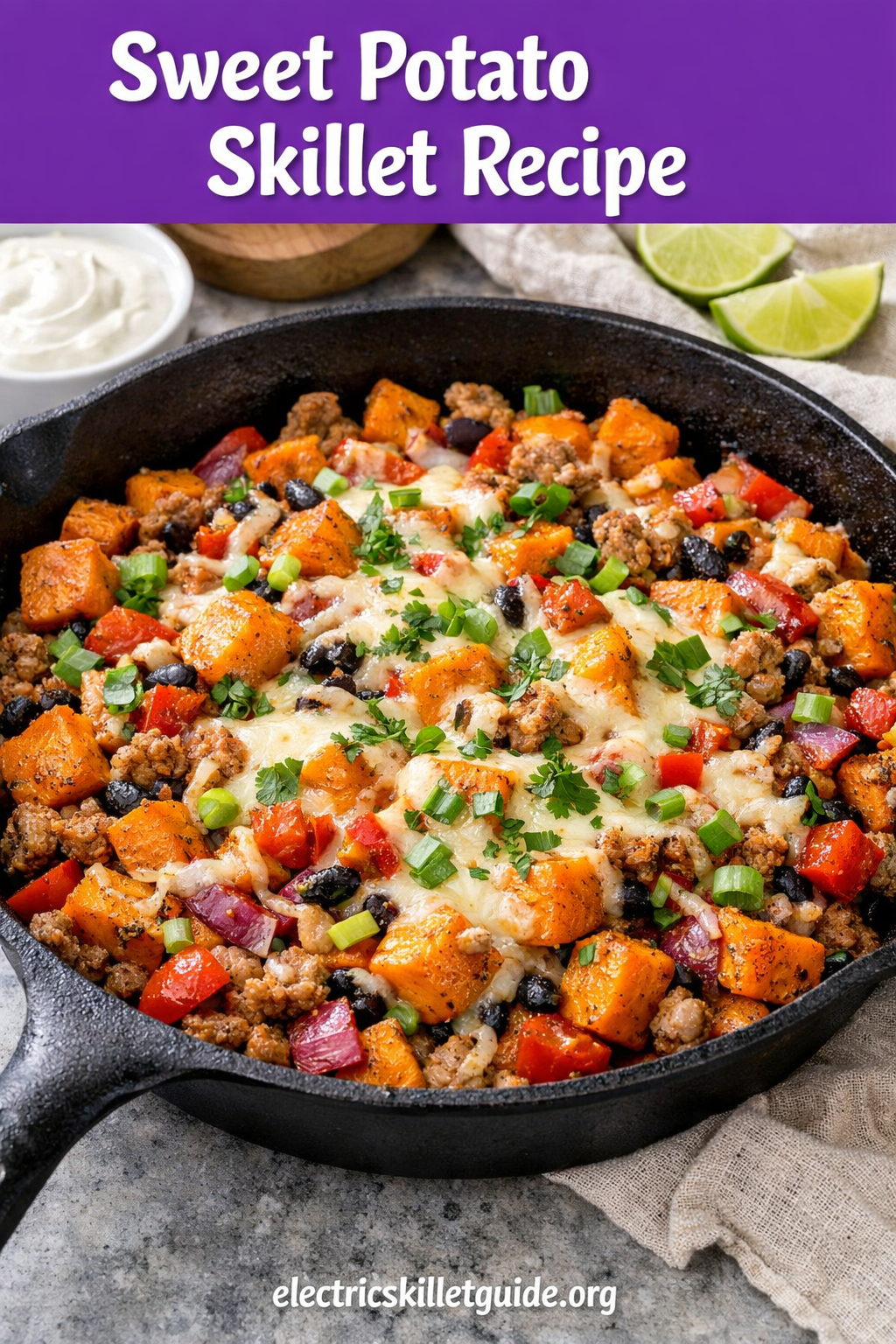
Sweet Potato Skillet Recipe
I didn’t grow up loving sweet potatoes. Honestly, I barely noticed them. Let alone talking about creating a sweet potato skillet recipe that makes magic in the kitchen.
They showed up once a year, usually overloaded with sugar and marshmallows, and everyone acted like it was the highlight of the meal. I ate it, sure—but it never stuck with me. It wasn’t something I’d ever think of cooking on my own.
Then one random evening—no plan, no groceries, nothing exciting in the fridge—I ended up with a couple of sweet potatoes, half an onion that was on its last day, and a skillet.
That was it.
I wasn’t expecting anything. I just needed dinner.
Somehow, it turned into this.
Now this sweet potato skillet recipe is one of those things I fall back on constantly. Not because it’s fancy (it’s not), but because it works every single time. It’s filling, fast enough, and weirdly satisfying in that “okay, I handled dinner like a functional person today” kind of way.
Even when everything else is a mess. Or maybe I just like pretending I have things under control because dinner turned out decent for once. Hard to say.
Why You’ll Love This Sweet Potato Skillet Recipe
Here’s the part where I’m supposed to sell you on it, but honestly—it kind of sells itself once you try it.
Still, a few things stand out.
First, it actually fills you up. That sounds basic, but a lot of “healthy” recipes don’t. You eat them and then 40 minutes later you’re back in the kitchen looking for snacks.
This doesn’t do that.
Second, texture. If you do it right (and I’ll explain), the sweet potatoes get these slightly crispy edges while staying soft inside. That contrast is what makes it addictive.
And then there’s the flavor. It’s not complicated, but it’s layered enough that you don’t get bored halfway through eating.
Also—one pan.
Which, for me, is half the reason I keep making it. Less cleanup means I’m way more likely to actually cook instead of ordering something.
I’ve eaten this straight from the skillet more times than I can count. Usually standing. Sometimes scrolling on my phone. Not proud, but also not changing it.
It works as:
- a quick dinner
- next-day lunch
- or even breakfast if you throw an egg on top (this one’s underrated)
Ingredients
You don’t need anything fancy here. And honestly, this recipe is pretty forgiving if you don’t follow it exactly.
For the base:
- 2 large sweet potatoes
- 1 medium onion
- 1 red bell pepper
- 3 cloves garlic
- about 2 tablespoons olive oil (give or take)
- 1 can black beans
- 1 cup corn
Spices:
- cumin
- smoked paprika
- chili powder
Salt and pepper—obviously.
You can measure everything if you want, but I usually don’t anymore. Once you’ve made it once or twice, you kind of just eyeball it.
Optional toppings:
- cilantro
- sour cream or yogurt
- avocado
- lime
- shredded cheese
I say “optional,” but they do make a difference. Even just a squeeze of lime at the end changes the whole thing.
Step-by-Step Instructions
Step 1: Prep everything
Start with the sweet potatoes.
Cut them into small cubes—around half an inch if you want to be precise. I used to rush this part and cut them unevenly, and then I’d end up with some pieces burnt and others still hard. Not ideal.
So yeah, try to keep them roughly the same size.
Chop the onion and bell pepper, mince the garlic. Nothing complicated here.
Step 2: Heat your pan properly
This step is boring but important.
Put your skillet on medium-high heat and let it sit for a bit before adding oil. Then add the oil and wait again until it looks slightly shimmery.
If you rush this, everything else suffers.
I used to throw ingredients into a barely warm pan and wonder why nothing browned. Turns out heat matters more than I thought.
Step 3: Cook the sweet potatoes
Add the sweet potatoes in a single layer.
Not piled up. Not crowded.
If your pan is too small, just do it in batches. It’s annoying, but worth it.
Now here’s the part that feels wrong: don’t touch them.
I still mess this up sometimes, by the way. I’ll tell myself to leave them alone and then immediately start stirring out of habit.
Just let them sit there for a few minutes.
If you keep stirring, they won’t brown—they’ll just soften. Which is fine, but you lose that crispy edge that makes the whole dish better.
After a few minutes, flip them. Let the other side cook.
You’re looking for some golden spots—not perfection.
If needed, take them out and set them aside.
Step 4: Cook the onion and pepper
Same pan.
Add the onion and bell pepper. Cook until they soften a bit—maybe 4–5 minutes.
Then add the garlic. Don’t add it too early or it’ll burn and taste bitter. This part happens fast, so don’t walk away.
Step 5: Add the spices
Sprinkle in the cumin, smoked paprika, and chili powder.
Stir everything around and let the spices cook for about 30 seconds.
It doesn’t seem like much, but it makes a difference. The flavor gets deeper, less raw.
Step 6: Bring everything together
Add the sweet potatoes back into the pan.
Then the beans and corn.
Mix everything together and season with salt and pepper.
Let it cook for a few more minutes so everything heats through and the flavors come together a bit.
Taste it. Adjust if needed.
This part is flexible—add more spice, more salt, whatever feels right.
Step 7: Serve it however you want
Once it’s done, take it off the heat and add your toppings.
Or don’t. It’s still good without them.
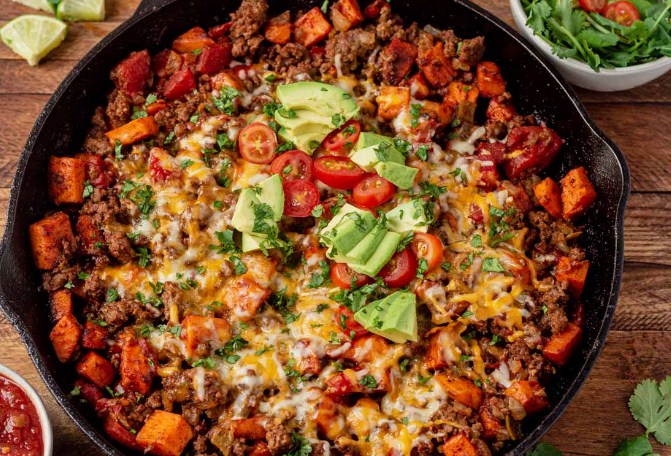
I usually add avocado and lime. Sometimes yogurt. Sometimes nothing because I’m too hungry to bother.
Eat it right away though—it’s best hot.
Cooking Tips
A few things I figured out after messing this up more than once:
Don’t overcrowd the pan
This is probably the biggest one. Too many ingredients at once = steaming instead of browning.
Dry the sweet potatoes
If they’re wet after cutting, pat them dry. Even a little moisture affects how they cook.
Stop stirring so much
This took me a while to accept. Let things sit. That’s how you get flavor.
Season in stages
Add a bit of salt early, then again later. It builds better flavor.
Use cast iron if you have it
Not required, but it does help with even browning.
Why This Sweet Potato Skillet Recipe Recipe Actually Works
Sweet potatoes on their own can be… a bit one-dimensional.
They’re sweet, yes—but that’s kind of it.
So the spices balance that out. The smoky paprika, the warmth from cumin, a bit of heat from chili powder—it all cuts through the sweetness.
Cooking everything in one pan also helps. Instead of separate components, everything kind of blends together, especially once those browned edges start forming.
The oil plays a role too. It helps carry the flavors and makes the whole dish feel more cohesive instead of just a mix of separate ingredients.
It’s simple, but there’s a reason it works.
Substitutions & Variations
This is one of those recipes where you can change a lot without breaking it. Which is great, because let’s be honest—most of us don’t have every ingredient every time.
If you’re missing something, just adjust.
No sweet potatoes?
You can use regular potatoes. It’s not the same, obviously—less sweetness—but still solid. Yukon Gold works especially well. Butternut squash is probably the closest substitute if you want to keep that slightly sweet flavor.
Different beans?
Use whatever you’ve got. Pinto beans, kidney beans, chickpeas—it all works. I’ve even mixed two types once because I had half cans lying around. No issues.
No corn?
Skip it. Or throw in something else. Zucchini works. Frozen peas work. Spinach at the end works surprisingly well too.
Want to add protein?
Go for it.
- Chicken (cook it first, then set aside)
- Chorizo (this one adds a ton of flavor, almost feels like cheating)
- Even shrimp—just toss it in at the end so it doesn’t overcook
Make it breakfast
This is probably my favorite variation.
Add a fried egg on top. Maybe some hot sauce. That’s it.
It turns into one of those meals that feels way more impressive than it actually is.
Spice level
Totally adjustable.
Add more chili powder, throw in a jalapeño, or just keep it mild if that’s your thing. I’ve made both versions—it works either way.
Small Changes That Made a Big Difference
I didn’t get this recipe “right” the first time.
Or the second.
It took a few tries—and a few slightly disappointing dinners—to figure out what actually makes a difference.
Toasting the spices
At first, I skipped this because it felt unnecessary.
It’s not.
That quick 20–30 seconds where the spices hit the hot pan? That’s where the flavor deepens. Without it, everything tastes a little flat. Still okay, just… missing something.
Letting the pan heat properly
I used to rush this step all the time.
I’d add oil too early, then add the potatoes too early, and they’d just sit there. No browning, no texture.
Now I wait. Sometimes longer than feels reasonable.
It pays off.
A tiny bit of acid at the end
This one surprised me.
A small squeeze of lime—or even a splash of vinegar—right at the end makes everything taste brighter. Less heavy.
You don’t really taste the acid itself, it just… lifts everything.
Hard to explain, but noticeable once you try it.
What to Serve With It
You don’t actually need anything else. This holds up on its own.
But if you want to stretch it or turn it into something bigger, there are options.
Wrap it
Throw it into a tortilla with some cheese or yogurt.
Instant burrito situation. Slightly messy, but worth it.
Serve over rice or quinoa
Makes it more filling, especially if you’re feeding more people. Also good for meal prep.
Add a simple salad
Something light and acidic balances the skillet pretty well. Nothing fancy—just greens and a basic dressing.
Eggs
Again, this works at any time of day.
Fried, scrambled, poached—doesn’t matter. It just works.
Storage & Reheating
This is one of those meals that actually gets better after sitting for a while. Which sounds like something people always say, but in this case it’s actually true—I was a bit skeptical the first time I noticed it.
Which is convenient.
Fridge
Store it in a container for up to 4 days. The flavors settle in more by the next day, so leftovers are solid.
Freezer
Yeah, you can freeze it. I didn’t expect much the first time I tried, but it holds up fine.
Just let it cool first, then freeze in portions.
Reheating
Best option: back into a skillet.
Add a tiny bit of oil and let it heat up slowly. It brings back some of that texture.
Microwave works too—but everything softens. Still tastes good, just less texture.
If I Were Making This Again Tomorrow
I probably will, to be honest.
And I’d keep most of it the same.
But I’d maybe throw in a handful of spinach at the end. It cooks down fast and adds a bit of color (and makes me feel like I made a healthier decision).
I’d also actually remember to cut the lime beforehand.
For some reason, I always forget—and then I’m scrambling to find it while the food is already done. It’s a small thing, but it happens more often than I’d like to admit.
If I had extra time, I might add some crumbled cheese on top. Something salty works really well against the sweetness.
What I Skip When I’m Short on Time
Some nights, you just want food. Not a whole process.
So I cut corners.
I don’t peel the sweet potatoes
The skin is fine. Adds texture. Saves time.
I don’t measure spices
I just estimate. It’s never exactly the same, but it’s always close enough.
Sometimes I skip fresh garlic
Garlic powder works in a pinch. Not identical, but acceptable.
Frozen sweet potatoes
I’ve used them. They don’t brown quite as well, but they’re convenient.
The one thing I don’t skip?
The high heat at the start.
That’s doing most of the heavy lifting here. Without it, the whole dish feels a bit flat.
FAQ
Can I make this ahead of time?
Yes. It reheats well and actually tastes better the next day.
Is it vegan?
The base recipe is. Just watch the toppings.
Why are my potatoes mushy?
Usually one of three things:
- pan wasn’t hot enough
- too many ingredients crowded together
- too much moisture
Fix those, and it improves immediately.
Do I need a cast iron skillet?
No. It helps, but any decent pan will work.
How do I make it spicier?
Add chili, hot sauce, or something like cayenne. Easy fix.
Conclusion
This sweet potato skillet recipe isn’t a complicated one.
And I think that’s why it sticks.
It’s reliable. You can make it without overthinking, adjust it based on what you have, and it still turns out good.
Some nights that’s all you need.
One pan, a handful of ingredients, and something warm at the end of it.
Once you get the hang of it—especially that initial sear—you’ll probably start making it more often than you expect.
At least, that’s what happened to me.