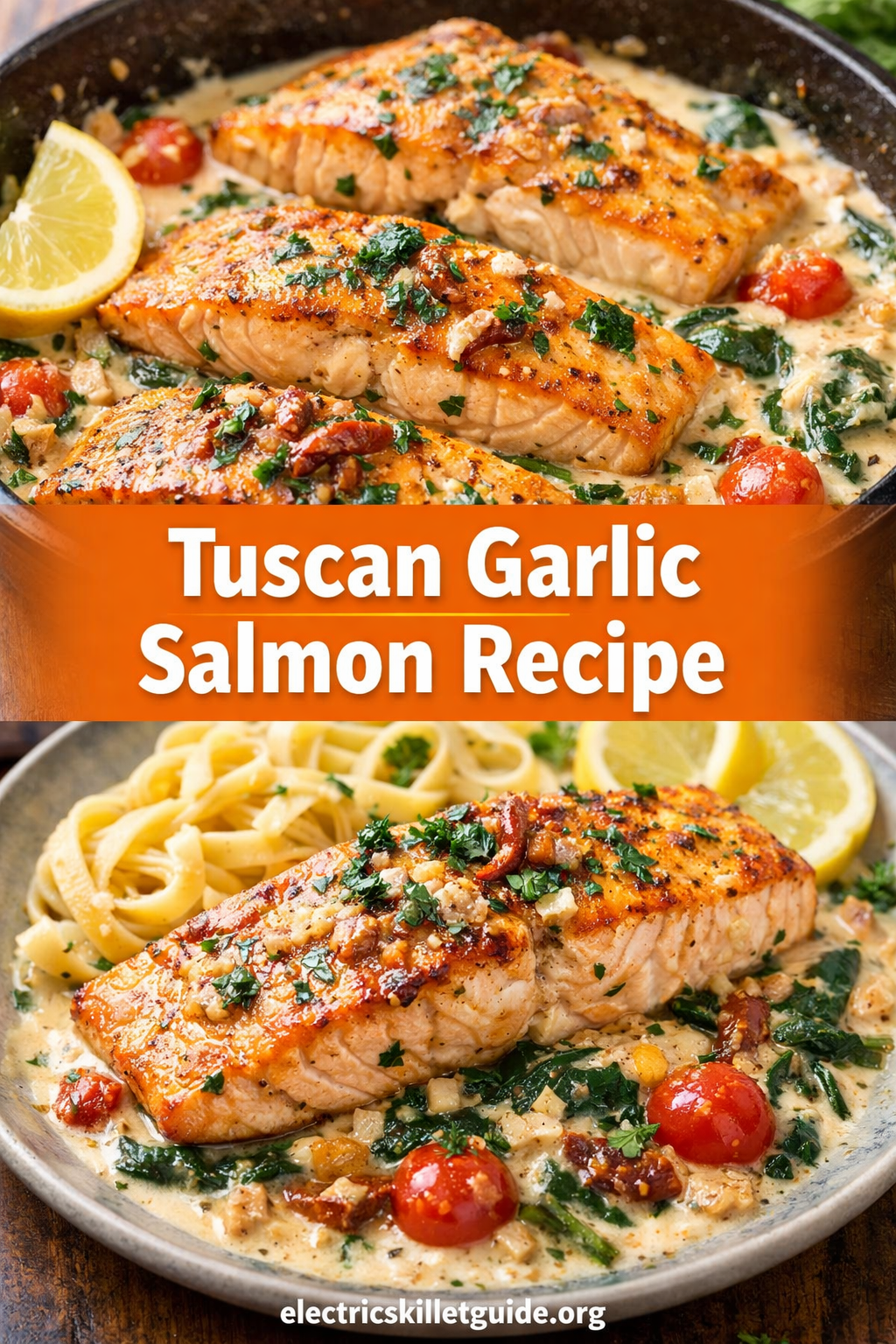
Tuscan Garlic Salmon (Skillet-Seared & Smothered in Creamy Sun-Dried Tomato Sauce)
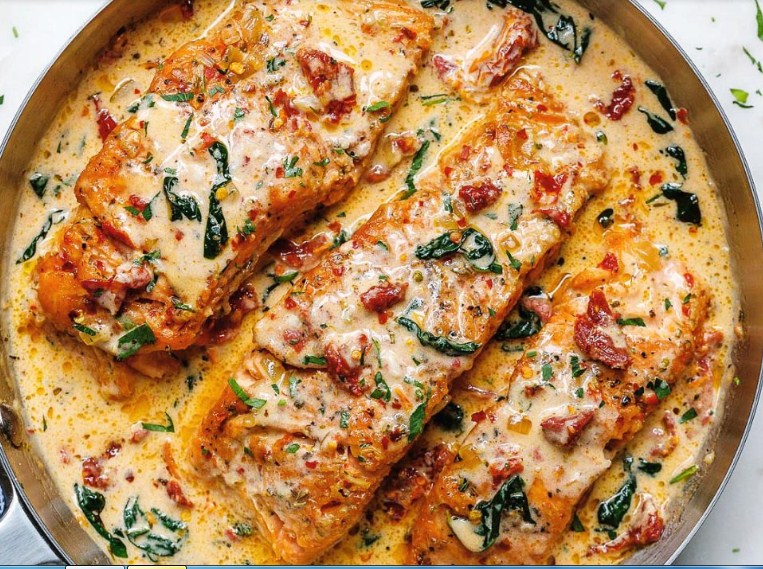
I’ll be honest with you — the first time I dabbled with the Tuscan garlic salmon recipe, I stood over the skillet and just stared at it. Like, who gave this dish the right to look this good on a Tuesday night? The deep golden crust on the salmon, that creamy sauce swirling with garlic and sun-dried tomatoes, the wilted spinach tucked in like it belongs on a magazine cover — I almost felt guilty eating it. Almost. Truly, this is the magic of Tuscan recipes.
This is one of those recipes that sounds fancy enough for a dinner party but takes about 25 minutes on a weeknight when you’re too tired to even open a cookbook. I’ve made it for picky kids, skeptical in-laws, and people who claimed they “don’t really like salmon” — and every single time, someone asks for the recipe before they’re done chewing.
If you’ve got a skillet, a few pantry staples, and a salmon fillet, you’re closer to a restaurant-worthy dinner than you think.
Why You’ll Love This Recipe
Let’s get into it. Because “it tastes good” is not a reason — everything on this blog tastes good (okay, most things).
Here’s why this one is different: it’s a one-pan situation. You sear the salmon, make the sauce in the same skillet, and dinner’s done. Less cleanup means more time to pretend you did something impressive tonight.
The sauce is genuinely ridiculous. Heavy cream, garlic, parmesan, sun-dried tomatoes — this sauce would make a flip-flop taste good. I’m not exaggerating by much.
It works on a budget. Salmon can be pricey, but you only need about 6 oz per person. The sauce ingredients are mostly pantry staples you probably already have, and a little goes a very long way.
It’s flexible. No sun-dried tomatoes? Cherry tomatoes work. No spinach? Baby kale, arugula, even frozen spinach. This recipe is forgiving, and I appreciate that in a dinner.
Kids will eat it. Or at least, mine did. That alone earns this recipe a permanent spot in the rotation.
Ingredients
Here’s what you’ll need for 2 servings (scale it up easily for more):
For the salmon:
2 salmon fillets (about 6 oz each), skin-on or off — your call
Salt and black pepper
1 tablespoon olive oil
1 tablespoon butter
For the Tuscan garlic sauce:
4 cloves garlic, minced (or more, I’m not your doctor)
½ cup sun-dried tomatoes, drained and roughly chopped (oil-packed is best)
2 cups fresh baby spinach
¾ cup heavy cream
¼ cup chicken broth (or vegetable broth)
⅓ cup freshly grated parmesan
1 teaspoon Italian seasoning
½ teaspoon crushed red pepper flakes (optional, but encouraged)
Fresh basil, for topping
Step-by-Step Instructions
Step 1: Prep Your Salmon
Pat the salmon fillets completely dry with paper towels. This is the step most people skip, and it’s also why most people end up with salmon that steams instead of sears. Dry fish = golden crust. Wet fish = sad, grey fish. Season both sides generously with salt and pepper.
Step 2: Sear the Salmon
Heat your skillet (cast iron or stainless steel works beautifully here) over medium-high heat. Add the olive oil and butter together — the butter adds flavor, the oil raises the smoke point so you don’t burn it.
Once the butter is melted and the pan is hot, lay the salmon fillets down away from you (oil splatter is nobody’s friend). Don’t touch them. Seriously, let them sit undisturbed for 4 minutes until they develop that gorgeous golden crust. Flip and cook another 3 minutes. Remove the salmon from the pan and set aside on a plate.
Step 3: Build the Sauce
Turn the heat down to medium. In the same skillet — yes, with all those brown bits and leftover butter — add the minced garlic. Cook it for about 30 seconds until fragrant. Don’t let it burn; burnt garlic will ruin everything and you’ll know the moment it happens.
Add the sun-dried tomatoes and stir them around for another minute. Then pour in the chicken broth, scraping up all those delicious browned bits from the bottom of the pan. That stuff is flavor gold.
Pour in the heavy cream and stir. Let it simmer for 2–3 minutes until it thickens slightly. Add the Italian seasoning, red pepper flakes, and parmesan. Stir until the cheese melts in and the sauce looks glossy and thick and completely irresistible.
Step 4: Add the Spinach
Toss in the baby spinach. It’ll look like way too much spinach. It’s not. Stir gently and it’ll wilt down in about 60–90 seconds.
Step 5: Return the Salmon
Nestle the seared salmon fillets back into the sauce. Spoon the sauce over them generously. Let everything cook together for another 2 minutes just to warm the salmon through and let the flavors get cozy with each other.
Top with fresh basil, extra parmesan if the mood strikes, and serve immediately.
Cooking Tips
A few things I’ve learned from making this more times than I should probably admit:
Use a wide skillet. The salmon needs room to sear properly. Crowding the pan = steaming, not searing. A 12-inch skillet is ideal.
Room temperature salmon sears better. Take it out of the fridge 15–20 minutes before cooking. Cold fish straight into a hot pan tends to cook unevenly — you’ll get overcooked edges and an undercooked center.
Don’t skimp on garlic. I listed 4 cloves. That’s a minimum. Some nights I use 6. The name of the dish literally has “garlic” in it — this is not the place for restraint.
Fresh parmesan, not the shaker can. The pre-shredded or powdered stuff doesn’t melt properly into the sauce. It clumps. Freshly grated parmesan makes a noticeably smoother, richer sauce and the effort takes about 45 seconds.
Deglaze properly. When you add the broth, use a wooden spoon to scrape the bottom of the pan. Those little brown bits — called fond — are packed with flavor. They’re what makes a homemade pan sauce taste like something from a restaurant.
Substitutions & Variations
This recipe is pretty flexible once you know the base. Here’s what I’ve swapped in and out:
Salmon alternatives: Trout works beautifully and is usually cheaper. Tilapia is milder and cooks faster — reduce the sear time by a minute. Shrimp is incredible in this sauce if you’re not a fish person; just cook it about 2 minutes per side.
No heavy cream? Half-and-half can work but the sauce won’t be as thick. Full-fat coconut milk gives you a dairy-free version that honestly surprised me the first time I tried it — slightly different flavor but still really good.
Swap the spinach: Kale takes a bit longer to wilt but adds a nice texture. Frozen spinach works in a pinch — just thaw it, squeeze out the water, and add it in at the same stage.
Sun-dried tomatoes not your thing? Cherry tomatoes halved and added right after the garlic gives a fresher, lighter version of the sauce. You’ll lose some of the concentrated, slightly tangy flavor but gain something brighter.
Make it spicier: Double the red pepper flakes or add a teaspoon of calabrian chili paste. Absolutely worth it if you can handle the heat.
Lighten it up: Swap half the cream for more broth and add a squeeze of lemon at the end. It’s not quite as luxurious, but it’s still really good and feels a little less indulgent on a weeknight.
What to Serve With It
Tuscan garlic salmon is rich — that sauce is no joke — so I usually pair it with something simple that can soak it all up.
Pasta: This is my #1 pairing. Linguine or fettuccine tossed right into the sauce is absolutely the move. Use some of the pasta water to loosen the sauce if it thickens too much. This transforms the dish into a full Tuscan salmon pasta that people literally ask for by name.
Rice: Plain white rice or a simple lemon rice does the job perfectly. It soaks up the sauce without competing with the flavors.
Crusty bread: If you serve this with nothing but a big piece of sourdough to mop up the sauce, I promise nobody will complain. I’ve done it. It was great.
Roasted vegetables: Asparagus, broccolini, or zucchini roasted with olive oil and salt are all solid. They add some lightness to balance the richness of the sauce.
Mashed potatoes: Sounds unusual, I know. But crème-laden sauce over creamy mashed potatoes? Please. It’s incredible.
Storage & Reheating
Storing: Let leftovers cool to room temperature, then store in an airtight container in the fridge for up to 3 days. The sauce thickens quite a bit when cold — that’s totally normal.
Reheating: Reheat gently in a small saucepan over low heat or in the microwave at 50% power in 30-second intervals. Add a splash of cream or broth to loosen the sauce back up. Don’t blast it on high heat; cream sauces can separate if they’re reheated too aggressively.
Freezing: I don’t recommend freezing this one. Cream-based sauces tend to separate and turn grainy when frozen and thawed, and the salmon texture doesn’t hold up great either. This is best made fresh or eaten as leftovers within a few days.
Why This Works When Others Don’t
Most Tuscan salmon recipes either over-season the fish or under-develop the sauce. The secret here is a two-step build: sear the salmon first to get that golden crust, then build the sauce in the same pan so all those browned bits and fish drippings flavor the cream from the inside out. A lot of recipes skip the sear entirely and just poach the salmon in the sauce. You’ll get cooked salmon that way — but you won’t get this.
Also: the parmesan goes in at the end, not with the cream. It melts smoother that way, and the sauce stays silky instead of going grainy.
Small Changes That Made a Big Difference
The single biggest upgrade I made to this recipe was switching from garlic powder to real, freshly minced garlic. Obvious? Maybe. But I made this with garlic powder once when I was in a rush, and it just wasn’t the same. Fresh garlic blooms in the hot butter and fat from the sear, and it perfumes the entire sauce in a way that the powder just can’t replicate.
Second change: finishing with fresh basil instead of dried. Dried basil is fine in the sauce during cooking, but a few fresh basil leaves torn on top right before serving adds this bright, slightly sweet pop that wakes the whole dish up. It costs almost nothing and takes five seconds.
If I Were Making This Again Tomorrow
Honestly? I would add more sun-dried tomatoes. I call for half a cup in this recipe, which gives you a good amount in every bite. But I’ve made a version with three-quarters of a cup and the sauce had this deeper, almost jammy richness that was completely addictive. I’d also double the sauce, because there is never enough sauce for the bread I’m serving on the side.
I might also add a splash of white wine after the garlic — just two or three tablespoons, enough to give the sauce a little acidity and depth. Let it cook off for a minute before you add the broth and cream. Completely optional, but it rounds out the flavor really nicely.
What I Skip When I’m Short on Time
When I’m in a real hurry, I skip bringing the salmon to room temperature and just cook it straight from the fridge — I just add an extra minute or two to the sear time. I also sometimes use pre-minced garlic from a jar, and while it’s not ideal, it works fine. And I’ve used frozen spinach on rushed evenings, already thawed and squeezed dry. It’s not as pretty as fresh, but it does the job.
The one thing I never skip? Patting the salmon dry. Every single time, no matter how rushed I am. That step makes too much of a difference to the crust to cut.
FAQ
Can I use frozen salmon?
Yes, just thaw it completely first and pat it very dry. Frozen salmon tends to hold more moisture, so a thorough pat-dry is even more important here to get a good sear.
My sauce turned out too thin. What happened?
It probably needed more time to reduce. Let it simmer a bit longer after adding the cream, or add a little extra parmesan, which also helps thicken it. Make sure you’re using heavy cream and not a lighter substitute — that makes a big difference.
Can I make this dairy-free?
Yes. Use full-fat coconut milk in place of heavy cream, skip the parmesan (or use a dairy-free alternative), and use olive oil instead of butter. The flavor profile shifts slightly, but it’s still really good.
Is this recipe keto-friendly?
It is, actually. Salmon, heavy cream, Parmesan, spinach, garlic — all low-carb. Just watch the sun-dried tomatoes, which can have added sugars depending on the brand.
Can I make the sauce ahead of time?
Yes. Make the sauce up to a day ahead, store it in the fridge, and reheat it gently while you sear fresh salmon. It works really well for entertaining.
What’s the best type of skillet for this?
Cast iron gives you the best sear on the salmon. Stainless steel is a close second. Non-stick works but you won’t get as deep a crust, and the fond (those brown bits that flavor the sauce) tends to be less developed. If non-stick is all you have, it’ll still taste great — just expect a slightly paler sear.
Final Thoughts
Tuscan garlic salmon is one of those recipes that belongs in everyone’s regular rotation, whether you cook once a week or every single night. It’s fast, it’s impressive, it’s filling, and it tastes like you spent way more time and effort on it than you actually did. That’s basically the dream for a weeknight dinner.
I’ve made this for lazy Sundays, last-minute dinner guests, and nights when I needed something that actually felt good to eat. Every time, it delivers. The creamy garlic sauce with those sun-dried tomatoes, the perfectly seared salmon, the wilted spinach folded in — it just works.
If you try this recipe, I really want to know how it went. Leave a comment below, especially if you made any swaps or discovered something that made it even better. And if you’re anything like me, you’ll be back next week making it again.
Happy cooking. Don’t forget the bread.