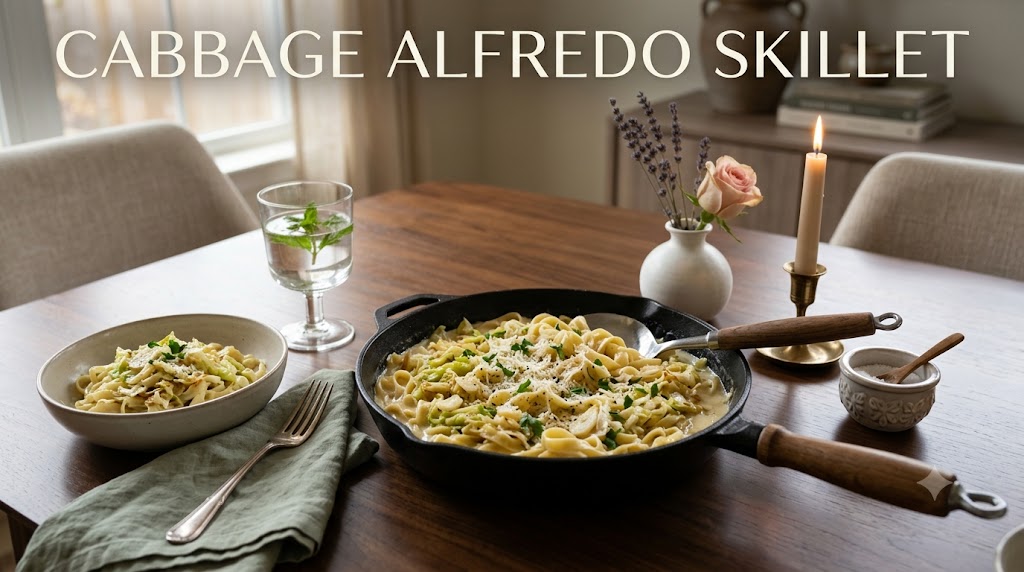
Cabbage Alfredo Skillet Recipe
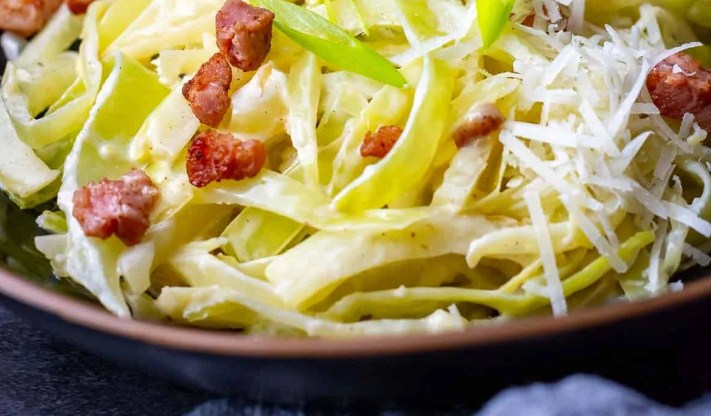
My neighbor once caught me eating this cabbage alfredo skillet straight out of the pan, standing at the counter at 9:47 pm, and she just laughed and asked what on earth I was eating that smelled so good. That’s basically the whole pitch for this recipe right there. It’s creamy, it’s got that garlicky parmesan punch, and cabbage — yes, plain old cabbage — turns into something you’d actually crave. I know that sounds like a stretch. Cabbage has a reputation problem. It’s the vegetable people associate with boiled dinners and sad diet plans, not with rich, silky alfredo sauce. But cook it right in a hot skillet with butter and let it get a little color, and it soaks up flavor like nobody’s business.
This cabbage alfredo skillet recipe came out of a very ordinary problem: I had half a head of cabbage sitting in my fridge drawer, going a little limp around the edges, and not much else to work with besides pasta staples. Instead of tossing it in soup again (my usual move), I threw it in a skillet with garlic and butter, and somewhere around the third stir I thought, huh, this would be incredible with alfredo sauce. So I made some. It worked. It worked so well that I’ve made it probably a dozen times since, tweaking little things here and there.
Why You’ll Love This Recipe
This isn’t one of those recipes with nineteen ingredients and three separate pans to wash. It’s a one-skillet situation, mostly, and it comes together in under 40 minutes. The cabbage gets tender but keeps a little bite, which honestly saves the dish from feeling too heavy — alfredo sauce alone can sit like a brick in your stomach, but the cabbage lightens things up while still tasting indulgent.
It’s also cheap. Cabbage costs next to nothing compared to most vegetables, so this is a solid weeknight dinner if you’re trying to stretch a grocery budget without eating like it. And if you’ve got picky eaters who claim to hate cabbage, don’t tell them what’s in it until after they’ve cleaned their plate. I’ve pulled that trick more than once. Works every time, no shame here.
Beyond the money and time savings, there’s something satisfying about turning an unglamorous vegetable into the star of dinner. This cabbage alfredo skillet recipe proves cabbage deserves way more credit than it gets.
Ingredients
- 1 medium head of green cabbage, cored and roughly chopped (about 6-7 cups)
- 4 tablespoons unsalted butter, divided
- 4 cloves garlic, minced
- 1 small yellow onion, diced
- 1 cup heavy cream
- 1 cup grated parmesan cheese, plus extra for serving
- 8 ounces fettuccine or penne pasta
- 1/2 teaspoon crushed red pepper flakes (optional, but I always add it)
- Salt and black pepper, to taste
- 1/4 cup reserved pasta water
- Fresh parsley, chopped, for garnish
- A splash of white wine (optional — I use it maybe half the time)
Equipment Needed
- Large deep skillet or braiser with a lid
- Medium pot for boiling pasta
- Wooden spoon or silicone spatula
- Sharp knife and cutting board
- Measuring cups and spoons
Step-by-Step Cooking Instructions
- Bring a large pot of salted water to a boil and cook your pasta according to package directions, but pull it about a minute before it’s fully done. Reserve 1/4 cup of pasta water before draining, then set the pasta aside.
- While the pasta cooks, melt 2 tablespoons of butter in your large skillet over medium heat. Add the diced onion and cook for about 4 minutes, until it softens and turns translucent.
- Toss in the minced garlic and cook for another 30 seconds, just until you can smell it — don’t let it brown or it’ll turn bitter.
- Add the chopped cabbage to the skillet in batches if needed, since it’ll look like way too much at first. Stir it around so it starts wilting down; this takes about 5-6 minutes. If you’re using the white wine, pour it in now and let it cook off for a minute.
- Once the cabbage has softened but still has a slight crunch, push it to one side of the skillet and add the remaining 2 tablespoons of butter to the empty space.
- Pour in the heavy cream and stir it together with the butter, letting it come to a gentle simmer. Don’t let it boil hard or the cream can separate on you.
- Sprinkle in the parmesan cheese gradually, stirring constantly so it melts smoothly into the sauce instead of clumping.
- Mix the cabbage back into the sauce fully, then add the cooked pasta and the reserved pasta water. Toss everything together until the pasta is coated and the sauce clings to the cabbage.
- Season with salt, pepper, and red pepper flakes if using. Let it simmer another 2 minutes so the flavors settle in.
- Remove from heat, garnish with fresh parsley and extra parmesan, and serve immediately while it’s hot and creamy.
Cooking Tips
Don’t rush the onion and garlic step — that base flavor matters more than people think, and if you skip it or rush it, the whole dish tastes flatter. Also, cut your cabbage into pieces that are roughly bite-sized; too big and it won’t cook evenly, too small and it turns mushy fast. I learned that one the hard way after shredding a batch too fine and ending up with something closer to cabbage soup than a skillet dish.
One thing I used to skip was reserving the pasta water. I thought it was one of those “professional chef” steps that didn’t actually matter for home cooking. Turns out that was a mistake — that starchy water is what helps the sauce cling to the pasta instead of pooling at the bottom of the pan. Now I never skip it, and honestly it takes ten extra seconds.
Keep your heat at medium, not high. Cream sauces get temperamental fast, and if the pan’s too hot, you risk the cream breaking into a grainy mess instead of staying silky.
Substitutions & Variations
You’ve got room to play around here. Swap the heavy cream for half-and-half if you want something a little lighter, though the sauce won’t be quite as thick. Pre-shredded coleslaw mix works in a pinch instead of chopping a whole cabbage yourself, and nobody’s going to know the difference once it’s in the skillet. If you want protein in there, crumbled Italian sausage or shredded rotisserie chicken both work great, just stir them in during step 8. Vegetarians can add mushrooms or white beans instead. I’ve also made this with savoy cabbage a few times when that’s what was on sale, and it turns out slightly more tender, softer edges, a bit sweeter — different, but good.
For a spicier version, double the red pepper flakes or add a diced jalapeño with the onions. Gluten-free? Any gluten-free pasta shape will work fine, just watch your cooking time since they tend to go mushy faster than regular pasta.
What to Serve With It
This cabbage alfredo skillet is rich enough to stand on its own as a main dish, but a simple green salad with a sharp vinaigrette cuts through the creaminess nicely. Garlic bread is basically mandatory in my house, mostly because there’s always extra sauce left in the pan that deserves to be mopped up. A glass of dry white wine pairs well too, especially if you used it in the cooking. For something lighter on the side, roasted cherry tomatoes or a quick lemon-dressed cucumber salad both work.
Storage & Reheating
Leftovers keep well in an airtight container in the fridge for up to 3 days. The sauce will thicken up quite a bit once it’s cold, so when reheating, add a splash of milk or cream to loosen it back up. Reheat gently on the stovetop over low heat, stirring often, rather than blasting it in the microwave, which tends to make the sauce separate and go a little oily. I don’t recommend freezing this one — cream sauces don’t usually hold up well in the freezer, and the texture gets weird once thawed.
Cook and Prep Time
Prep time: 15 minutes Cook time: 25 minutes Total time: 40 minutes Servings: 4
Nutrition Facts (per serving)
Calories: 520 Fat: 32g Carbohydrates: 42g Protein: 15g Sodium: 480mg Fiber: 4g
This nutritional information is an estimate calculated using standard ingredient data and is provided for general reference only. Actual values will vary depending on specific brands, exact measurements, and any substitutions you make. For precise dietary needs, please consult a registered dietitian or use a dedicated nutrition calculator.
Why This One Actually Works
The trick with this cabbage alfredo skillet recipe is that the cabbage isn’t just filler — it’s doing real work in the dish. As it cooks down in the butter and garlic, it releases a little natural sweetness that balances out the richness of the cream sauce. Most cabbage recipes either boil it into oblivion or barely cook it at all. This one lands right in the middle, tender with a bit of bite left, and that texture contrast against the smooth sauce is honestly what makes people go back for seconds.
The Small Change That Made a Big Difference
For the longest time I made this with milk instead of heavy cream, trying to lighten it up. It was fine. Just fine. The day I finally committed to real heavy cream, the whole dish leveled up — thicker sauce, better cling to the pasta, way more satisfying. Sometimes the “healthier” swap just isn’t worth it, and this was one of those times for me.
What I’d Do Differently Tomorrow
If I made this again tomorrow, I’d probably add a little lemon zest at the end. I tried it once on a whim and it brightened up the whole dish in a way I wasn’t expecting, cutting through the richness just enough. I keep forgetting to do it every single time, which says more about my memory than the recipe.
What I Skip When I’m Short on Time
On busy nights, I skip mincing fresh garlic and use the jarred stuff instead — don’t judge me, it happens more than I’d like to admit. I’ll also grab pre-shredded coleslaw mix instead of chopping a whole cabbage head, which saves a solid 10 minutes of prep. The dish loses a tiny bit of freshness but honestly, most people can’t tell.
FAQ
Can I make this ahead of time? You can prep the cabbage and chop your onion and garlic a day ahead, but I’d cook the whole dish fresh since cream sauces don’t reheat as beautifully as they taste fresh off the stove.
Is this recipe kid-friendly? Mostly, yes. My own experience is that cabbage disguised in a creamy sauce gets way less resistance than steamed cabbage on its own. Consider it a sneaky vegetable delivery system.
Can I use pre-made alfredo sauce instead of making it from scratch? Sure, that’ll save time. Just cook your cabbage first, then stir in a jar of store-bought alfredo sauce along with the pasta. It won’t taste quite as fresh, but it’s a fair shortcut on a rushed night.
What kind of cabbage works best? Green cabbage is the most common and what I use most often, but savoy or even napa cabbage will work if that’s what you’ve got.
Final Thoughts
This cabbage alfredo skillet recipe turned a random fridge cleanout into one of my most-requested dinners, and I still find that a little funny given how humble the ingredients are. It’s proof that you don’t need anything fancy to make something people actually want seconds of. Give it a shot next time cabbage is on sale or sitting forgotten in your crisper drawer — I think it’ll surprise you the same way it surprised me that first night, standing at the counter, fork in hand, wondering why I hadn’t thought of it sooner.