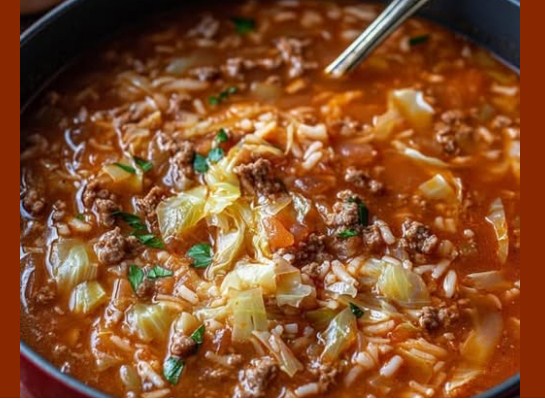
Easy Golumpki Soup Skillet Recipe

Let you tell you an interesting story about how I became a master of the easy Golumpki soup skillet recipe. To be honest, my grandmother made stuffed cabbage rolls every single Sunday for probably twenty years straight, and not once did I offer to help roll them. Big regret now. So when my own kids started asking for “the cabbage roll thing grandma used to make,” I panicked a little, because rolling forty individual cabbage leaves around meat filling sounded like a full afternoon commitment I did not have. That’s how this easy golumpki soup skillet happened — I took every flavor from those cabbage rolls and just… didn’t roll anything. One pan, one pot really, and you get all that same cozy, tomato-y, meaty goodness without the folding-and-tucking marathon. If you grew up with golumpki (or galumpki, or golabki, depending on which side of your family said it), you already know the flavor I’m chasing here.
This dish is basically deconstructed stuffed cabbage — ground beef, rice, cabbage, tomatoes, all simmered together in one skillet until it tastes like Sunday dinner but takes about 40 minutes start to finish. Trust me, once you make this version, you might not go back to the rolled kind, and I say that as someone who used to think skipping the rolling was practically cheating.
Why You’ll Love This Recipe
There’s a lot to love here, honestly. It’s a one-pan meal, so cleanup is minimal — I hate doing dishes, don’t judge me. The flavors are deep and savory without needing a long ingredient list. It’s also forgiving. You can throw in extra veggies, swap the meat, adjust the rice, and it still turns out great. Kids who normally side-eye cabbage will eat this because it’s mixed into a hearty, saucy dish instead of sitting there as a big green leaf staring back at them.
It reheats beautifully too, which matters a ton on busy weeknights. And unlike traditional golumpki, you don’t need to blanch cabbage leaves or worry about them tearing while you roll. I burned my fingers so many times trying to peel hot cabbage leaves off a boiling pot as a teenager helping my mom — this skillet version skips that whole ordeal entirely.
Ingredients
- 1 pound ground beef (80/20 works best for flavor)
- 1 small head of cabbage, chopped into bite-sized pieces (about 6 cups)
- 1 cup cooked white rice (or ¾ cup uncooked, if simmering it in the soup)
- 1 medium onion, diced
- 2 cloves garlic, minced
- 1 can (28 oz) crushed tomatoes
- 2 cups beef broth
- 1 tablespoon tomato paste
- 1 teaspoon smoked paprika
- 1 teaspoon dried thyme
- Salt and black pepper, to taste
- 2 tablespoons olive oil
- 1 tablespoon brown sugar (this cuts the acidity from the tomatoes — don’t skip it)
- Fresh parsley, chopped, for topping
Equipment Needed
You really just need a large, deep skillet with a lid, or a Dutch oven if that’s what you’ve got sitting around. A wooden spoon for stirring, a cutting board, and a decent knife for chopping the cabbage. That’s it. No blender, no food processor, no fifteen mixing bowls dirtying up your sink.
Step-by-Step Cooking Instructions
- Heat the olive oil in your large skillet over medium heat. Add the diced onion and cook for about 4 minutes, until it starts turning soft and a little golden.
- Add the garlic and cook another 30 seconds or so, just until it smells fragrant. Don’t walk away here — garlic burns fast and turns bitter.
- Add the ground beef to the skillet, breaking it up with your spoon as it browns. This should take around 6-7 minutes. Drain excess grease if there’s a lot.
- Stir in the tomato paste, smoked paprika, thyme, salt, and pepper. Let this cook for a minute so the spices bloom a bit.
- Add the crushed tomatoes, beef broth, and brown sugar. Stir everything together.
- Add the chopped cabbage on top. It’ll look like way too much cabbage — it isn’t. It shrinks down fast once it starts steaming.
- Cover the skillet and let it simmer on medium-low for about 15 minutes, stirring once or twice, until the cabbage softens.
- Stir in the cooked rice (or add uncooked rice earlier along with an extra ½ cup broth, if you’re going that route, and let it simmer covered for 20 minutes instead).
- Taste and adjust seasoning — sometimes it needs a little more salt, sometimes a splash more broth if it looks too thick.
- Top with fresh parsley and serve hot, right out of the skillet if you’re feeling rustic about it.
Cooking Tips
Don’t rush the onion and garlic step at the beginning — that little bit of patience builds a flavor base for the whole dish. I used to just toss everything in the pot at once to save five minutes, and honestly, it always tasted flatter. Turns out that was a mistake I kept making for way too long before I figured out why my soup tasted “fine” instead of “amazing.”
Also, chop your cabbage into similar-sized pieces so it cooks evenly. Nobody wants one bite of crunchy raw cabbage next to a mushy piece two seconds later. And if your skillet feels crowded when you add the cabbage, that’s normal — just give it a stir every few minutes so it wilts down evenly instead of steaming in one clump.
Substitutions & Variations
Ground turkey or ground pork both work fine here if beef isn’t your thing, though I’ll admit beef gives the richest flavor. For a lighter version, swap in ground chicken and use low-sodium broth. Rice-wise, you can use brown rice (just extend the simmer time by about 15 minutes), or cauliflower rice if you want to keep carbs lower — add it near the end since it cooks fast and turns mushy if it sits too long.
Some people like adding a handful of shredded carrots or a diced bell pepper for extra veggies, and honestly that works great too, it doesn’t clash with anything and just adds a bit of natural sweetness. If you want a spicier version, a pinch of red pepper flakes goes a long way. Vegetarian? Lentils or a plant-based ground substitute can replace the beef, though you’ll want to add a little extra seasoning since plant proteins tend to taste blander on their own.
What to Serve With It
This golumpki soup skillet is pretty filling on its own, but a slice of crusty bread on the side is basically non-negotiable in my house — you need something to mop up the sauce. A simple green salad with vinaigrette balances out the richness nicely. If you want to lean into the Eastern European comfort-food vibe even further, a dollop of sour cream on top does wonders. My father-in-law puts sour cream on literally everything, and honestly, on this dish, he’s not wrong.
Storage & Reheating
Leftovers keep well in an airtight container in the fridge for up to 4 days. This is one of those dishes that actually tastes better the next day, once the flavors have had time to sit and mingle. To reheat, just warm it on the stovetop over medium-low heat, adding a splash of broth or water if it’s thickened up too much in the fridge. You can microwave it too, of course, if you’re in a hurry — just stir halfway through so it heats evenly.
For freezing, let it cool completely, then portion it into freezer-safe containers. It’ll keep for about 3 months. Thaw it overnight in the fridge before reheating. I will say, the texture of the cabbage softens a bit more after freezing, so if you’re picky about that crunch, eat it fresh or refrigerated instead.
Cook and Prep Time
Prep time: 15 minutes Cook time: 35 minutes Total time: about 50 minutes Servings: 6
Nutrition Facts (per serving)
Calories: 320 Protein: 22g Carbohydrates: 24g Fat: 15g Fiber: 4g Sodium: 540mg
Nutrition information is an estimate calculated using standard ingredient values and is provided for informational purposes only. Actual values may vary depending on specific brands, exact measurements, and any substitutions made. For precise dietary needs, we recommend calculating nutrition using your own ingredients and a trusted nutrition calculator.
What makes this whole thing click, flavor-wise, is that you’re basically building the exact same taste profile as traditional stuffed cabbage — the tomato tang, the savory beef, the soft sweet cabbage — but letting the ingredients mingle freely in one pot instead of being sealed inside individual rolls. That freedom actually helps the flavors blend more, if you ask me. Every bite gets a little bit of everything instead of one roll tasting slightly different from the next.
The small tweak that genuinely changed this recipe for me was the brown sugar. I skipped it for years because it felt like an odd addition to a savory dish, and my soup always had this sharp, almost tinny edge from the crushed tomatoes. One night, low on patience and out of ideas, I tossed in a spoonful just to see what would happen. It rounded everything out immediately. Now I wouldn’t make this without it.
If I were making this again tomorrow, I’d probably use less broth than the recipe calls for, maybe by a half cup, since I like mine on the thicker side, almost like a stew rather than a soup. That’s purely a texture preference though — plenty of people prefer it brothier, and there’s nothing wrong with that.
When I’m short on time, which is often these days between school pickups and everything else, I skip cooking the rice separately and just use leftover rice from takeout the night before. It saves a solid 20 minutes and honestly, day-old rice holds its texture in soup better than fresh rice does anyway.
FAQ
Can I make this in a slow cooker instead? Yes, though you’ll want to brown the beef and onions first on the stovetop for flavor, then transfer everything to the slow cooker and cook on low for 5-6 hours, adding the rice in the last hour so it doesn’t turn to mush.
Is golumpki the same as galumpki or golabki? Pretty much, yes — these are just different spellings and regional pronunciations of the same Polish stuffed cabbage dish, depending on family background and dialect.
Can I use pre-shredded coleslaw mix instead of chopping cabbage myself? You can, and it saves time, though I’d say fresh chopped cabbage gives a slightly better texture since coleslaw mix is cut thinner and can get softer faster than you’d like.
Why does my soup taste too acidic? That’s usually the crushed tomatoes talking. A little extra brown sugar or even a pinch of baking soda can help mellow that sharp tomato flavor without making the dish taste sweet.
Can I double this recipe? Absolutely, just make sure your skillet or pot is big enough to hold everything without overflowing once the cabbage goes in, since it takes up a lot of space before it cooks down.
Final Thoughts
I think what I love most about this easy golumpki soup skillet is that it lets me have the exact dinner my grandmother used to make, minus the part where I’d have to set aside a whole Sunday afternoon for it. It’s not fancy, it’s not trying to be anything other than what it is — hearty, warm, a little nostalgic if you grew up with this kind of food. And if you didn’t grow up with it, that’s fine too, because it’s just a genuinely good, simple dinner that comes together fast. Give it a shot on a weeknight when you want something comforting without much fuss, and don’t be surprised if it becomes a regular in your rotation the way