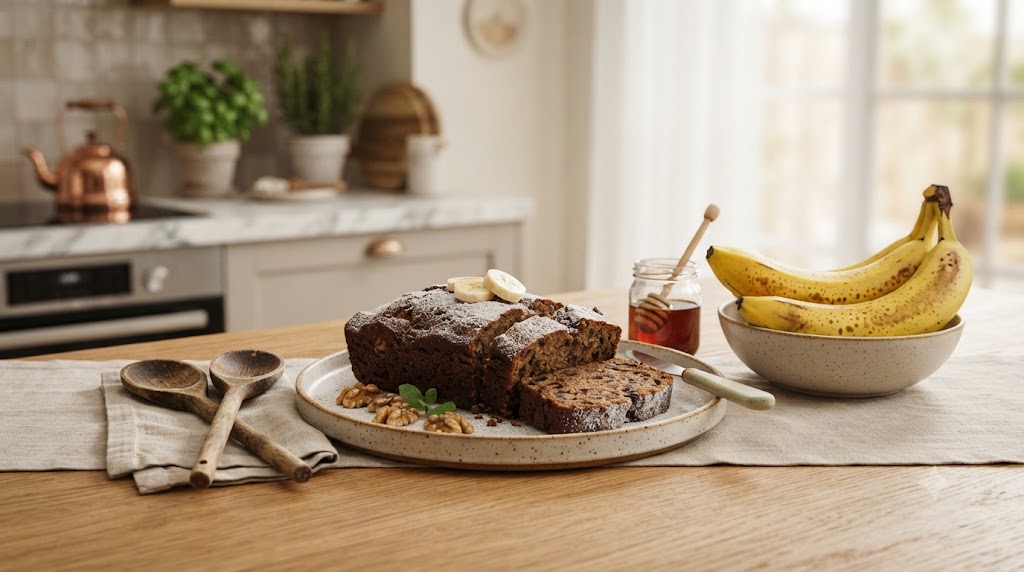
Quick And Easy Banana Bread Recipe
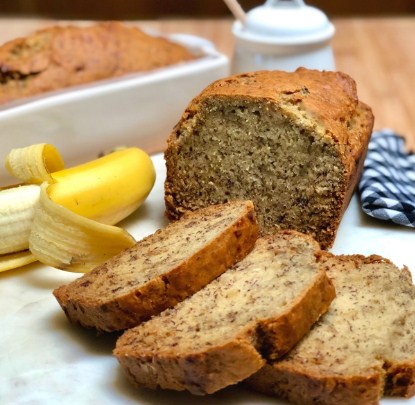
I’ve made this easy banana bread recipe so many times I don’t even need the card anymore, and honestly, that’s the whole point of it. It started because I had four bananas going brown on my counter and a toddler who refused to eat them plain (fair enough, kid, they were pretty mushy). So I threw together this loaf, half expecting it to flop, and it came out so good my husband asked if I’d bought it from the bakery down the street. That was three years ago. I’ve tweaked it maybe twice since then, and both times I regretted messing with something that already worked.
This isn’t a fancy recipe. There’s no stand mixer required, no weird ingredient you have to hunt down at a specialty store. It’s the kind of thing you can make on a random Tuesday with stuff already sitting in your kitchen, and that’s exactly why it’s stuck around in my rotation longer than most recipes do.
Why You’ll Love This Recipe
Let’s get the obvious stuff out of the way first: it’s fast. One bowl, one loaf pan, done in under 15 minutes of actual hands-on work. You don’t need to cream butter and sugar for five minutes like some recipes demand — I just mash, mix, and pour. If you’ve got a whisk and a fork, you’re basically set.
It’s also incredibly forgiving. I’ve made this with three bananas instead of four because I ate one standing at the counter (don’t judge me), and it still turned out fine, just slightly less sweet. I’ve swapped oil for melted butter, added chocolate chips when my kids were being difficult about eating breakfast, and once — accidentally — used self-rising flour because I grabbed the wrong bag. It still worked, though I wouldn’t recommend doing that on purpose.
And it smells incredible while it bakes. There’s something about warm banana and cinnamon filling up a kitchen on a cold morning that just feels like home. My neighbor Denise smelled it through her kitchen window once and literally texted me asking what I was baking. That’s the kind of loaf this is.
Ingredients
Here’s what you’ll need, and none of it should require a special trip to the store. You’ll want 3 to 4 very ripe bananas (the browner and spottier, the better — I know it looks gross, but that’s where the flavor lives), 1/3 cup of melted butter or neutral oil, 3/4 cup of granulated sugar (you can go lower, I’ve done 1/2 cup with no complaints), 1 large egg, 1 teaspoon of vanilla extract, a pinch of salt, 1 teaspoon of baking soda, and 1 1/2 cups of all-purpose flour. That’s it. Nine ingredients, most of which are probably already in your pantry right now.
I sometimes throw in a teaspoon of cinnamon too, mostly because my mom always did, and old habits die hard. It’s optional, but I’d call it a strong suggestion.
Step-by-Step Cooking Instructions
Preheat your oven to 350°F and grease a 9×5-inch loaf pan, or line it with parchment paper if you’re lazy about scrubbing pans later (I am). In a large mixing bowl, mash your bananas with a fork until they’re mostly smooth — a few small lumps are fine, actually kind of nice in the final bread.
Stir the melted butter into the mashed bananas. Then mix in the sugar, egg, and vanilla until everything’s combined and looks glossy. Sprinkle the baking soda and salt over the top and stir it in — I learned the hard way that dumping it in one spot without spreading it around gives you weird bitter pockets in random bites. Not fun.
Add the flour last, folding it in gently. Don’t overmix here; a few flour streaks are okay, and honestly overmixing is the number one reason banana bread turns out dense and rubbery instead of soft. Pour the batter into your prepared pan and bake for 55 to 65 minutes, checking around the 50-minute mark with a toothpick. When it comes out clean, or with just a few moist crumbs (not wet batter), you’re done. Let it cool in the pan for about 10 minutes before turning it out onto a rack.
Cooking Tips and Special Notes
The single biggest tip I can give you: use bananas that look almost too far gone. If they’re just yellow with a couple of brown spots, wait a couple more days. You want them soft, sweet, and honestly kind of ugly. I used to toss bananas the second they got spotty — turns out that was a mistake, and I was throwing away the best baking bananas without knowing it.
Room-temperature eggs blend in more smoothly, though I’ll admit I forget this half the time and use a cold egg straight from the fridge anyway. It still works, it just takes a few extra seconds of stirring. Also, don’t skip greasing the corners of the pan. I did that once at 6:40 in the morning, half asleep, and spent ten minutes fighting with a stuck loaf that tore apart when I flipped it. Tasted fine. Looked like a crime scene.
Substitutions and Variations
You’ve got room to play around here, which is honestly one of my favorite things about this recipe. Swap the all-purpose flour for a gluten-free 1:1 blend if that’s what your kitchen needs, use coconut oil instead of butter for a slightly different flavor, or cut the sugar down to 1/2 cup if you’re serving it with something sweet on the side already. Walnuts, pecans, chocolate chips, a swirl of peanut butter, even a handful of blueberries — I’ve thrown all of these into the batter at different points, and the base recipe holds up every time. My sister-in-law adds shredded coconut and calls it her “tropical version,” which sounds fancier than it actually is, but hey, it works.
If you want it a little healthier, you can replace half the flour with whole wheat flour, though the texture gets a bit denser. I did that for a while when I was trying to sneak more fiber into my kids’ snacks, and nobody noticed except my husband, who noticed everything.
What to Serve With It
I usually eat a slice plain, still slightly warm, with just a smear of butter melting into it. That’s the gold standard, in my opinion. But if you want to make it feel more like a proper breakfast, pair it with a bowl of Greek yogurt and some fresh berries, or a mug of coffee if it’s morning and a glass of milk if it’s, say, 9 pm and you’re eating dessert (no judgment, I do this too). It also holds up surprisingly well next to a scoop of vanilla ice cream if you’re serving it as an after-dinner treat.
Storage and Reheating
This loaf keeps well at room temperature for about 3 days if you wrap it tightly in plastic wrap or keep it in an airtight container. After that, I move it to the fridge, where it’ll last close to a week. It also freezes beautifully — slice it first, then wrap individual pieces so you can pull one out whenever a craving hits, which for me is usually around 3 pm on a Wednesday for no particular reason.
To reheat, a few seconds in the microwave brings it right back to that fresh-baked softness. If you’re doing it from frozen, give it about 20 to 25 seconds, check it, and add more time if needed.
Cook and Prep Time
Prep time runs about 10 to 15 minutes, and baking takes 55 to 65 minutes, so you’re looking at just over an hour total, most of which is hands-off oven time. It’s the kind of recipe you can start before hopping in the shower and have ready by the time you’re dressed.
Nutrition Facts (Approximate, Per Slice)
Based on a loaf cut into 10 slices, each one runs roughly 210 calories, 7 grams of fat, 34 grams of carbohydrates, 3 grams of protein, and about 18 grams of sugar. These numbers shift depending on which substitutions you use, so treat this as a rough guide rather than gospel.
Why This Recipe Actually Works
The magic here really comes down to ripe bananas and not overmixing the batter. Overripe bananas bring natural sugars and moisture that you just can’t fake with underripe ones, and that moisture is what keeps the crumb soft instead of dry and crumbly. Meanwhile, folding the flour in gently, rather than beating it, keeps the gluten from developing too much, which is the difference between a tender loaf and a chewy, tough one. It’s simple chemistry, but it makes a real difference you can taste.
The Small Change That Made a Big Difference
For years, I followed recipes that had me whisk the baking soda, salt, and flour together in a separate bowl before adding them to the wet ingredients. One rushed morning, I skipped that extra step and stirred the baking soda and salt directly into the banana mixture before folding in the flour. The loaf turned out just as soft and tender as always, and I realized I’d saved myself one less bowl to wash without sacrificing the result. Ever since then, that’s been my routine. It’s not a game-changing baking trick, but it’s one of those small shortcuts that makes homemade banana bread feel even easier on busy mornings.
What I’d Do Differently Making It Again Tomorrow
Honestly? I’d measure my sugar more carefully. I tend to eyeball it, and sometimes that means my loaf comes out a touch sweeter than I meant it to be. I’d also toast my walnuts first if I’m adding them, since raw walnuts folded straight into the batter get a little soft and lose that nice crunch. Small stuff, but it adds up.
What I Skip When I’m Short on Time
When mornings are chaotic, and let’s be real, most of mine are, I skip toasting nuts, skip measuring the cinnamon precisely, and just eyeball it. I also skip lining the pan with parchment and just grease it well instead, because who has time to cut parchment paper into a neat rectangle at 7 am. The bread still turns out great. Nobody’s ever complained about a slightly less photogenic loaf.
Frequently Asked Questions
Can I make this banana bread recipe without eggs? Yes, you can swap the egg for a flax egg (1 tablespoon ground flaxseed mixed with 3 tablespoons water) or a quarter cup of unsweetened applesauce. The texture will be slightly denser, but it still works fine.
Why did my banana bread sink in the middle? This usually happens from underbaking, opening the oven door too early, or too much banana relative to flour. Give it the full bake time and resist the urge to peek before the 50-minute mark.
Can I double this recipe? Absolutely, I’ve made a double batch for a bake sale before, using two loaf pans rather than one giant one, since a single over-sized loaf tends to bake unevenly.
Do I have to use ripe bananas? For the best flavor, yes. If yours aren’t ripe enough, roast them in their peels at 300°F for about 15 minutes, then let them cool before mashing. It’s a decent shortcut when you’re impatient, like I usually am.
Final Thoughts
At the end of the day, this easy banana bread recipe earns its spot in my kitchen because it’s simple, it’s flexible, and it never lets me down, even on the mornings I’m half asleep measuring things wrong. It’s not the fanciest bread out there, and it doesn’t need to be. Give it a try next time your bananas start looking a little too spotty for snacking, and trust me, your kitchen is going to smell amazing.