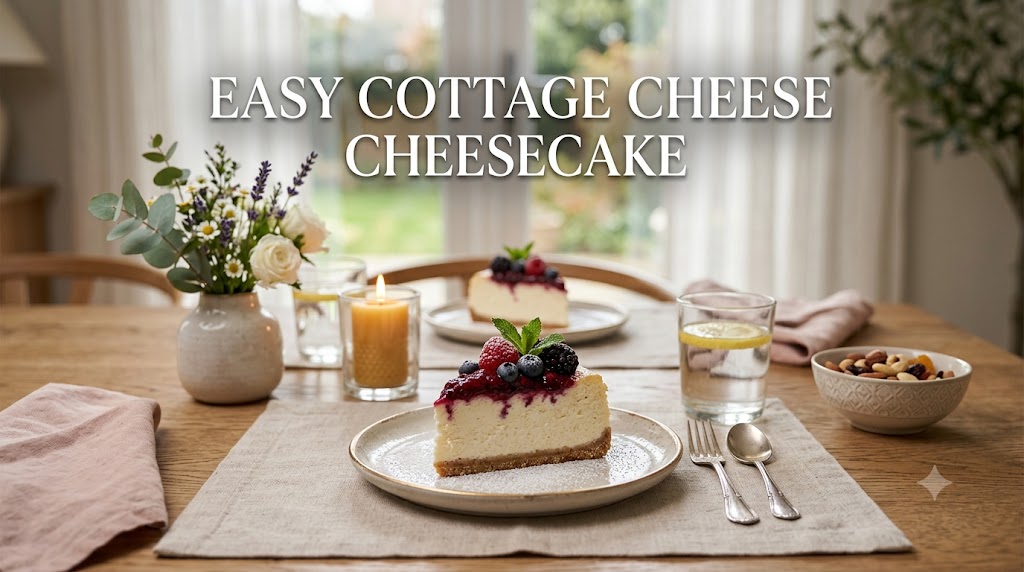
Easy Cottage Cheese Cheesecake Recipe
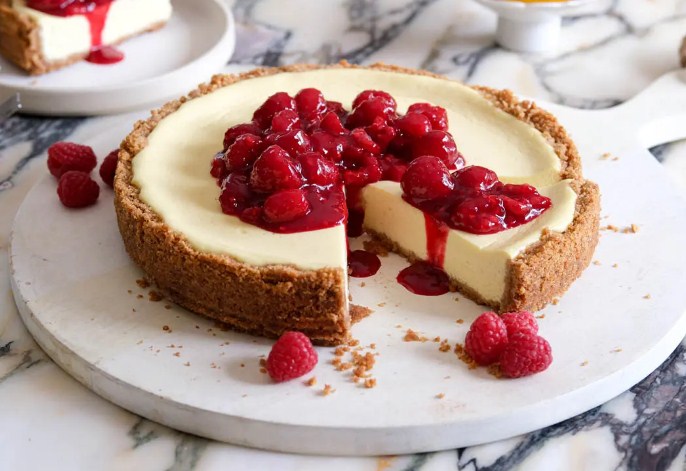
My easy cottage cheese cheesecake started as an accident, honestly. I’d bought a giant tub of cottage cheese for a completely different recipe, used maybe a third of it, and then stared at the rest wondering what on earth to do before it went bad. Cheesecake seemed like a stretch. Cottage cheese has that lumpy, watery reputation, and I wasn’t sure it belonged anywhere near a dessert. Turns out I was wrong, and now this is the cheesecake I make more than any other, including the classic cream cheese version I grew up eating.
Here’s the thing nobody tells you: blended cottage cheese turns silky, almost like a lighter ricotta, and it bakes up with this tang that regular cream cheese cheesecake just doesn’t have. It’s also considerably cheaper, which matters more some months than others. I’ve made this exact cheesecake for a Sunday brunch with six people and for myself on a random Wednesday with a spoon straight out of the fridge. Don’t judge me.
This isn’t a recipe that demands a water bath, a stand mixer, or a springform pan you bought once for a wedding and never used again. It’s the kind of dessert you make when you want something that tastes like effort but really only took twenty minutes of actual hands-on work.
Why You’ll Love This Recipe
I’ll be blunt: the texture surprised me the first time, and it still does a little. Once you blend cottage cheese properly, the curds disappear completely, and what’s left behind is smooth, slightly tangy, and rich without being heavy the way some cream cheese versions can sit in your stomach. My mother-in-law, who claims to dislike cottage cheese in every form, ate two slices and asked what kind of cream cheese I’d used. I let her believe whatever she wanted for a solid five minutes before telling her the truth.
There’s also a protein bump you don’t get from a traditional cheesecake, since cottage cheese is naturally higher in protein than cream cheese. That’s not why I make it, if I’m being honest, but it’s a nice bonus when my brother-in-law starts talking about macros at family dinners. Beyond that, it’s forgiving. I’ve overbaked it slightly and it still turned out fine. I’ve used low-fat cottage cheese in a pinch and it still worked, just slightly less rich.
Ingredients
- 2 cups cottage cheese (full-fat works best, but 2% is fine too)
- 8 ounces cream cheese, softened
- 3/4 cup granulated sugar
- 3 large eggs
- 1/3 cup sour cream or plain Greek yogurt
- 2 tablespoons cornstarch
- 1 teaspoon vanilla extract
- 1 tablespoon lemon juice (about half a lemon)
- 1/4 teaspoon salt
- 1 1/2 cups graham cracker crumbs (about 12 full sheets crushed)
- 5 tablespoons melted butter, for the crust
- 2 tablespoons sugar, for the crust
Equipment Needed
You’ll need a blender or food processor, a 9-inch springform pan, a mixing bowl, a rubber spatula, and an oven. If you don’t own a springform pan, a regular pie dish works in a pinch, though slicing gets messier. I learned that the hard way at a potluck once, wrestling a cheesecake out of a Pyrex dish with a butter knife while people watched.
Step-by-Step Cooking Instructions
- Preheat your oven to 325°F and set a rack in the middle position.
- Mix the graham cracker crumbs, melted butter, and 2 tablespoons of sugar in a bowl until it looks like wet sand.
- Press that mixture firmly into the bottom of your springform pan, going about half an inch up the sides. Use the bottom of a measuring cup to pack it down tight.
- Bake the crust alone for 8 minutes, then set it aside to cool slightly while you make the filling.
- Add the cottage cheese to a blender or food processor and blend on high for a full 2 minutes, scraping down the sides once. It needs to be completely smooth, no lumps left at all.
- Add the cream cheese, sugar, sour cream, cornstarch, vanilla, lemon juice, and salt to the blender. Blend again until fully combined and creamy.
- Add the eggs one at a time, pulsing briefly after each one. Don’t overmix once the eggs are in, or you’ll add too much air and risk cracking.
- Pour the filling over the cooled crust and smooth the top with a spatula.
- Bake for 45 to 55 minutes, until the edges look set but the center still has a slight jiggle, kind of like Jell-O that hasn’t fully firmed up.
- Turn the oven off, crack the door open, and let the cheesecake sit inside for an hour. This slow cooldown helps prevent cracks.
- Move it to the counter to finish cooling, then refrigerate for at least 4 hours, though overnight is genuinely better.
- Slice with a warm, clean knife, wiping it between cuts for neat pieces.
Cooking Tips
Room temperature ingredients matter more than you’d think. Cold cream cheese and cold eggs don’t blend evenly, and you’ll end up with little flecks in the batter that never quite smooth out. I used to skip this step and just toss everything in cold — turns out that was a mistake, because two of my early attempts came out slightly grainy for no reason I could figure out until a friend pointed out the obvious.
Don’t rush the blending step for the cottage cheese itself. This is the one part of the recipe where more time genuinely helps. Two full minutes sounds excessive for something that’s just going into a bowl anyway, but it’s the difference between a cheesecake that tastes like cottage cheese and one where you’d never guess.
Also, resist the urge to open the oven door repeatedly to check on it. I know it’s tempting. A sudden temperature drop is one of the more common reasons cheesecakes crack right down the middle.
Substitutions & Variations
You can swap the graham cracker crust for crushed digestive biscuits, vanilla wafers, or even crushed Oreos if you want a chocolate base, and each one changes the flavor just enough to feel like a different dessert. Swap the sour cream for plain yogurt, full-fat or Greek, without much difference in the final texture. If you want a lighter version, low-fat cottage cheese and reduced-fat cream cheese both work, though the final cheesecake will be a touch less rich and slightly softer once sliced. For a lemon version, double the lemon juice and add a tablespoon of lemon zest. For a berry swirl, drop spoonfuls of berry jam onto the unbaked filling and swirl gently with a knife before it goes in the oven.
What to Serve With It
Fresh berries are the obvious pairing, and I mean obvious in a good way, strawberries or raspberries cut through the richness nicely. A drizzle of honey works surprisingly well too, especially with the lemon variation. Coffee is my personal go-to alongside a slice, ideally something slightly bitter to balance the sweetness. I’ve also served it with a dollop of whipped cream at a birthday gathering, and nobody complained, which in my family counts as a rave review.
Storage & Reheating
This cheesecake keeps well in the fridge, covered, for up to 5 days. It doesn’t need reheating since it’s meant to be served cold, but if you’ve frozen leftover slices (which freeze surprisingly well for up to 2 months), just move them to the fridge overnight to thaw before eating. Don’t microwave it. I tried that once out of impatience and ended up with something closer to warm cheese soup than cheesecake.
Cook and Prep Time
Prep time runs about 20 minutes, plus roughly 50 minutes of baking, and then the long wait: an hour of cooling in the oven and at least 4 hours in the fridge afterward. Total hands-on time is short. Total waiting time is where the patience comes in.
Nutrition Facts
Per slice (based on 10 slices): Calories: 245, Protein: 9g, Carbohydrates: 18g, Fat: 15g, Sugar: 13g, Sodium: 210mg.
Nutritional values are estimates only and will vary based on specific brands and substitutions used. This information is provided for general reference and shouldn’t replace advice from a registered dietitian or nutritionist, especially if you’re managing a specific health condition.
The Part Where the Texture Finally Clicked
The first two times I made this, something felt slightly off, and it took me a while to realize the culprit was under-blending the cottage cheese. Once I gave it that full two minutes on high, everything changed. The tang stayed, the lumps vanished, and the whole thing baked up smoother than some cream cheese cheesecakes I’ve made in the past. It’s a small thing, blending longer than feels necessary, but it’s genuinely the difference between good and great here.
The One Change That Actually Mattered
Adding cornstarch was almost an afterthought the first time, something I threw in because a recipe I half-remembered from years ago used it. But it stabilizes the filling in a way that’s hard to notice until you skip it. Without it, my third attempt came out slightly looser than I wanted, still tasty, just not as sliceable. Two tablespoons sounds like nothing, and it basically is nothing in terms of flavor, but it holds the whole structure together.
What I’d Do Differently Next Time
Honestly? I’d add the lemon zest along with the juice every single time going forward, not just for the lemon variation. It adds a brightness that cuts the richness in a way plain juice doesn’t quite manage on its own. I skipped it for months because I didn’t want to dirty another tool, a microplane, over something that felt optional. It wasn’t optional. It was just easy to overlook.
What I Skip When I’m Short on Time
If I’m rushed, I skip making my own crust and use a store-bought graham cracker crust instead, the kind that comes in the foil pan from the grocery store. It’s not quite as good, the texture is a little softer and less buttery, but it saves a solid fifteen minutes and nobody at a casual gathering has ever noticed or cared. I also sometimes skip the hour-long oven cooldown and just crack the door for twenty minutes instead, accepting the small risk of a crack down the middle since it gets covered in berries anyway.
FAQ
Can I use fat-free cottage cheese? You can, though the texture ends up a bit less creamy and the flavor is milder. Full-fat or 2% gives the best balance of richness and tang.
Why did my cheesecake crack? Cracks usually come from overbaking, opening the oven door too often, or cooling too fast. The slow oven cooldown step really does help prevent this.
Do I have to blend the cottage cheese? Yes, unless you enjoy a slightly curdy texture in your dessert, which most people don’t. Blending is what makes this whole recipe work.
Can I make this ahead of time? Absolutely, and honestly it tastes better the next day once the flavors settle. Make it a day before you need it if you can.
Is this healthier than a regular cheesecake? It has more protein and a bit less fat than a traditional cream cheese cheesecake, but it’s still a dessert with sugar and eggs in it, so I wouldn’t call it a health food exactly.
Final Thoughts
This easy cottage cheese cheesecake has become one of those recipes I return to without really thinking about it anymore, the way some people default to chocolate chip cookies when they need to bring something to a gathering. It’s forgiving, it’s a little unexpected in the best way, and it costs less than most cheesecakes while tasting like it cost more. If you’ve got a tub of cottage cheese sitting in your fridge with no clear purpose, this is a pretty good use for it. Give it a try, adjust the lemon to your taste, and don’t be afraid to mess with the crust. Trust me, once you taste that first cool, tangy slice, you’ll wonder why you didn’t try a cottage cheese cheesecake sooner.