What Does Guava Taste Like?
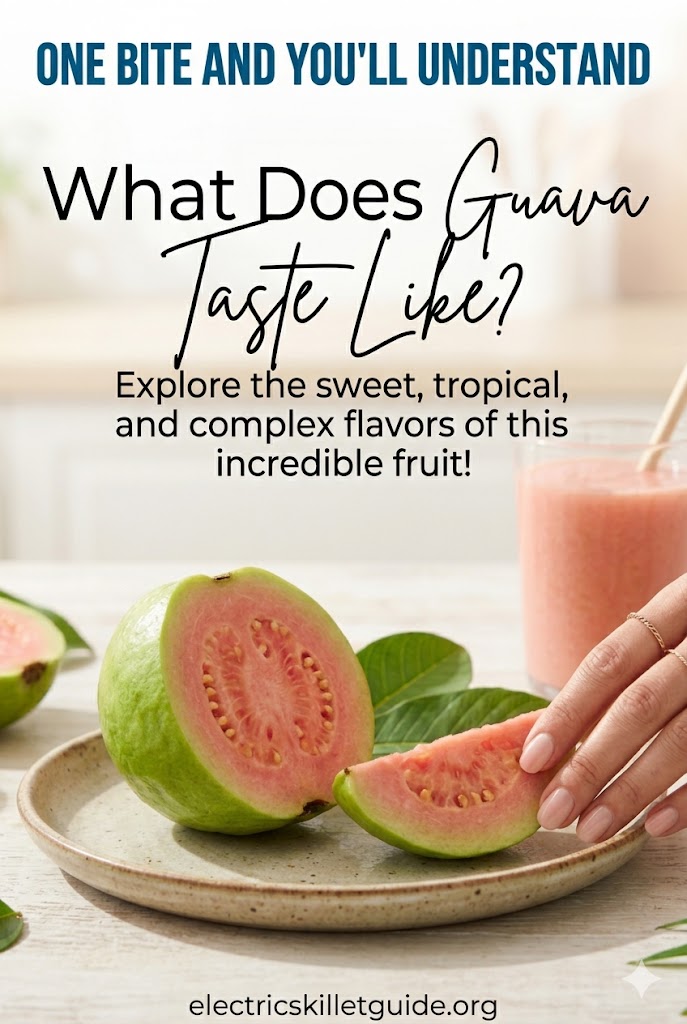
What does guava taste like? Important question indeed. Well, if you’ve never bitten into a guava before, you’re probably wondering what you’re missing. Maybe you spotted it at the grocery store or saw someone rave about guava juice online and thought — okay, but what does it actually taste like? That’s a fair question, because guava isn’t easy to compare to the fruits most people grew up eating.
The short answer: guava tastes like a cross between a strawberry and a pear, with a floral, slightly musky aroma that’s all its own. But that description barely scratches the surface. Let’s break it all down so you know exactly what to expect before you take your first bite.
The Basic Flavor Profile
Guava has a flavor that’s sweet, slightly tart, and tropical all at once. When the fruit is fully ripe, it leans heavily sweet with a gentle tang underneath. When it’s not quite ripe yet, that tartness becomes much more noticeable — almost sharp.
The taste is rich and fragrant, not watery or bland like some other tropical fruits can be. There’s a depth to it. Some people describe it as almost perfume-like because the sweetness has a floral quality that you don’t usually find in common fruits like apples or grapes.
If you’ve had guava candy, juice, or flavored snacks before, those products tend to play up the sweet, tropical side of the flavor. Real guava fruit is more complex than any of those — and honestly, better.
How Ripe Guava Tastes vs. Unripe Guava
Ripeness makes a huge difference with guava — probably more than with most fruits.
Ripe guava is soft to the touch, smells strongly sweet and floral, and tastes like tropical candy without being cloying. The flesh is smooth and juicy. The flavor is well-balanced — sweet upfront, with a mild tartness in the background that keeps it interesting.
Unripe guava is firm, almost hard, and tastes quite sour and astringent. Some people in Southeast Asia and Latin America actually enjoy eating it this way — with salt, chili powder, or vinegar — as a savory snack. It’s an acquired taste, but popular in many cultures.
Overripe guava goes the other direction. The flesh gets very soft and mushy, and the flavor becomes overly sweet and fermented-smelling. You can still use it in cooking or smoothies at this point, but eating it plain feels like a lot.
The sweet spot (literally) is a guava that gives slightly when you press it, smells fragrant from a distance, and has a yellow or light green skin — or pink/red, depending on the variety.
Does the Skin Taste Different from the Flesh?
Yes, and this surprises a lot of people. The skin of a guava is edible, but it has a stronger, more bitter flavor than the interior flesh. It’s also slightly grainy in texture. Some people peel their guava before eating it; others eat the whole thing.
The flesh inside is what most people are after. Depending on the variety, guava flesh can be white, yellow, or pink to deep red. The pink and red varieties tend to be sweeter and slightly more aromatic. White-fleshed guavas are a bit milder and less sweet, with a subtler flavor.
At the center of the fruit are small, hard seeds surrounded by a layer of pulp that’s even softer and more intensely flavored than the outer flesh. You can eat the seeds — they’re safe — but they’re hard enough that some people avoid them or spit them out.
What Does Guava Smell Like?
The smell of guava is actually one of its most distinctive features. Walk into a room with ripe guavas and you’ll notice the scent before you see the fruit.
It’s sweet and floral, with a musky, tropical undertone that some people love and others find a little overwhelming at first. Think of it like a more complex version of a strawberry’s aroma, with something almost jasmine-like layered on top.
That strong fragrance is part of why guava shows up so often in perfumes, candles, and air fresheners. It’s one of those scents that immediately signals “tropical” to most people.
If a guava doesn’t smell like much, it’s probably not ripe yet. The stronger the fragrance, the closer it is to peak ripeness.
Different Types of Guava and How Their Taste Varies
Not all guavas taste exactly the same. There are several common varieties you might come across, and each has its own personality.
Tropical Pink Guava — This is the one most people think of when they picture guava. It has pink-red flesh, a strong sweet aroma, and a rich, jammy flavor. It’s the sweetest of the common varieties and the most popular for juices, pastes, and desserts.
White or Yellow Guava — Milder and less fragrant than pink guava. The flavor is still sweet and tropical, but it’s gentler — less in-your-face. These are often preferred for eating fresh because the flavor isn’t as intense.
Strawberry Guava — Much smaller than regular guava, about the size of a large cherry. The flavor is brighter and more tart, with a noticeable strawberry-like quality. These are often described as more refreshing.
Lemon Guava — Has a distinctive citrusy note alongside the typical guava sweetness. It’s aromatic and slightly tangy, somewhere between a regular guava and a lemon in flavor.
Pineapple Guava (Feijoa) — While technically a different species, feijoa is often sold under the name pineapple guava. It tastes like a combination of pineapple, mint, and guava — more tart and herbal than common guava varieties.
How Does Guava Compare to Other Fruits?
People often try to explain guava by pointing to other fruits, and here are the most useful comparisons:
It’s close to a pear in texture when it’s not fully ripe — firm, slightly grainy. When it’s ripe, the flesh becomes closer to a mango — soft, juicy, and deeply fragrant.
Flavor-wise, the closest thing is probably a strawberry, but with more tropical depth and that floral muskiness that strawberries don’t have.
Compared to passion fruit, guava is sweeter and less acidic. Compared to papaya, guava is more aromatic and has a stronger personality.
If you like the idea of a fruit that’s sweet but not one-dimensional, with enough tartness to keep things balanced and a scent that fills the room — guava is probably going to be your thing.
What Does Guava Juice Taste Like?
Guava juice is one of the most popular ways to enjoy the fruit, especially in Latin America, the Caribbean, and parts of Asia.
When it’s made from real guava (not guava-flavored syrup), the juice is thick, fragrant, and intensely sweet. It has more body than apple juice or orange juice — closer to nectarines or papaya in consistency. The color is usually pale pink or orange depending on the variety used.
Most commercial guava juices add sugar, which can push the flavor into very-sweet territory. Fresh-pressed or minimally sweetened guava juice gives you a better sense of what the real fruit tastes like — tropical, aromatic, and just tart enough to be refreshing.
How Is Guava Used in Cooking?
Because of its bold, sweet flavor, guava works really well in both sweet and savory dishes.
On the sweet side, guava paste (pasta de guayaba) is a staple in Cuban and Latin American cooking. It’s eaten with cream cheese as a snack or dessert, used as a filling in pastries, and spread on crackers. Guava jam and guava jelly are also common. The fruit’s natural pectin content makes it ideal for preserves — it sets up thick and beautifully.
On the savory side, guava works well in glazes for meat, especially pork. The sweetness caramelizes nicely and plays against salty, fatty flavors. Guava-habanero sauces are popular because the fruity sweetness of the guava softens the heat of the pepper without completely neutralizing it.
In drinks, guava shows up in smoothies, cocktails, agua fresca, and flavored sparkling water. It pairs especially well with lime, ginger, coconut, and mint.
Should You Try Guava?
If you’ve been on the fence about guava, here’s the honest case for giving it a shot: it’s one of the most uniquely flavored fruits out there. It’s not trying to taste like anything else. It’s just guava — sweet, fragrant, slightly tart, and completely its own thing.
Start with a ripe pink guava if you can find one. Let it come to room temperature, smell it (you’ll know it’s ready when the aroma hits you from a foot away), and eat it fresh. Cut it in half like an apple, scoop out the seeds if you want, and try the flesh on its own before adding anything else.
If fresh guava isn’t available near you, guava juice or guava paste are decent starting points — they’ll give you a solid sense of the flavor profile, even if they don’t capture every nuance of the real thing.
Either way, once you know what guava tastes like, you’ll understand pretty quickly why so much of the tropical world is obsessed with it.