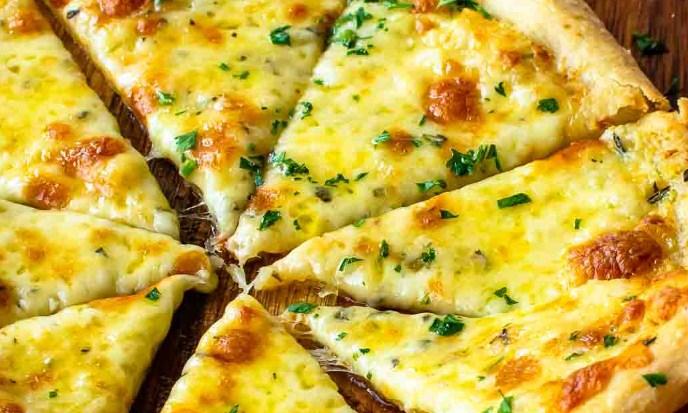
White Garlic Skillet Pizza Recipe
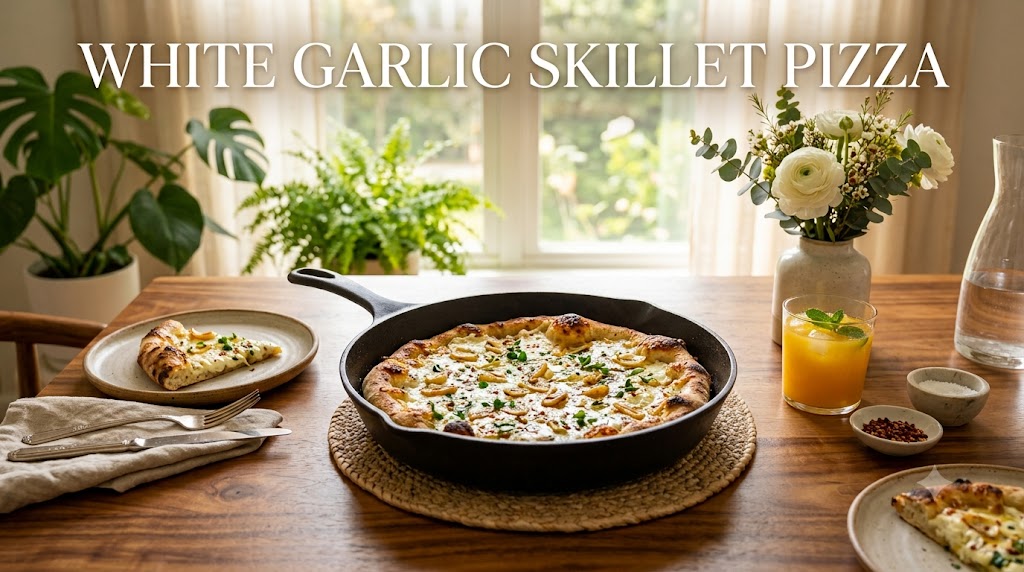
My cast iron skillet has burn marks on the handle from a decade of use, and it’s the reason I even started making white garlic skillet pizza in the first place. I’d run out of tomato sauce one night, panicked a little, and just went with what I had: olive oil, a stupid amount of garlic, and three kinds of cheese I found hiding in the back of the fridge. Turns out that “mistake” became the pizza my family asks for more than any other. No red sauce, just a garlicky, cheesy, crispy-bottomed pie made in a single pan on your stovetop and finished in the oven.
If you’ve never made pizza in a skillet before, don’t worry. It’s honestly more forgiving than working with a pizza stone, and you don’t need any fancy equipment to get that shatter-crisp crust everyone raves about.
Why You’ll Love This Recipe
There’s something deeply satisfying about pulling a bubbling, golden-edged pizza out of a skillet you’ve had for years. This one skips the marinara entirely, which sounds weird until you taste how the garlic and olive oil soak into the dough instead of getting buried under sauce. The crust gets genuinely crackly on the bottom because the skillet holds heat like nothing else, and the top stays soft and chewy. It’s also just faster than a lot of homemade pizza recipes since you’re not waiting around for a pizza stone to preheat for 45 minutes.
Plus, and I mean this, it tastes like something you’d order at a small Italian place with checkered tablecloths, not something that came out of your kitchen on a random weeknight.
Ingredients
- 1 pound pizza dough (store-bought or homemade), room temperature
- 4 tablespoons olive oil, divided
- 6 cloves garlic, thinly sliced (not minced — trust me on this)
- 1 teaspoon dried oregano
- 1/2 teaspoon red pepper flakes (optional, but I like the kick)
- 1 1/2 cups shredded mozzarella
- 1/2 cup shredded provolone
- 1/4 cup grated Parmesan
- 1/2 cup ricotta, small spoonfuls
- Fresh basil leaves, torn, for topping
- Flaky sea salt and black pepper, to taste
Equipment Needed
You’ll need a 10 or 12-inch oven-safe cast iron skillet, a mixing bowl, a rolling pin or your hands (rolling pins are overrated honestly), a pastry brush or just a spoon, and an oven that can hit 475°F without complaint.
Step-by-Step Cooking Instructions
- Pull your pizza dough out of the fridge at least an hour before you plan to cook, so it comes to room temperature and stretches without fighting you.
- Preheat your oven to 475°F with the rack in the middle position.
- Heat 2 tablespoons of olive oil in your skillet over medium-low heat, then add the sliced garlic and cook gently for about 2 minutes, just until it turns golden and fragrant. Don’t walk away here — garlic burns fast and turns bitter almost instantly.
- Remove the skillet from heat and swirl the garlic oil around so it coats the bottom and sides of the pan.
- Stretch your dough into a circle roughly the size of your skillet, a little smaller is fine since it’ll expand as it cooks.
- Lay the dough into the skillet, pressing it gently up the sides about half an inch.
- Brush or spoon the remaining 2 tablespoons of olive oil over the top of the dough.
- Sprinkle oregano and red pepper flakes evenly across the surface.
- Scatter the mozzarella and provolone over the dough, leaving a small gap near the edges for the crust to puff.
- Dot small spoonfuls of ricotta across the top, then finish with the grated Parmesan.
- Place the skillet on the stovetop over medium heat for 2 to 3 minutes, just to get the bottom crust started and crisping before it goes into the oven.
- Transfer the skillet directly into the preheated oven and bake for 12 to 15 minutes, until the cheese is bubbling and the edges are deep golden brown.
- Remove carefully (the handle will be scorching, use a real oven mitt, not a dish towel — I’ve made that mistake exactly once) and let it rest for 5 minutes.
- Top with torn basil, a pinch of flaky salt, and cracked black pepper before slicing.
Cooking Tips
Slice your garlic thin, not minced, if you want it to caramelize instead of burning into little bitter specks — this one change alone made a bigger difference than almost anything else I tried. Also, resist the urge to overload the cheese. I know, I know, more cheese sounds better in theory, but too much and the middle turns soggy instead of that nice golden bubble you’re going for. And always preheat that skillet on the stovetop for a couple minutes before the oven step; it’s the secret to getting a crust that’s crisp on the bottom instead of pale and floppy.
Substitutions & Variations
You can swap ricotta for burrata if you’re feeling fancy, or leave it out entirely if you’re not a fan of the texture. Whole wheat dough works fine here too, though it’ll be a touch denser. If garlic allergies are a concern in your house, roasted shallots make a surprisingly good stand-in, and honestly I’ve done a version with caramelized onions instead that got polished off faster than the original. Some nights I throw on thin slices of prosciutto after baking, other nights it’s mushrooms sautéed in the same garlic oil before assembling — this white garlic skillet pizza handles variations really well because the base flavor is so simple.
What to Serve With It
A simple arugula salad with lemon and olive oil cuts through the richness nicely. I’ll also throw together a quick tomato and cucumber salad on the side, or sometimes just a bowl of olives and some crusty bread for dipping in the leftover garlic oil, because wasting that oil feels like a crime.
Storage & Reheating
Leftovers keep in the fridge for up to 3 days in an airtight container. Reheat slices in a dry skillet over medium-low heat for a few minutes to bring back that crisp bottom — the microwave will get you fed but it turns the crust sad and chewy in the wrong way. You can also freeze fully cooled slices for up to 2 months, wrapped tightly, and reheat straight from frozen in a 400°F oven for about 10 minutes.
Why This Recipe Actually Works
The magic here really comes down to fat and heat working together instead of fighting. That garlic-infused olive oil does double duty: it flavors the dough directly instead of relying on a sauce layer, and it helps conduct heat evenly across the cast iron so the bottom crisps instead of steaming. Skip the sauce and you’re not fighting excess moisture, which is honestly half the reason skillet pizzas sometimes turn out soggy in other recipes.
The Small Change That Made A Big Difference
For years I minced my garlic for this, out of habit more than anything, and it kept burning into these bitter little black flecks that ruined the whole pan. Switching to thin slices instead of mince was such a small thing, but it changed everything. The garlic turns golden and almost candy-like instead of scorched, and it stays that way even after the second bake in the oven.
What I’d Do Differently Making It Again Tomorrow
Honestly? I’d probably let the dough rest a little longer before stretching it. I rushed it once, maybe 20 minutes short of where it should’ve been, and the dough kept springing back instead of relaxing into the pan. It still turned out fine, edible, even good, but not quite as evenly shaped as I wanted. Patience with the dough pays off more than I give it credit for.
What I Skip When Short On Time
On busy nights I skip making my own dough entirely and just grab a ball from the grocery store bakery counter — no shame in that. I’ll also skip the ricotta dollops sometimes since they’re more of a nice-to-have than essential, and I’ll use pre-shredded cheese instead of block cheese I’d normally grate myself. None of that changes the core of what makes this white garlic skillet pizza work.
Cook and Prep Time
Prep time runs about 15 minutes, not counting the hour you’ll want to let your dough sit at room temperature. Cook time is roughly 20 minutes total between the stovetop start and the oven finish. So from start to actual bite, you’re looking at around 40 minutes of active involvement, give or take.
Nutrition Facts
Per slice (recipe makes 8 slices): Calories: 310 | Protein: 13g | Carbohydrates: 28g | Fat: 16g | Fiber: 1g | Sodium: 480mg
Nutritional values are estimates only, calculated using standard ingredient databases, and can vary based on brands, exact measurements, and any substitutions you make. If you’re tracking nutrition for medical or dietary reasons, we recommend calculating values with your specific ingredients.
FAQ
Can I make this without a cast iron skillet? You can use any oven-safe heavy-bottomed skillet, though cast iron gives you the best crust because it holds heat so well.
Why no tomato sauce in this recipe? White garlic skillet pizza skips the sauce on purpose — the garlic oil and cheese carry all the flavor, and it keeps the crust from getting soggy.
Can I prep the dough ahead of time? Yes, you can make the dough a day ahead and let it rise slowly in the fridge overnight, then bring it to room temp before using.
What if my garlic burns while cooking the oil? Toss it and start over with fresh garlic and a lower flame. Burnt garlic turns bitter fast and there’s no saving it once it’s gone too far.
Final Thoughts
This white garlic skillet pizza has become one of those recipes I make without even thinking twice about it anymore, the kind where my hands just know the motions. It’s simple, it’s a little messy in the best way, and it never once needs a jar of sauce to taste like something worth sitting down for. Give it a shot next time you’ve got a skillet, some dough, and way too much garlic sitting around — you’ll probably end up making it a habit too.