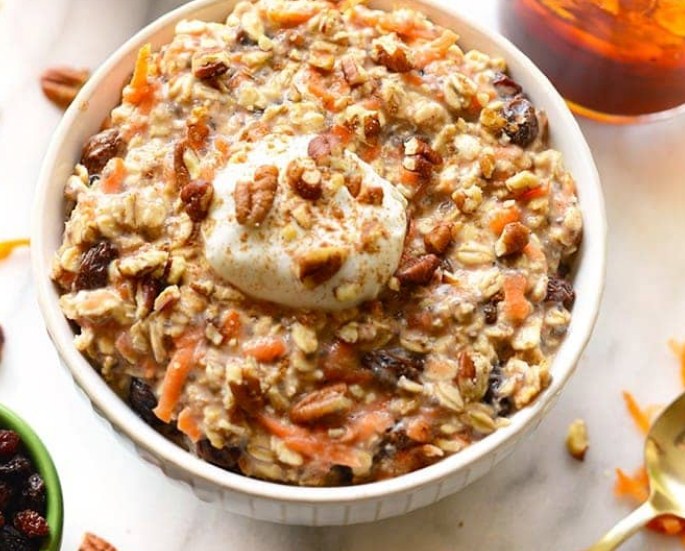
Carrot Cake Overnight Oats
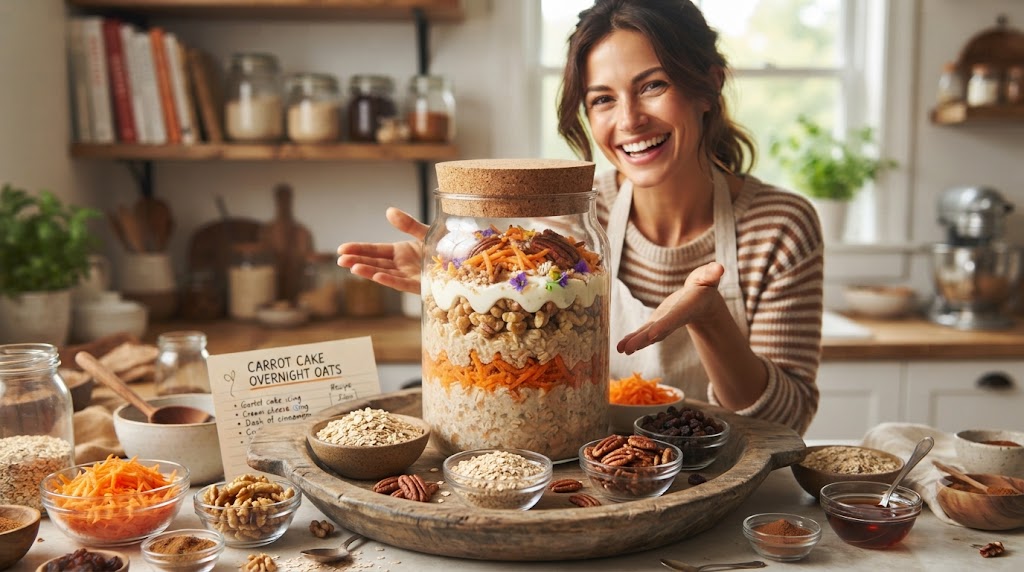
I started making this carrot cake overnight oats recipe because I was tired of eating actual carrot cake for breakfast and then feeling weird about it by 10 a.m. True story — for about three weeks last spring, I had a leftover carrot cake in my fridge from my sister-in-law’s birthday, and I just kept slicing into it every morning like a raccoon with a day planner. Eventually I figured, why not just turn the flavors I love into something that’s actually meant to be breakfast? So that’s what this is. It tastes like carrot cake, spoonful for spoonful, but it’s oats, yogurt, shredded carrot, and warm spices instead of butter and frosting.
This recipe has become the thing I prep on Sunday nights for the whole work week, usually around 8:30 while some true crime documentary plays in the background that I’m not really watching. It takes maybe ten minutes of actual effort, and then the fridge does the rest of the work overnight. If you’ve made overnight oats before, you know the drill. If you haven’t, don’t worry, I’ll walk you through every bit of it, including the mistakes I made getting here.
Why You’ll Love This Recipe
Here’s the thing about carrot cake overnight oats — they hit that dessert-for-breakfast craving without the sugar crash that comes an hour later. The carrots add natural sweetness and a little bite, the cinnamon and nutmeg do the heavy lifting on flavor, and the oats turn creamy and almost pudding-like by morning. It’s genuinely satisfying in a way that a lot of “healthy” breakfasts pretend to be but aren’t.
I also love that this recipe is basically foolproof. You can’t really overcook oats that aren’t being cooked at all, which takes a lot of pressure off a Sunday night when you’re mostly just trying to get to bed. And it holds up well for four, sometimes five days in the fridge, so one prep session covers almost the whole week. My neighbor Jennifer (yes, the same Jennifer from the tamarind conversation — she’s become something of a recurring character in my kitchen life) started making a batch after trying mine at a brunch, and she said her kids ask for it by name now, which I think says something about how far this recipe has come from “sad breakfast substitute” to genuinely craveable.
Ingredients You Will Need
You’ll need a handful of pantry staples plus one produce item, and none of it is exotic or hard to find. Here’s what goes into a single jar of carrot cake overnight oats:
- 1/2 cup old-fashioned rolled oats (not instant, not steel-cut — trust me on this one)
- 1/2 cup milk of your choice, dairy or plant-based both work fine
- 1/4 cup plain yogurt, Greek or regular
- 1/2 cup finely shredded carrot, about one medium carrot
- 1 tablespoon maple syrup or honey
- 1/2 teaspoon ground cinnamon
- 1/4 teaspoon ground nutmeg
- A pinch of ground ginger, optional but I always add it
- 1 tablespoon chopped walnuts or pecans
- 1 tablespoon raisins or chopped dates
- 1/2 teaspoon vanilla extract
- A small pinch of salt, because oats without salt taste flat, no matter what anyone tells you
Step-by-Step Cooking Instructions
- Grab a mason jar or any container with a lid — I use old pasta sauce jars because I refuse to buy special jars for this, it feels unnecessary. Add the oats first.
- Pour in the milk and yogurt, then stir well so the oats are fully coated and nothing’s clumping at the bottom. This step matters more than people think; skip it and you’ll get a dry pocket of oats hiding at the base of the jar in the morning.
- Add the shredded carrot, maple syrup, cinnamon, nutmeg, ginger if you’re using it, vanilla, and salt. Stir again until everything’s evenly mixed and the mixture looks uniformly speckled with orange and brown.
- Fold in the walnuts and raisins last, just so they don’t get too soggy sitting in the wet mixture all night.
- Put the lid on, pop it in the fridge, and just leave it alone for at least six hours, though overnight (eight to ten hours) gives you the best texture.
- In the morning, give it a good stir, since some separation is totally normal. Add a splash more milk if it’s thicker than you’d like, and top with a few extra walnuts or a dollop of yogurt if you’re feeling fancy.
Cooking Tips and Special Notes
The single biggest change I made to this recipe, and I mean this changed everything, was switching from grating the carrot coarsely to shredding it really fine, almost like confetti. I used to just grate it the regular way, the way you’d do for a salad, and the texture ended up weirdly stringy and kind of chewy in a bad way. Once I started using the fine side of my box grater, the carrot practically melts into the oats overnight and you get that classic carrot cake texture instead of, well, oat soup with carrot ribbons floating in it.
Also, don’t skip the resting time even if you’re in a rush. I tried eating this after only two hours in the fridge once, on a morning I was running late for a dentist appointment, and it was fine, not amazing — the oats hadn’t fully softened and the whole thing tasted more like wet cereal than cake. Give it the full overnight soak whenever you can. It really is worth the wait.
Substitutions and Variations
This recipe bends pretty easily depending on what’s in your kitchen or what you’re craving. Swap the walnuts for pecans, or skip nuts entirely if you’ve got an allergy in the house, use unsweetened applesauce instead of maple syrup for a lower-sugar version, throw in a tablespoon of cream cheese instead of yogurt if you want that actual cream-cheese-frosting vibe (this one’s a little indulgent but so good), or use grated apple alongside the carrot for extra natural sweetness and a slightly different texture. Steel-cut oats don’t work well here since they stay too firm even after an overnight soak, so stick with rolled oats unless you’re willing to experiment with soak time.
What to Serve With It
I usually eat this on its own since it’s pretty filling as is, but a side of fresh fruit rounds it out nicely, think sliced banana or a handful of berries. If you’re serving this for a brunch spread, small dessert-style glasses with a sprinkle of extra cinnamon on top make it look a lot more put-together than the effort actually required.
Storage and Reheating
These oats keep well in the fridge for up to five days, sealed in their jar or container. I wouldn’t recommend freezing this one, honestly — the texture gets grainy and a little sad after thawing, and the carrots turn mushy in a way that’s not pleasant. No reheating needed either; this is meant to be eaten cold or at room temperature, straight from the fridge. If you really want it warm, a quick 20 seconds in the microwave works, though I think it changes the texture for the worse.
Cook and Prep Time
Prep time is about ten minutes, and there’s zero actual cook time since nothing gets heated. Total time before it’s ready to eat is roughly eight hours, mostly hands-off overnight resting.
Nutrition Facts (per serving, approximate)
Calories: 310, Protein: 10g, Carbohydrates: 42g, Fiber: 6g, Sugar: 16g, Fat: 11g. These numbers shift a bit depending on which milk and sweetener you use, so treat this as a general guide rather than gospel.
Why This Recipe Actually Works
The combination of oats and yogurt does two jobs at once — the oats soak up liquid and turn creamy, while the yogurt adds tang and protein that plain milk alone can’t give you. Carrots bring natural sugar and moisture without needing much added sweetener, and the warm spices do the job that frosting usually does in regular carrot cake, giving you that same cozy flavor without needing a whole stick of butter involved.
What I’d Do Differently Next Time
If I’m being honest, I’d probably toast the walnuts first next time instead of adding them raw. I used to think it wasn’t worth the extra step for something this simple, but a friend convinced me to try it last month and the flavor difference was bigger than I expected — toasted nuts have this deeper, almost caramelized taste that raw walnuts just don’t have. Small thing, big payoff, and now I feel a little guilty for skipping it all those years.
What I Skip When I’m Short on Time
I’ll admit it, I skip the fine grating step sometimes when I’m exhausted and just running the carrot through the food processor’s shredding attachment instead, even though it comes out a bit coarser. It’s not quite as good, texture-wise, but it’s still perfectly edible and honestly most mornings I’m too busy drinking coffee to notice the difference anyway.
FAQ
Can I make carrot cake overnight oats without yogurt? Yes, just use extra milk in its place, though you’ll lose a bit of the tang and creaminess yogurt adds.
Do I need to cook the carrots first? No, raw shredded carrot softens naturally overnight as it sits in the liquid, so there’s no need to cook it beforehand.
Can I double or triple this recipe for meal prep? Definitely, and I do this most weeks. Just multiply everything evenly and store individual portions in separate jars so they’re grab-and-go ready.
Why are my oats too thick in the morning? This usually means the oat-to-liquid ratio was a bit off, or your oats are older and drier than usual. Just stir in a splash more milk until it loosens to the texture you like.
Final Thoughts
This carrot cake overnight oats recipe turned what used to be an actual slice of cake into something I can eat guilt-free on a random Tuesday morning, and honestly, that swap has stuck around longer than most of my breakfast experiments. It’s easy, it barely takes any effort the night before, and it genuinely tastes like dessert while still keeping me full until lunch. If you try one overnight oats recipe this year, let it be this one — trust me, your future groggy self will thank you.