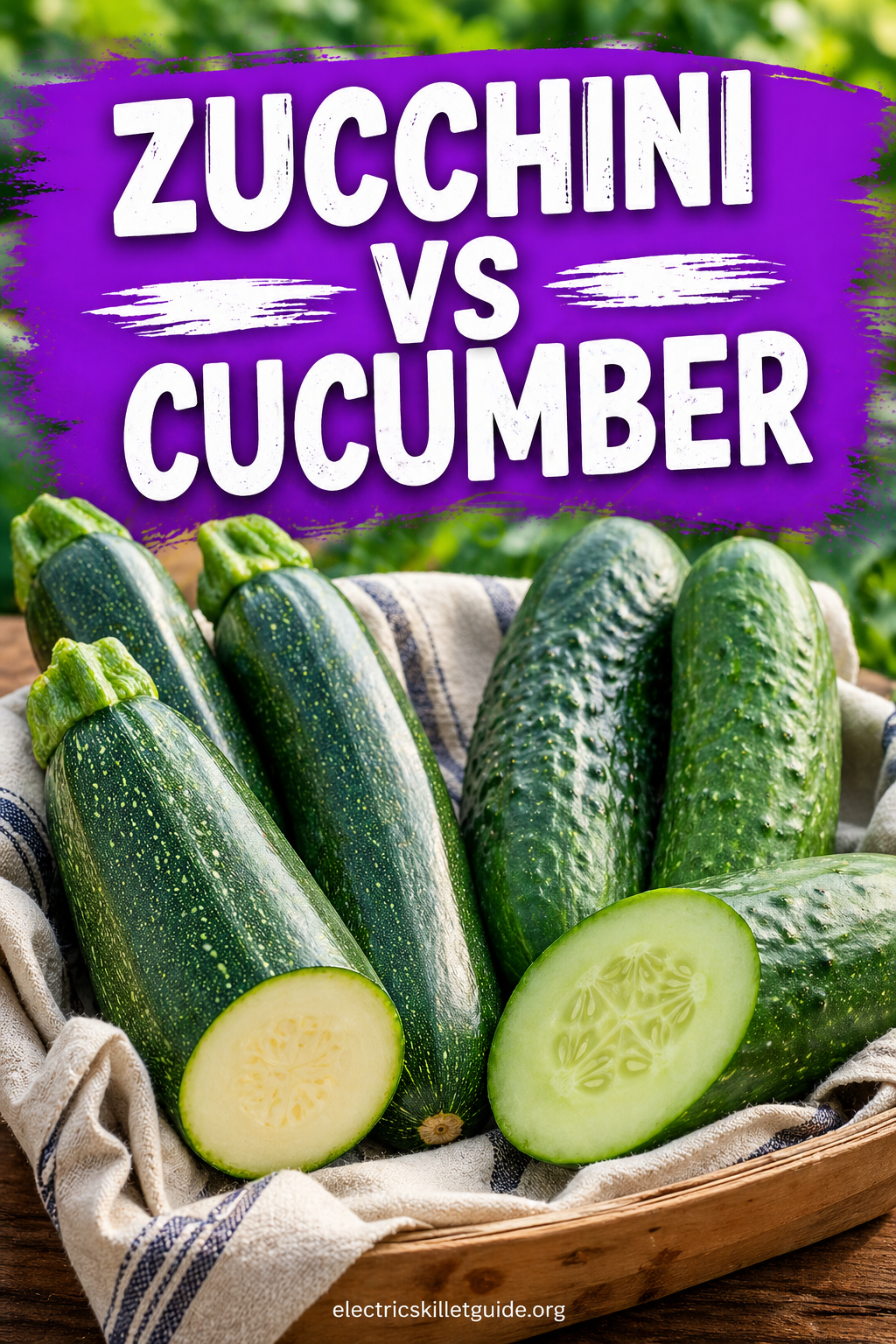
Zucchini Vs Cucumber
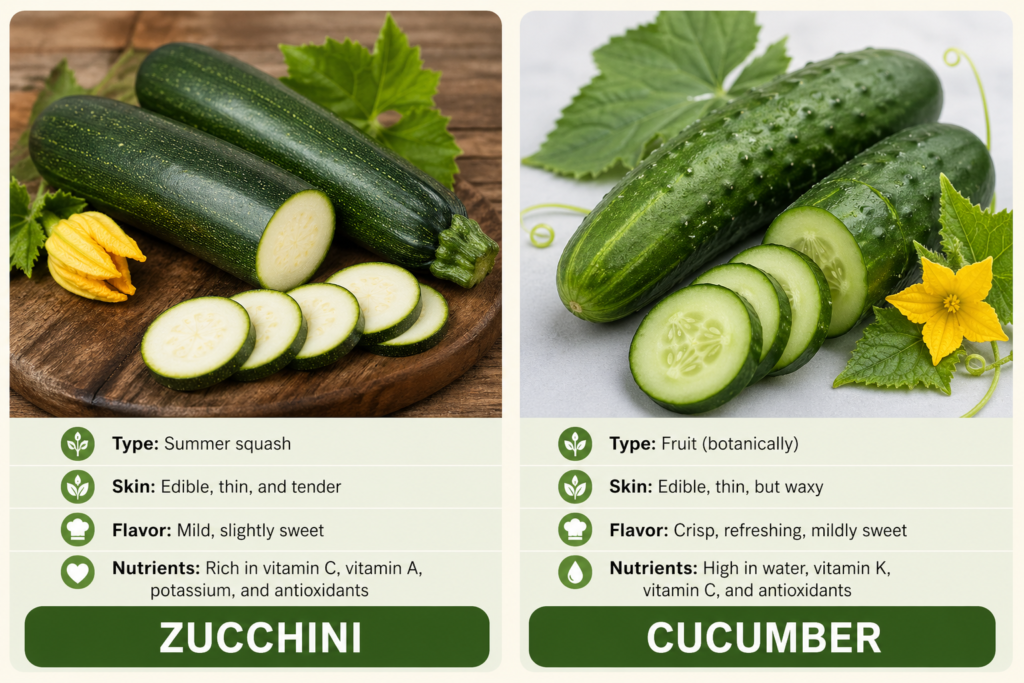
Zucchini vs Cucumber: What’s the Difference?
Okay, real talk — last summer I stood in my kitchen for a good two minutes holding what I thought was a cucumber. Took a bite later… yeah, zucchini. Not exactly the refreshing crunch I was expecting. I just stood there like, “well… that explains the weird salads this week.”
If you’ve ever grabbed the wrong one at the store or stared into your fridge drawer wondering which green thing is which, you’re definitely not alone. Zucchini vs cucumber is one of those oddly confusing situations. They look similar enough to trick you, and honestly, they don’t make it easy.
They sit next to each other at the store. Same general color, similar shape, both mostly water. But the second you use the wrong one in a dish — you’ll notice. Immediately.
Why You’ll Love This Article
Here’s the thing — this isn’t just some random veggie comparison. Knowing the difference actually helps in real cooking situations. You stop guessing. You stop second-guessing yourself mid-recipe, which… I’ve done more times than I’d like to admit.
You’ll know which one belongs in a hot skillet and which one absolutely doesn’t. That alone saves a lot of frustration.
I’ll also go through flavor, texture, storage, and what happens when you swap them (sometimes it works, sometimes it really doesn’t — depends). Whether you cook a lot or you’re just trying to eat better without overthinking everything, this should help.
So… What Even Are They?
Let me back up a bit, because this part surprised me when I first learned it.
Cucumber is technically a fruit. Same with zucchini. Yeah — both of them. It comes down to how they grow (from flowers, with seeds inside). But in everyday cooking, nobody treats them like fruit. That would just be confusing.
They’re also not as closely related as they look. Cucumbers are part of the Cucurbitaceae family — same group as melons and gourds. Zucchini is a type of summer squash, also in that family, but from a different branch, basically. So they’re related… just not that closely.
Kind of like distant cousins who somehow dress the same.
How to Tell Them Apart at a Glance
This is where things actually get useful — and where I wish I’d paid more attention earlier.
Skin: Cucumbers usually have smoother skin. Sometimes a bit waxy, sometimes slightly bumpy with faint stripes. Zucchini feels more matte, a little rougher when you run your fingers over it. Subtle difference, but it’s there.
Color: Cucumbers are usually a brighter green. Zucchini tends to be darker, more of a deep green. Not always obvious though — lighting in grocery stores doesn’t help, honestly.
Shape: This one helps. Cucumbers are more even in shape, same thickness throughout. Zucchini often gets wider toward one end — slightly uneven, kind of club-shaped when bigger.
Weight: Pick them up if you can. Cucumbers feel heavier and more solid for their size. Zucchini feels lighter, maybe a bit softer. Hard to explain, but once you notice it, it sticks.
Quick side note — if they’re not super fresh, this gets trickier. Older produce tends to blur the differences a bit. So if you can, check the stem end. Zucchini usually has a thicker, more noticeable stem piece attached.
Taste and Texture — Where They Really Diverge
This is where the confusion ends. They behave very differently once you actually eat or cook them.
Cucumber is crisp. Cool, refreshing, slightly sweet. That clean snap when you bite into it — that’s kind of its whole thing. It doesn’t try to dominate flavor-wise, which is why it works so well in salads, dips, and cold dishes.
Zucchini raw? Not amazing, if I’m being honest. It’s mild, a bit earthy, sometimes slightly bitter. The texture is softer too — no crunch. It works in ribbons or noodles with dressing, but it’s not exactly snackable the same way cucumber is.
Now cooking — that’s where things flip.
Zucchini actually wants to be cooked. It softens, absorbs flavor, gets a little buttery if you cook it right. Garlic, olive oil, herbs — it takes all of that in really well. This is where zucchini shines.
Cucumber… doesn’t. It releases a lot of water, turns soft, and loses most of its texture. There are some dishes that cook cucumber, sure, but they’re more technique-heavy. For everyday cooking? It’s better left raw.
Nutritional Differences — Who Wins?
Honestly, neither one is going to drastically change your diet overnight. They’re both low-calorie, high-water foods.
Cucumber (per 100g, raw):
• Calories: ~15
• Carbs: 3.6g
• Fiber: 0.5g
• Contains Vitamin K, Vitamin C, potassium
Zucchini (per 100g, raw):
• Calories: ~17
• Carbs: 3.1g
• Fiber: 1g
• Contains Vitamin C, B6, potassium, manganese
Zucchini has a bit more fiber and nutrients overall. Cucumber is more hydrating and refreshing.
If I had to pick — smoothies or hydration? Cucumber. Cooking or adding substance to a dish? Zucchini. That’s usually how I decide.
Ingredients (For Context — Common Dish Uses)
Since we’re talking real kitchen use, here’s where each one usually fits:
Zucchini works in things like skillet sautés, fritters, pasta dishes, scrambled eggs, stuffed boats… basically anything involving heat.
Cucumber shows up in salads, yogurt dips, quick pickles, chilled soups, noodle bowls — all cold or lightly dressed dishes.
They really don’t overlap much once you think about it. And yeah, I’ve tried swapping them before… not always a great idea.
Step-by-Step: How to Use Each One Right
This is less about a single recipe and more about avoiding common mistakes.
Working with Zucchini:
Wash it first — that skin holds onto dirt more than it looks like it would. No need to peel it. Slice however you like.
Important part: don’t overcrowd the pan. I ignored this for way too long. If you pile too much zucchini in at once, it steams instead of browns. You want space, high heat, and a bit of oil.
Also, salting it beforehand helps draw out water. Let it sit, pat dry. It’s an extra step, but yeah… it makes a difference.
Working with Cucumber:
Don’t cook it. I know I’ve said that already, but it’s worth repeating.
Slice or dice it however you need. If you’re making a salad, you can salt it first to reduce water. Same idea as zucchini, just for a different reason.
For pickling, cucumber is the better option. It keeps that crunch. Zucchini pickles exist, but they’re softer. Different texture entirely.
Cooking Tips
A few things I’ve picked up — mostly from mistakes, if I’m honest.
Don’t store zucchini and cucumbers right next to each other for too long. Cucumbers don’t handle ethylene gas well, and zucchini gives it off. They spoil faster.
Zucchini is best used within a few days. Once it gets soft or wrinkly, it’s not great raw — still usable for cooking though.
Cucumbers should be stored loosely wrapped in the fridge, not too cold. They last about a week, give or take.
Also — really big zucchini? Not ideal. The seeds get large, and the texture changes. Smaller ones are better. Around 6–8 inches is a good range.
Why This Recipe (and These Vegetables) Actually Work
This part gets a little technical, but it helps explain everything.
Zucchini softens under heat in a way that works in your favor. It absorbs flavors, breaks down just enough, and becomes something better than it starts as. That’s why simple zucchini dishes can taste surprisingly good.
Cucumber is the opposite. It’s built to be crisp and hydrating. Heat breaks that structure down completely. That’s why cooked cucumber feels off.
So when recipes work, it’s usually because the ingredient matches the method. Zucchini + heat = good. Cucumber + cold = good.
Sounds obvious… but it took me a while to actually follow that consistently.
Small Changes That Made a Big Difference
The biggest shift for me was just stopping the habit of treating them as interchangeable.
Once I stopped doing that, things improved pretty quickly. Fewer weird textures, fewer disappointing dishes.
Also — choosing smaller zucchini and better cucumbers (like English varieties) made a difference. Less water, fewer seeds, better overall texture.
Small details, but they add up.
If I Were Making This Again Tomorrow
I’d keep it simple.
Cucumber goes into a quick salad — maybe with feta, onion, lemon. Zucchini goes into a skillet with olive oil and garlic.
Having both on the plate actually works really well. One cold, one warm. Different textures, same meal. Feels balanced without trying too hard.
Substitutions & Variations
Can you swap them? Sometimes… but carefully.
Zucchini instead of cucumber — not great for most cold dishes. Works better in lightly dressed or quick-prep situations.
Cucumber instead of zucchini — doesn’t work well in cooked dishes. Too much water.
Variations: yellow zucchini, pattypan squash, English cucumbers — all worth trying. I usually go for English cucumbers when I can.
What to Serve With It
Zucchini pairs well with pasta, eggs, chicken, grains, tomato-based dishes.
Cucumber works with yogurt sauces, grilled meats, rice, and lighter summer meals.
Different roles, different strengths.
What I Skip When I’m Short on Time
I skip salting and draining most of the time when I’m busy. It helps, but not always worth the extra step.
I also don’t peel zucchini. And I rarely seed cucumbers unless I really need to.
Sometimes simple is good enough.
Storage & Reheating
Zucchini: store in the fridge, use within a few days. Reheat in a skillet if cooked. Microwave… not great, honestly.
Cucumber: don’t freeze it. Store in the fridge and use fresh. Once it’s gone soft, it’s done.
Cook and Prep Time
Zucchini | Cucumber
Prep Time: 5–10 min | 5 min
Cook Time: 8–12 min | None
Total Time: ~15–20 min | ~5 min
Nutrition Facts
(Per 100g, raw)
Zucchini | Cucumber
Calories: 17 kcal | 15 kcal
Carbs: 3.1g | 3.6g
Fiber: 1g | 0.5g
Protein: 1.2g | 0.7g
Vitamin C: 17.9mg | 2.8mg
Potassium: 261mg | 147mg
Water: ~95% | ~96%
FAQ
Can I eat zucchini raw? Yes, but it’s not ideal. Better cooked.
Are they the same family? Yes, but different types.
Which is better for weight loss? Both work. Just depends on how you use them.
Can you pickle zucchini? Yes, softer texture though.
Why is cucumber salad watery? Too much moisture — salt and drain first.
Is English cucumber better? Usually yes. Less bitter, fewer seeds.
Final Thoughts
Zucchini vs cucumber — they look similar, but that’s where it ends.
One handles heat, one doesn’t. One works in a skillet, the other in a salad. Once you get that, everything else becomes easier.
I’ve mixed them up before. Most people have. But once you really notice how they behave, you stop making that mistake.
Use zucchini for cooking. Keep cucumber cold. That’s really the takeaway.